Continuing our occasional theme of Still Things Turn Up, we have news of the revival of a JAP-engined motorcycle which was prepared and ridden by one of Australia’s most controversial motorcycle characters. On it, he set three outright Australian land speed records and holds the lap record at the Vale circuit near Bathurst.
Art Senior is most famous for extracting explosive power from humble Ariels but he first came to prominence in the early ’30s on a self-tuned but wickedly quick flat-tank AJS. On this he set an all-comers Australian quarter-mile speed record as well as winning the 1934 Junior GP in record time at Bathurst. He also won the 1935 Senior GP at Phillip Island, again on an AJS and most likely the same machine.
In late 1934, New South Wales OK Supreme agent Stan Ellis acquired a retired factory racer (see above) to help publicize and sell OKs. The bike had been campaigned in England throughout the 1934 season, including the Senior TT at the Isle of Man. Ellis offered to pay Senior’s expenses, a generous retainer and all winnings if he would prepare and ride it in major race and sprint events.
Eventually, on 27 November 1935 Senior made a successful attack on the Australian flying quarter-mile record wresting it from Rudge-mounted Wal Hawtrey. Senior’s outward run was 111.11mph and the return 112.23mph, for a mean speed of 111.67mph. In June 1936, Norton-mounted Leo Tobin added 8.33mph to Senior’s record for a mean speed of 120mph and Australian records in the 500, 750 & 1,000cc classes.
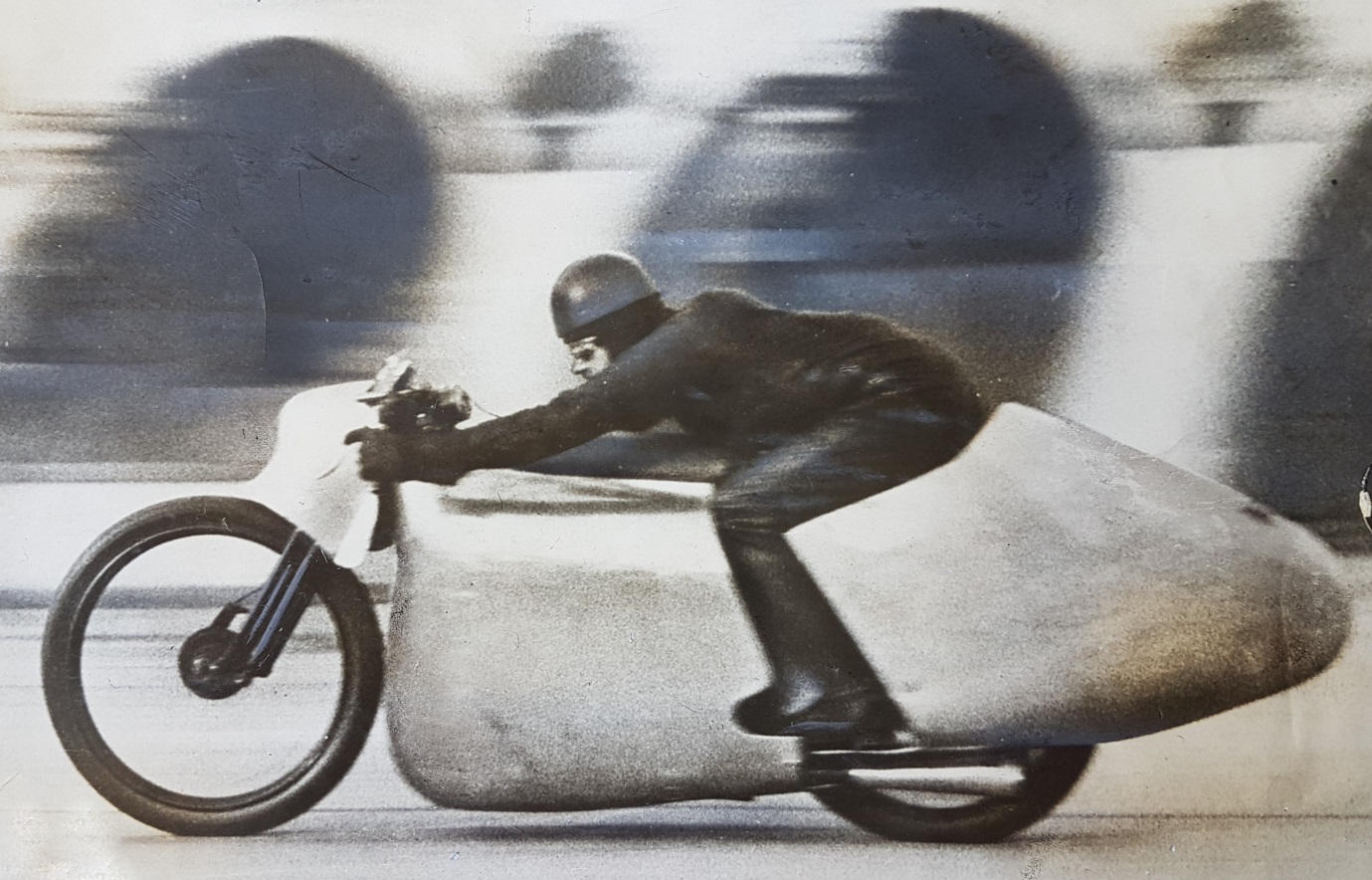
For the first record attempt, the bike had been stripped but, for the second (see below), Senior and Ellis decided to streamline the OK. Their inspiration was the supercharged Brough-JAP streamliner (known as Leaping Lena) that had set a world sidecar speed record when piloted by Australian Alan Bruce. Senior, ever reluctant to farm work out, set about fabricating the panels himself.
An aluminium wedge enclosed the crankcases, gearbox and clutch. The front down-tube and fork blades were sheathed in the same material. An elongated tail cone, which also covered the top of the disked rear wheel, was shaped to allow his backside to slide inside. And a new petrol tank enabled Senior to squat even lower. Lastly, a handlebar fairing, designed to deflect wind over his reverse beaked helmet, was made.
Art Senior on the Hume Highway on a very wet record day, and below, outside the Stan Ellis showroom
But hang on – 130mph! That’s a 15% speed increase on the original bike. Impossible! Without access to wind tunnels, streamlining design in the day left a lot to be desired and could not possibly account for all that improvement. Something else was clearly at play.
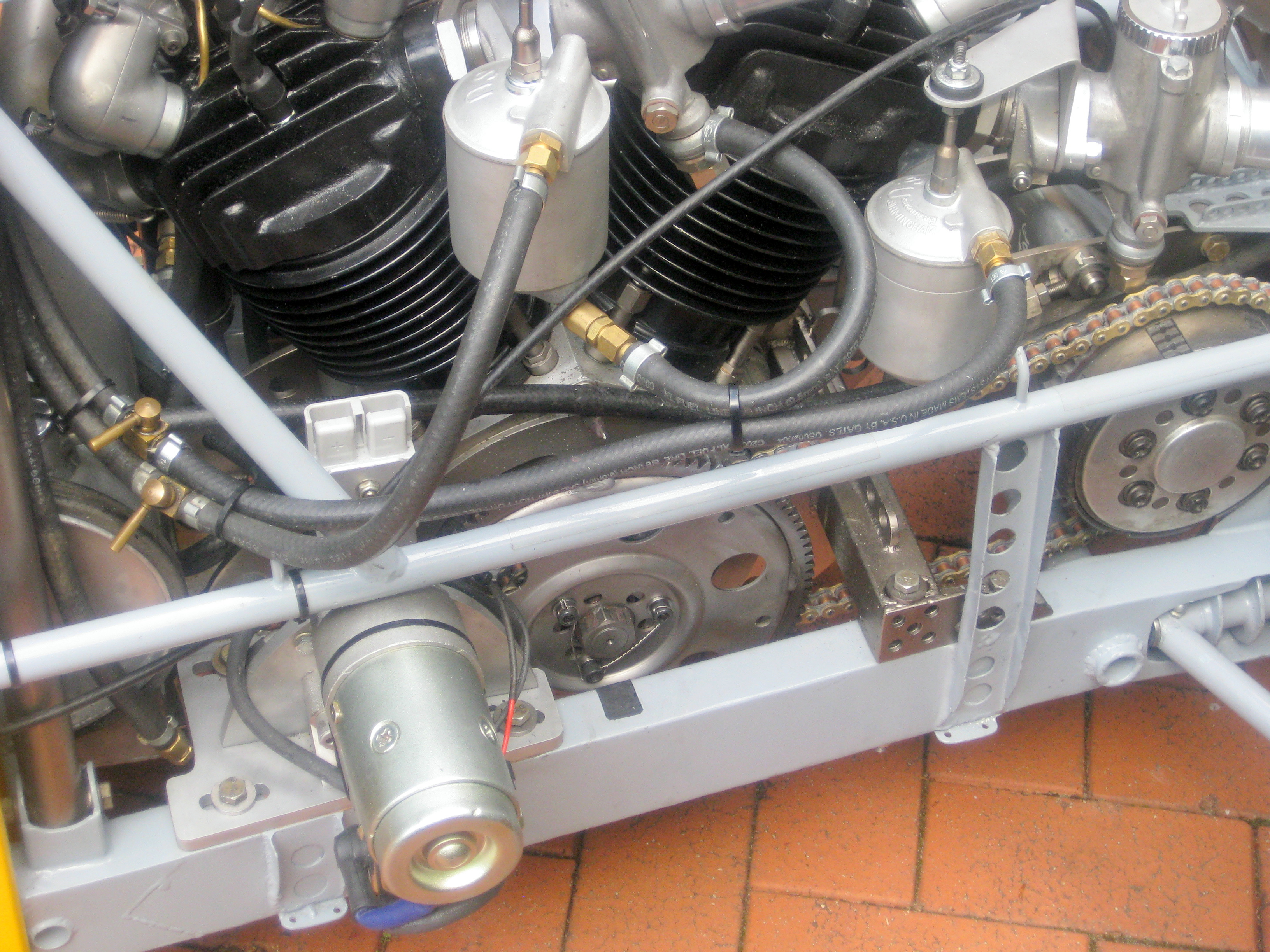
Unbeknown to those outside the inner sanctum, Stan Ellis had recently taken delivery of a new JAP JOR racing engine (JOR V/46508/S): a pukka 1935 big fin, twin carb, twin spark job used exclusively by HRD at the TT. It shared the same bottom-end as the ‘34 unit so slotted straight in. He fitted a high-compression piston to run on alcohol and enlarged the inlet ports from 7/8” to 1-3/32”. The ports are splayed at 22.5˚ with 7˚ of downdraft and are fed by two right-handed carbs (handed pairs were not made before the war). This engine type had only ever been used in anger once: in the 1935 Isle of Man Senior TT where, in stark contrast to the previous year’s lightly-finned, single-carb units, it proved both fast and reliable.
As the fairing hid the new motor from inquisitive eyes, the remarkable speed increase was put down to a combination of Senior’s freakish ability to conjure yet more grunt from clapped out junk allied with the wind scything properties of his crudely fashioned fairing. Art’s and Stan’s secret was well kept. The record-breaking bike was soon put on display at Stan Ellis Motorcycles Goulburn Street premises. A massive placard proudly proclaimed it as ‘the fastest motorcycle in Australia’. It proved a huge draw card and orders flooded in.
With OK sales soaring on the back of Senior’s records, Ellis offered Senior his own OK Supreme agency which duly opened on 1 June 1937. Senior should have been over the moon but something was gnawing away inside him. Shortly after a club event on June 13 (his last on the OK), Senior demanded Ellis gift him the record-breaker as was the tradition following a successful record attempt. Ellis rejected Senior’s claim as he had not only financed the entire campaign but this was not part of their deal.
Senior’s decibel-rich dummy spit not only kayoed their lucrative two-year partnership but also his own 2 week old OK Supreme agency. However, Australia’s fastest man wasn’t out of the saddle for long. Ariel’s Eric Moore gave him a new Red Hunter to race and sprint. It turned out to be a very lucky move as Senior’s record-breaking resumed and Ariel survived the war.
With the war killing off both motorcycle racing and OK Supreme production, the bike lost its hero status and its purpose. Now little more than a curio, Ellis moved it on and it was thrashed and trashed. I can only assume that the person(s) responsible for this vandalism was oblivious to its great deeds. Sometime in the early ‘fifties, it sold as a flogged-out ex-racer with no special history. While the new owner, who sold it to the writer, never got it running, he did arrest its decay. And so, despite the abuse and despite languishing unrecognized and largely unloved in a western Sydney shed for nearly seven decades, it survived.
Over time, many important components such as the TT-spec Webb forks, drop-forged Harwil front wheel, Bowden racing levers, bespoke oil tank and Amal TT carbs had disappeared. The condition of the remainder varies greatly. The frame has several broken lugs and more twists and turns than the Nurburgring. The TT petrol tank and Harwil 8” rear brake have clearly had a hard life but the priceless mechanicals: the Burman AR racing gearbox and bronze head twin carb JOR engine are surprisingly sound. There remains enough of the original for an authentic resurrection.
For practical reasons, the bike will be returned as closely as possible to its 1937 Bathurst lap record trim. A frame jig has been fabricated and a set of double-damped TT Webb forks and Hunter Bros front wheel (a favourite of Art’s) found. Bronze 7/8” Amal 15TTs are proving elusive. Period racing Bowdens will have to suffice for the moment. A new oil tank, primary guard and exhaust pipe will need to be made.
By and large, progress is glacial, but the bike, bless it, survives.
Anon
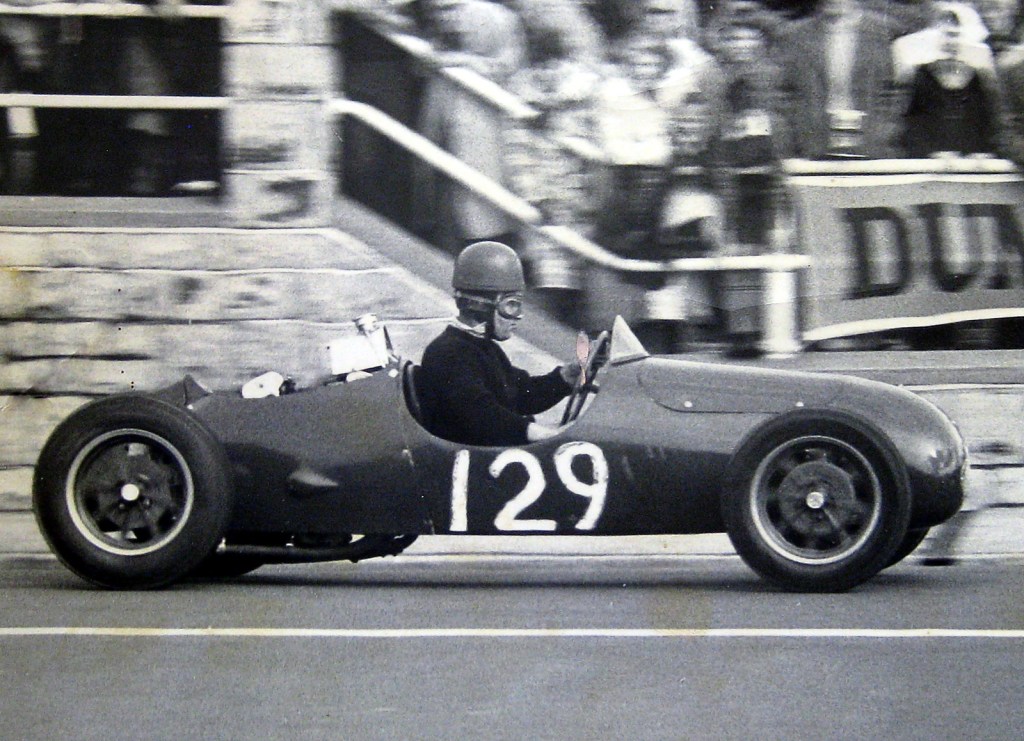
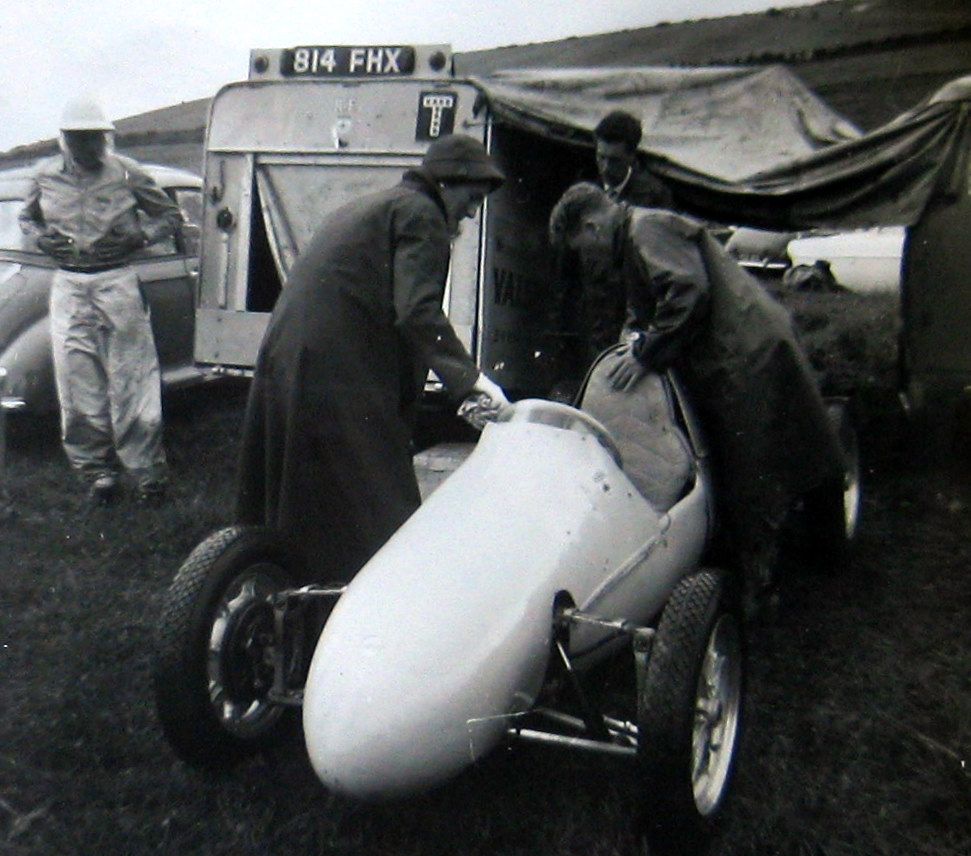
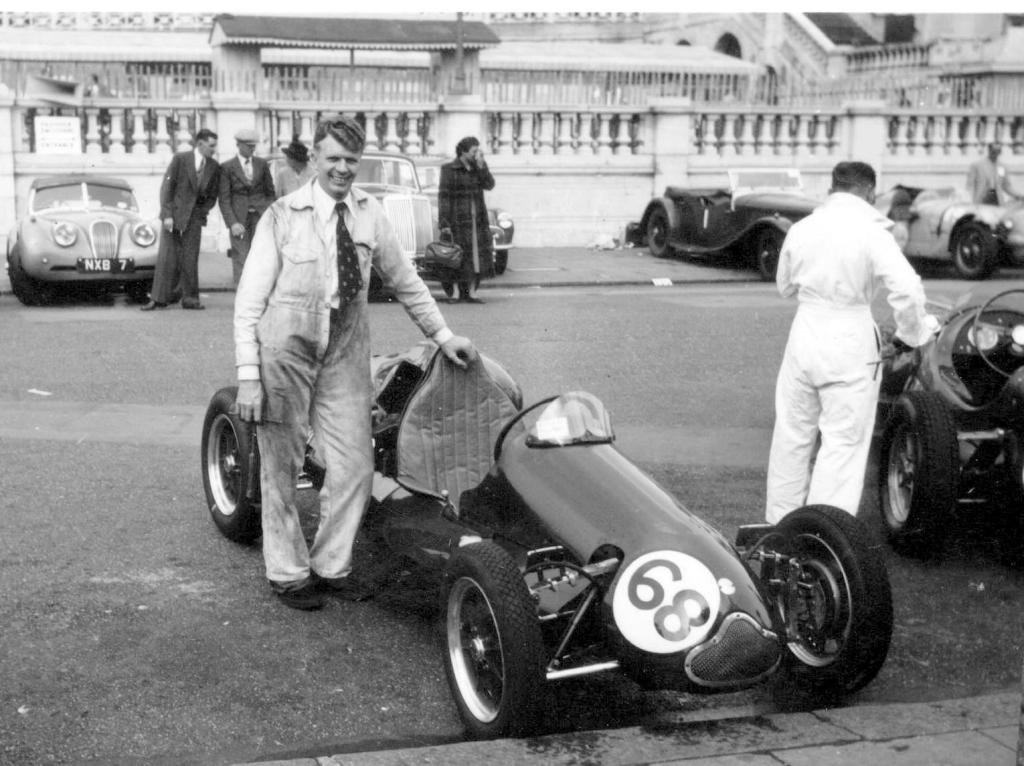
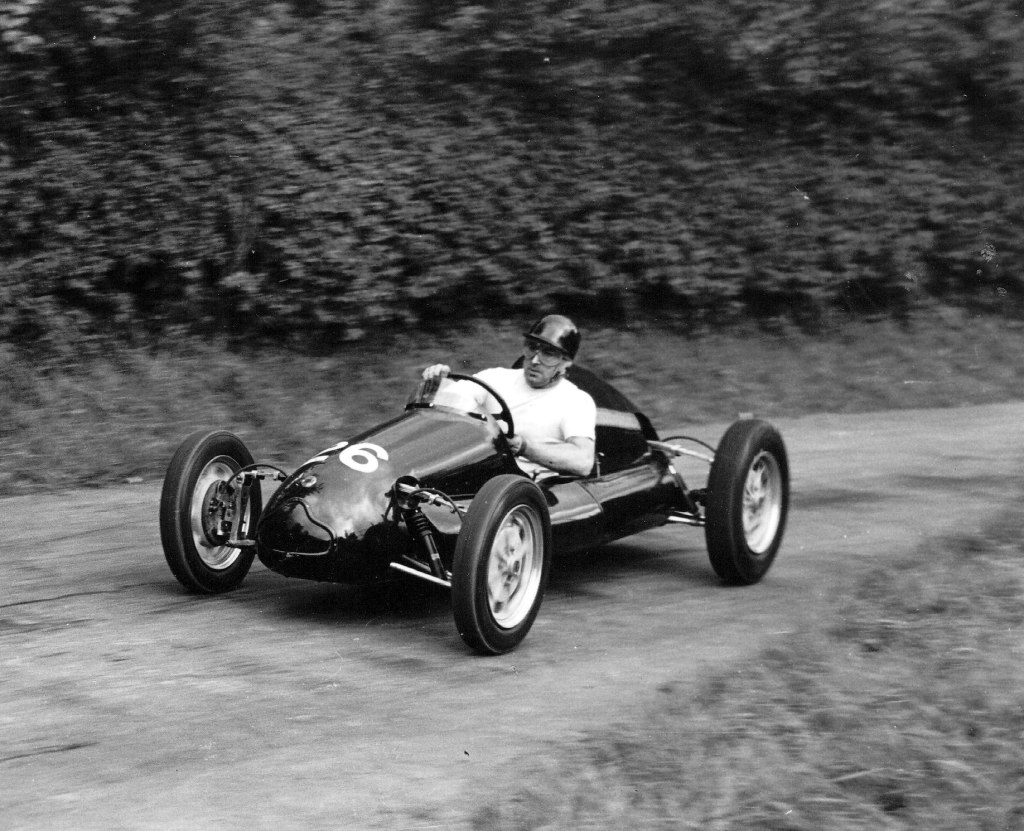
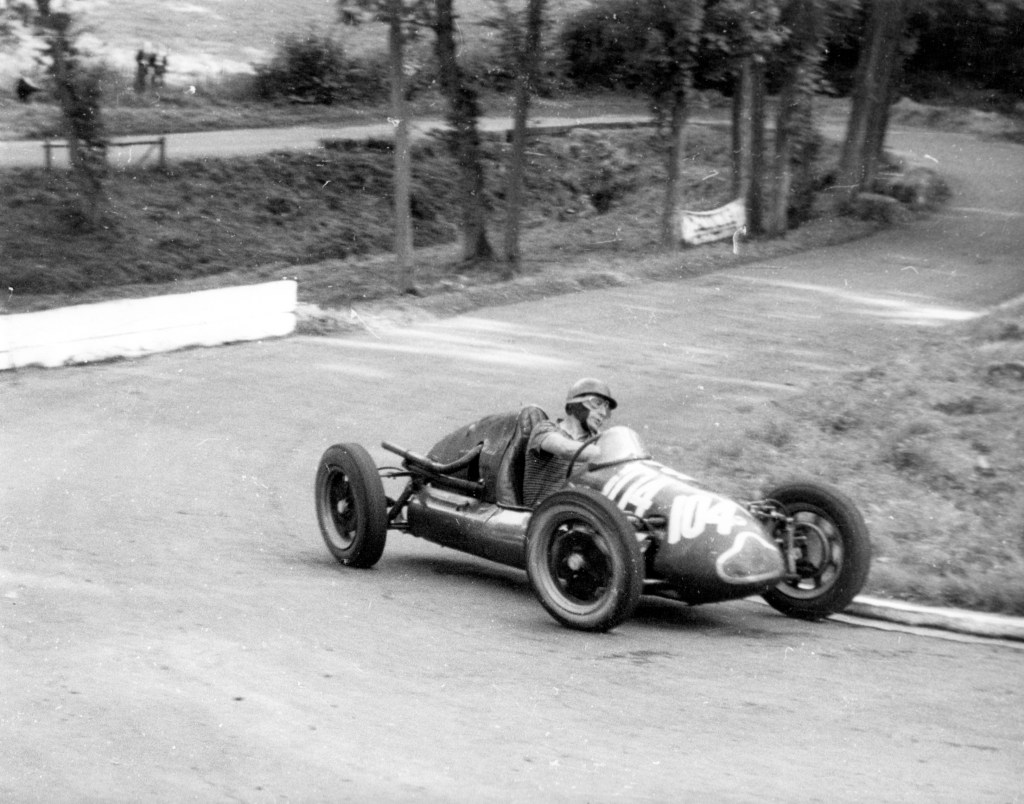
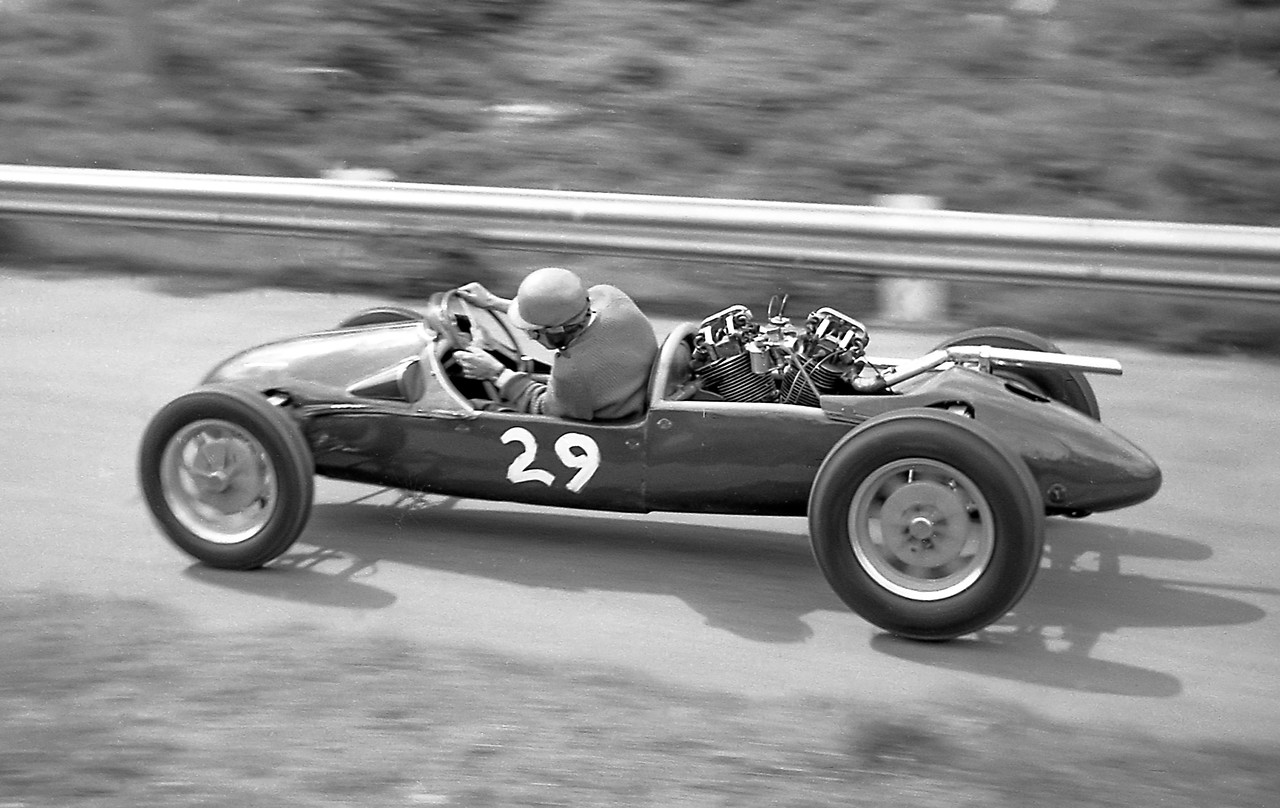
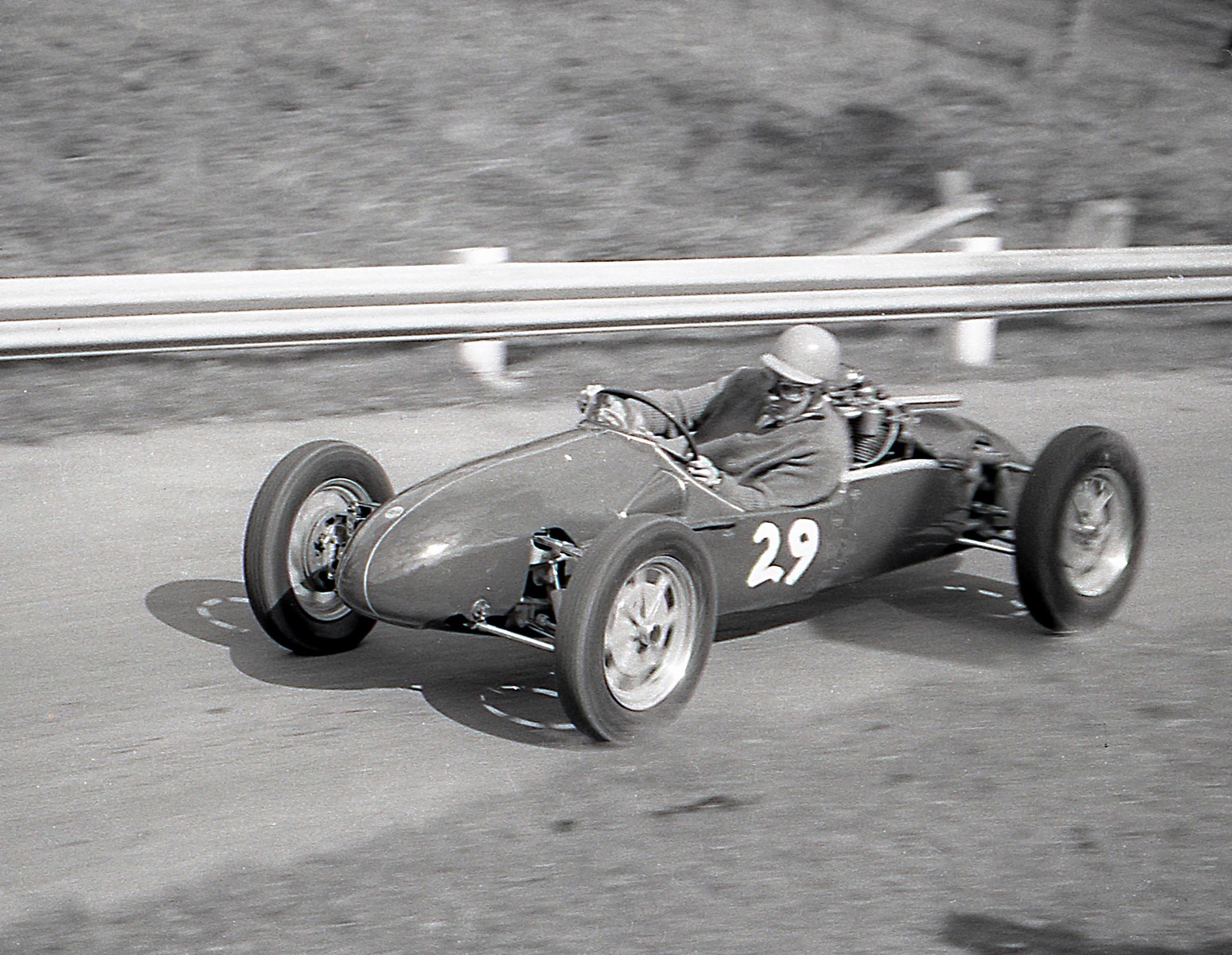
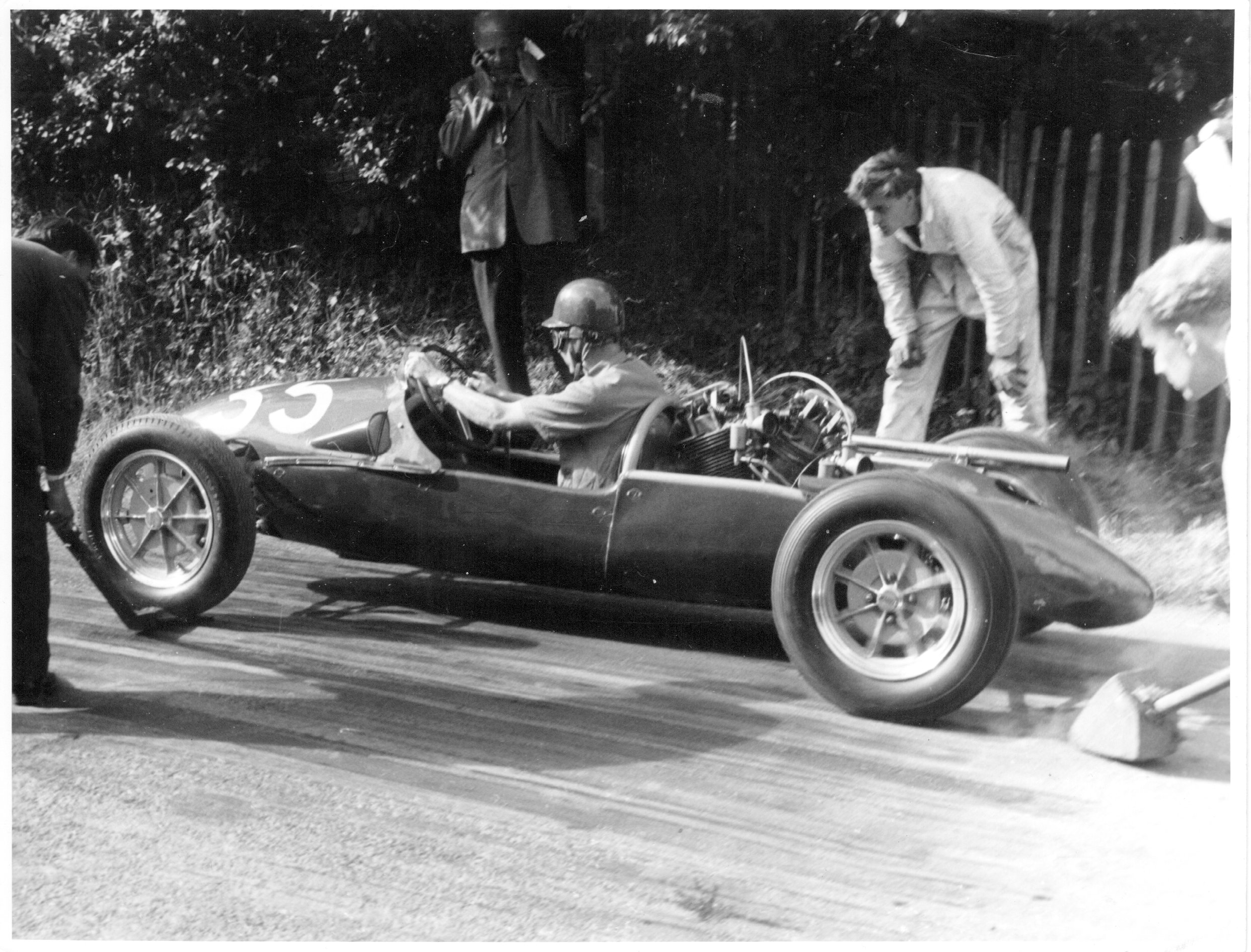
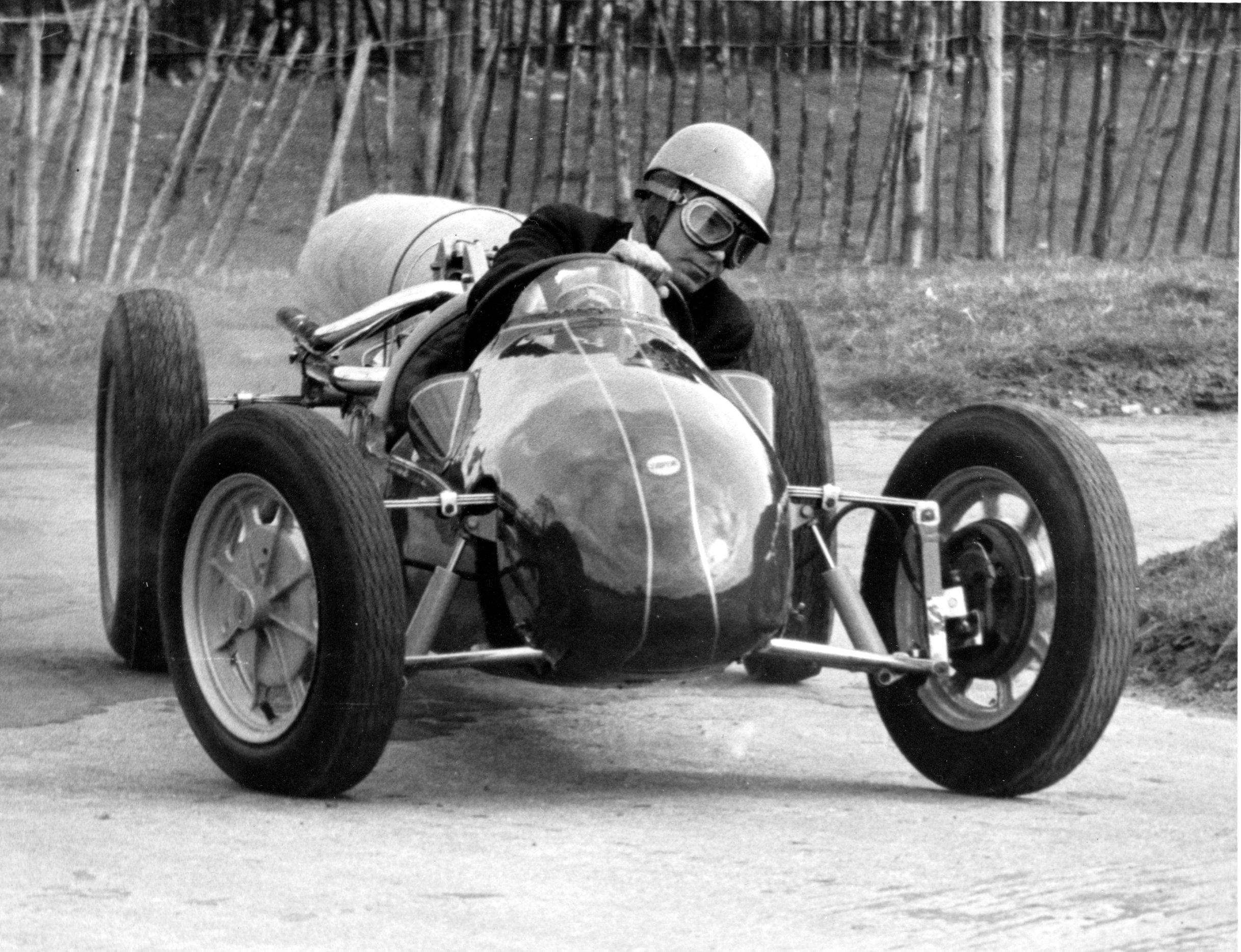
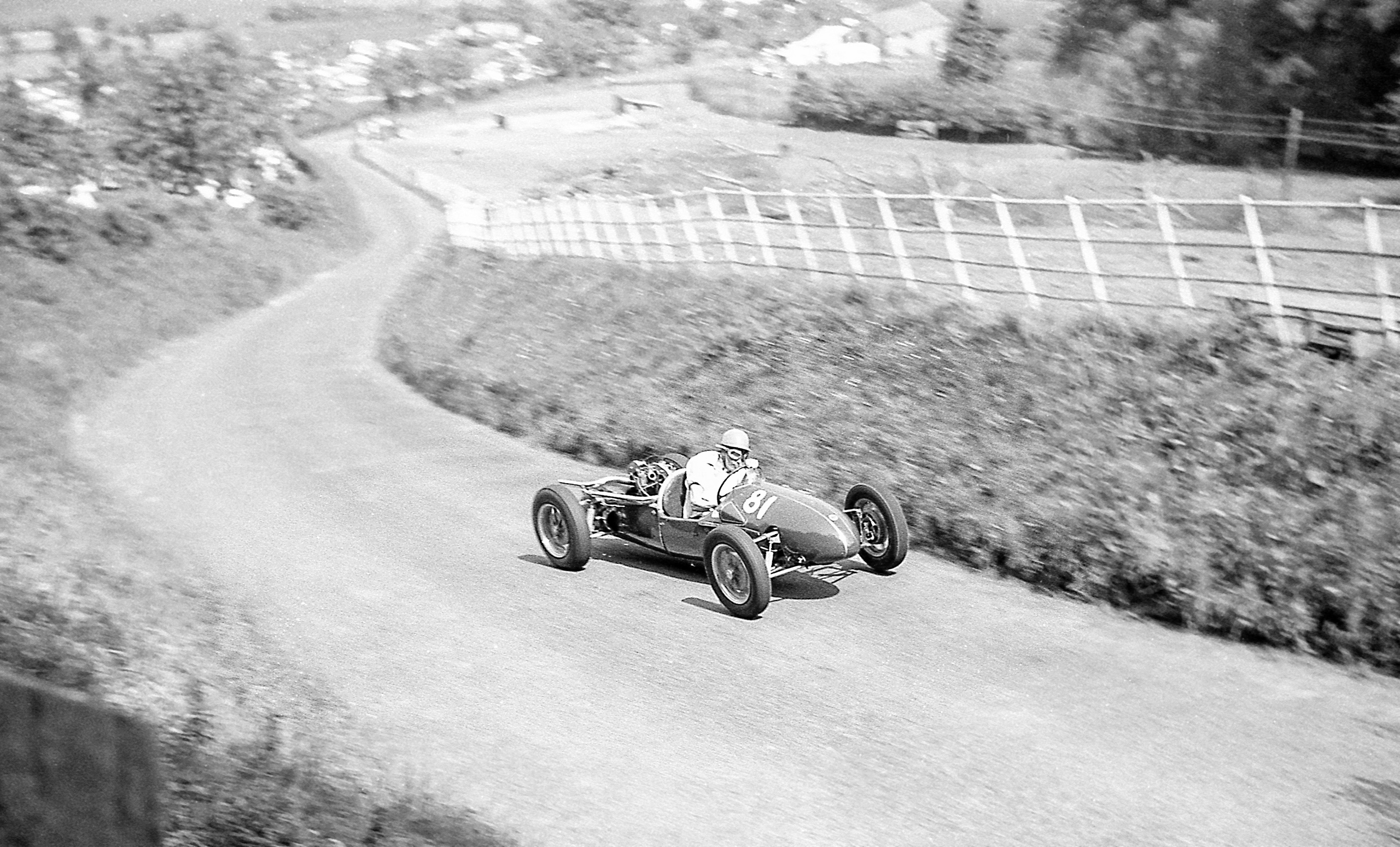
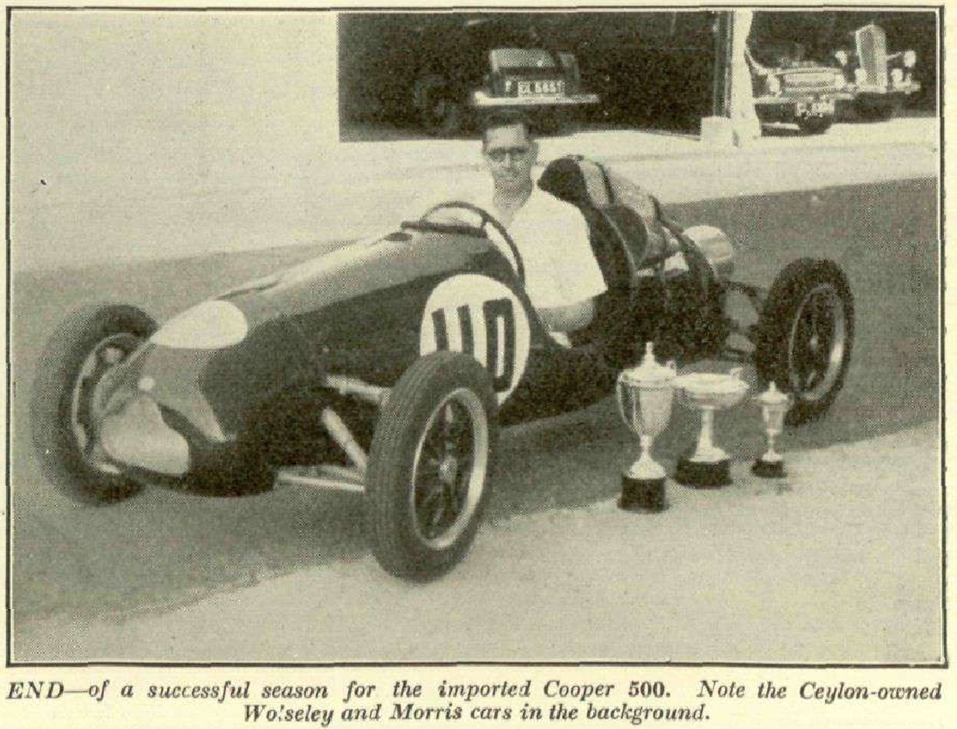
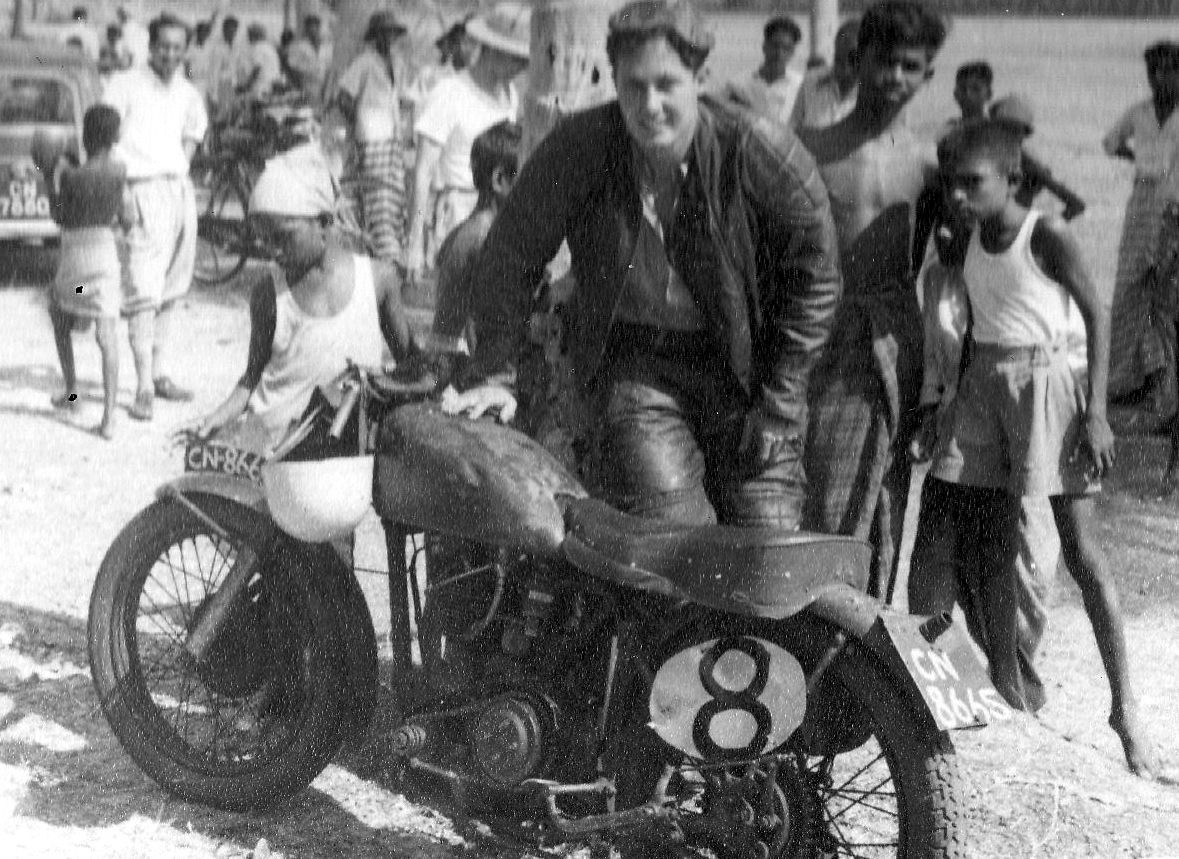 from my English friend David Stevenson who was posted there in 1951 along with several motorcycles which he rode and raced with some success (right). He returned to England in 1952 with a nomination as the third member of the Ceylon ‘team’ for the Isle of Man TT that year. He didn’t have a suitable bike but a sponsor supplied one and a Junior replica was earned for finishing well. Following that he rode the bike, an AJS 7R, all the way to Spa to race in the Belgian Grand Prix and then back to London! He can’t remember where he finished but recalled it was well up with the privateers.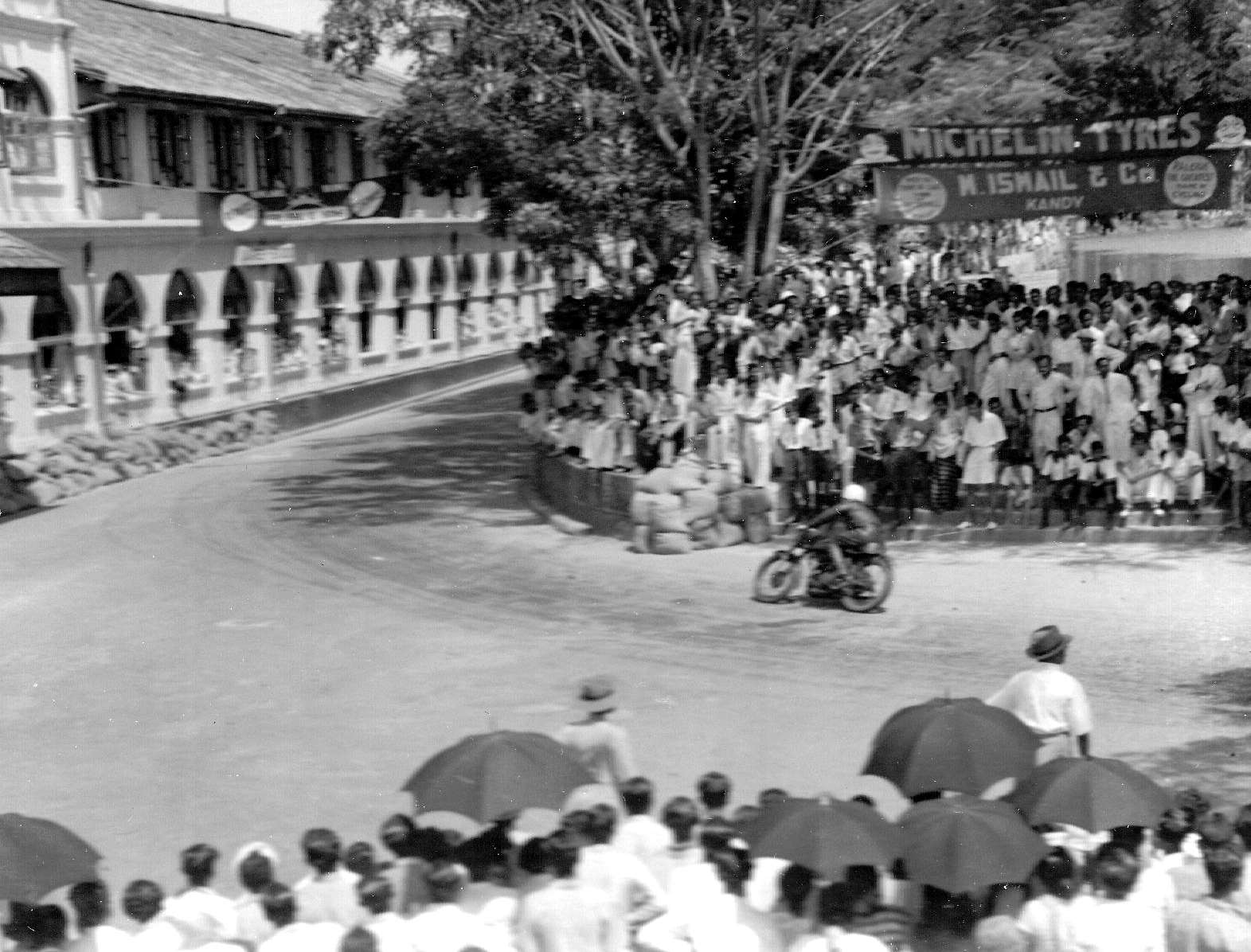
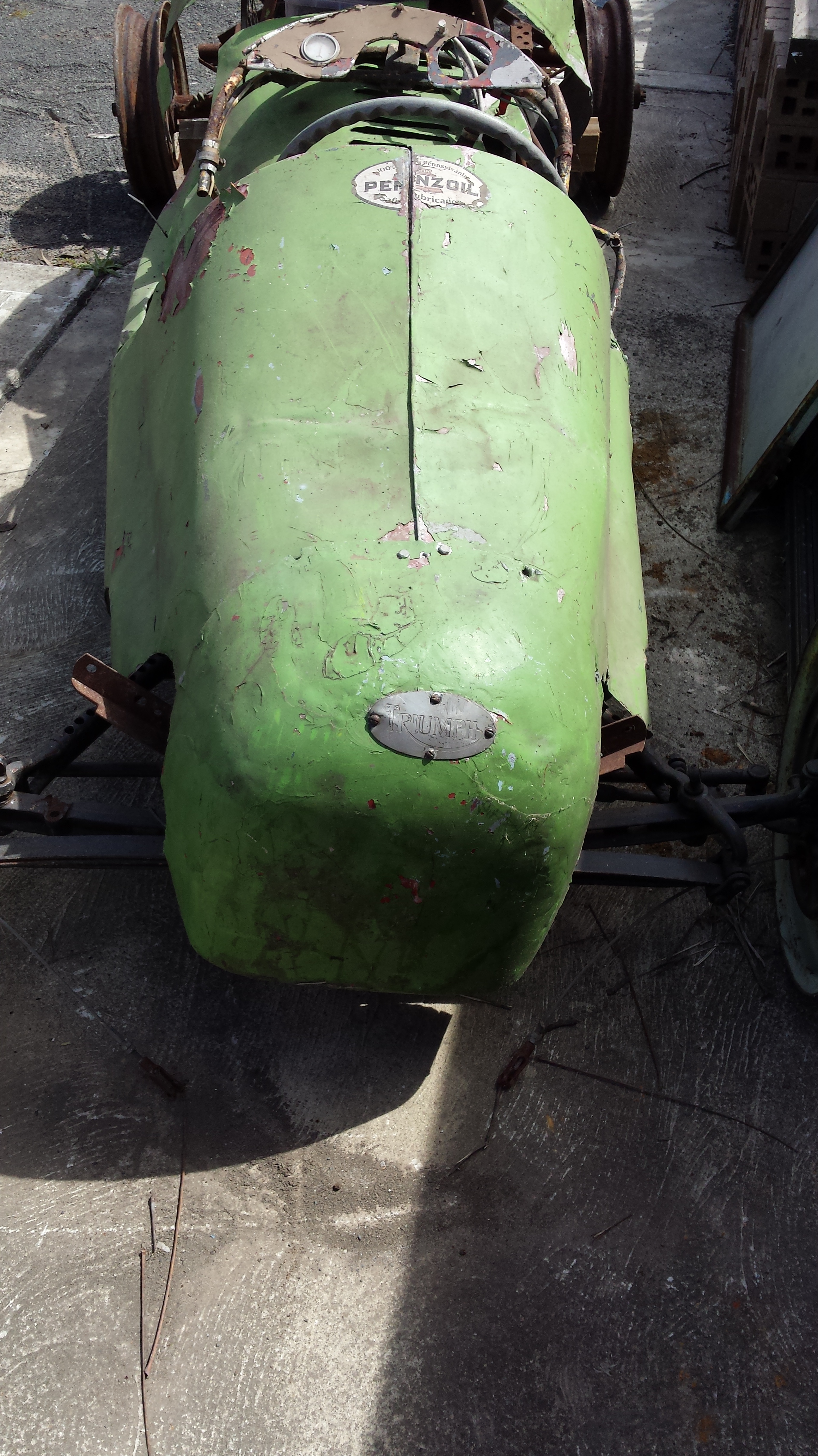
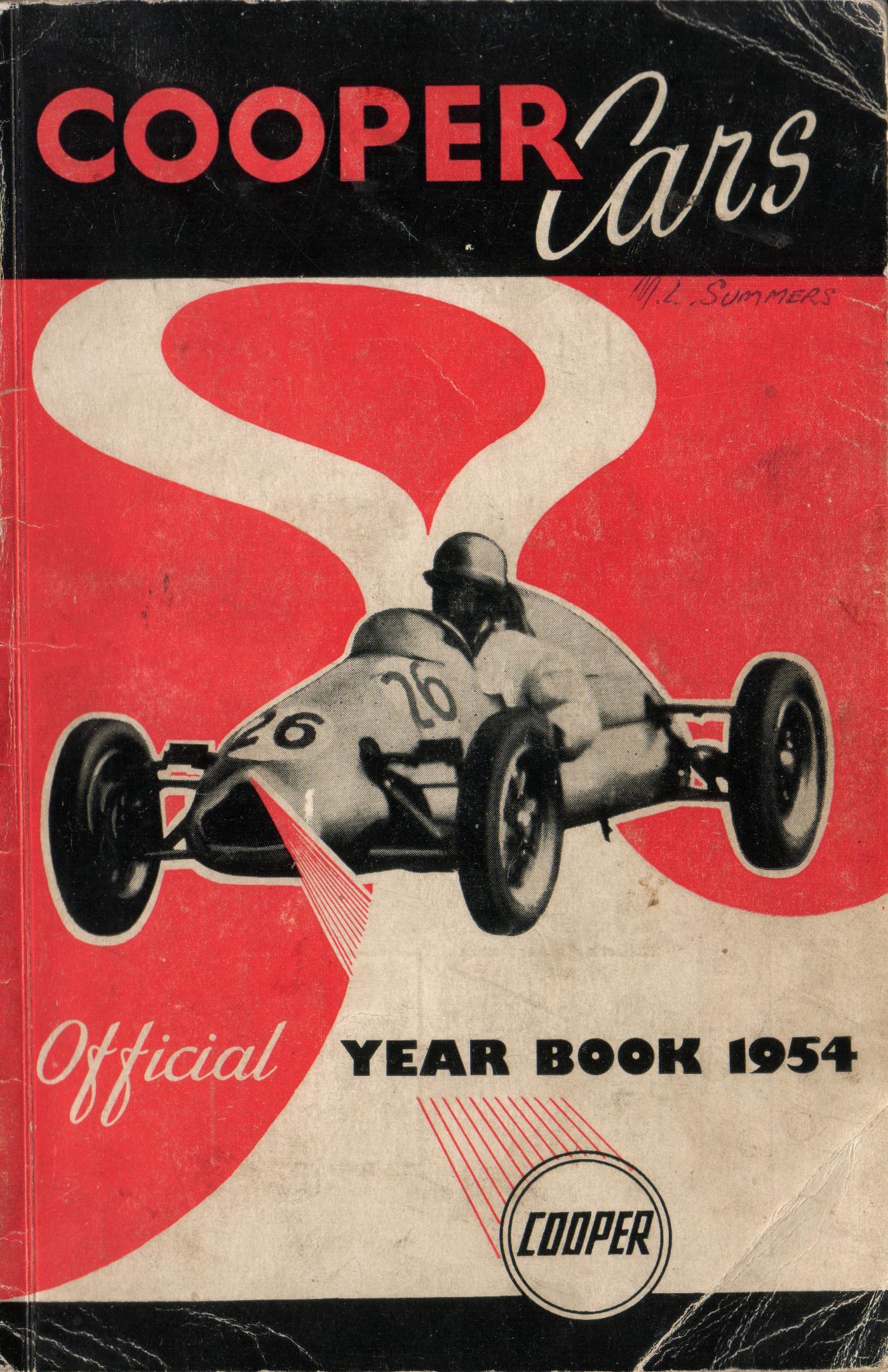
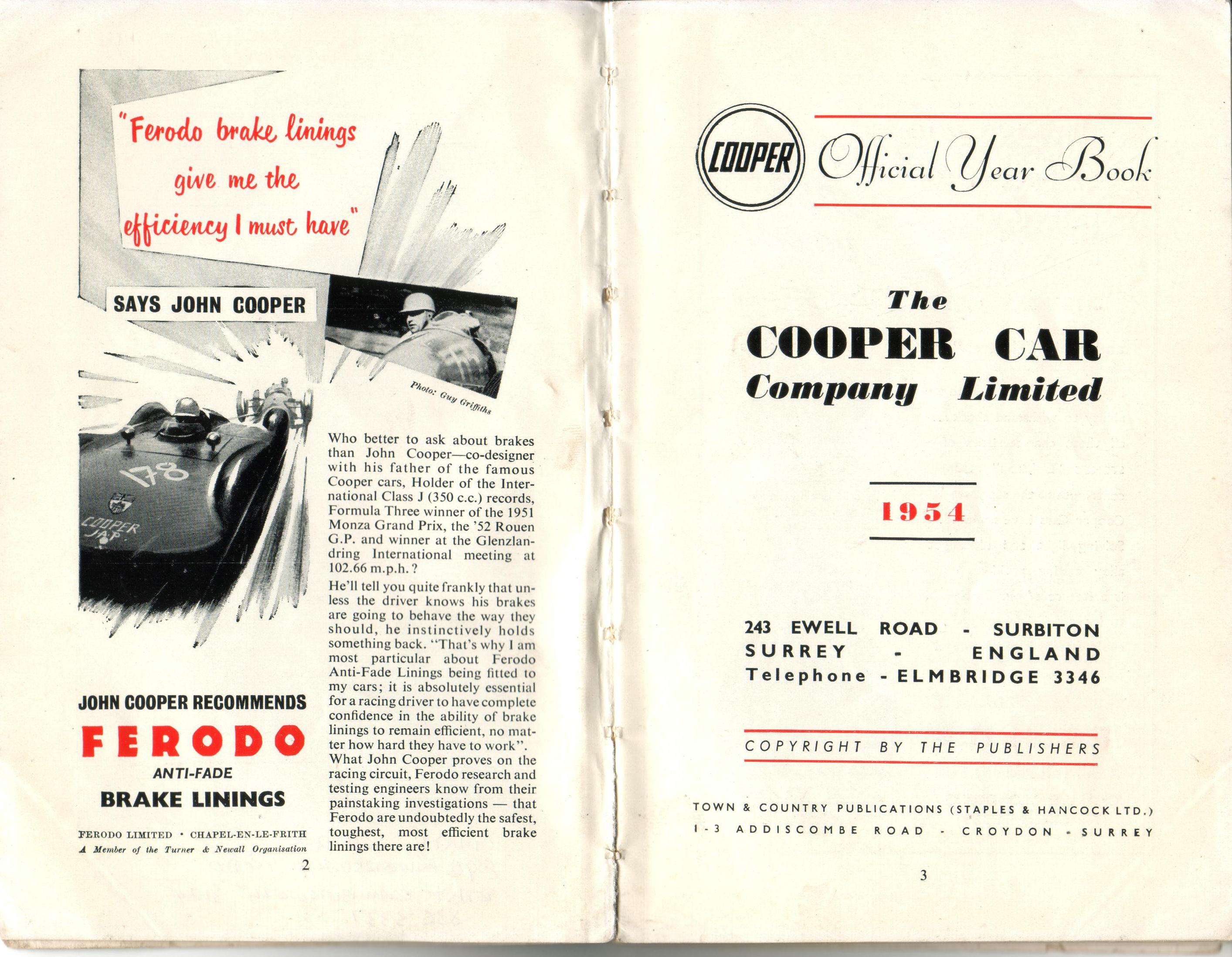

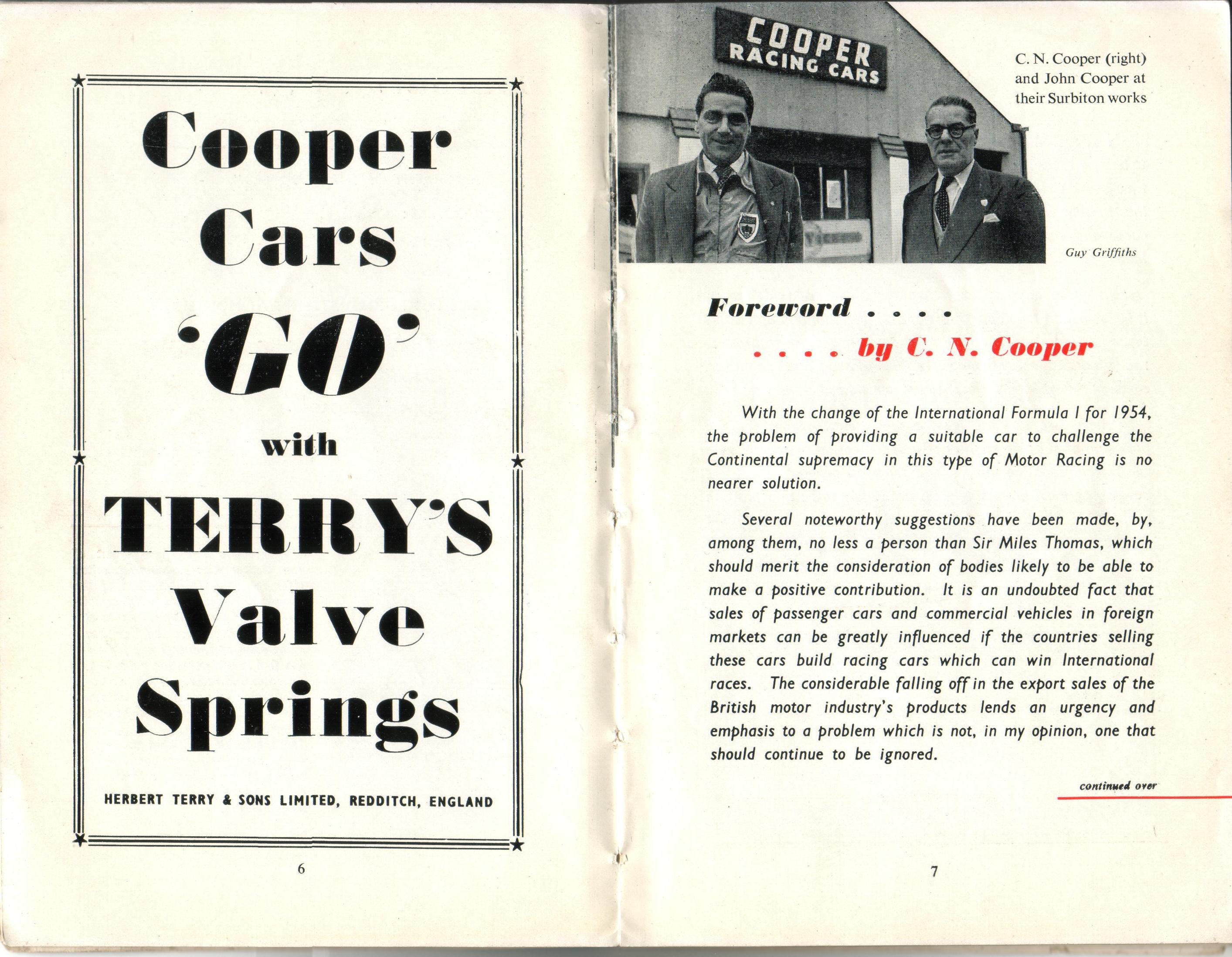
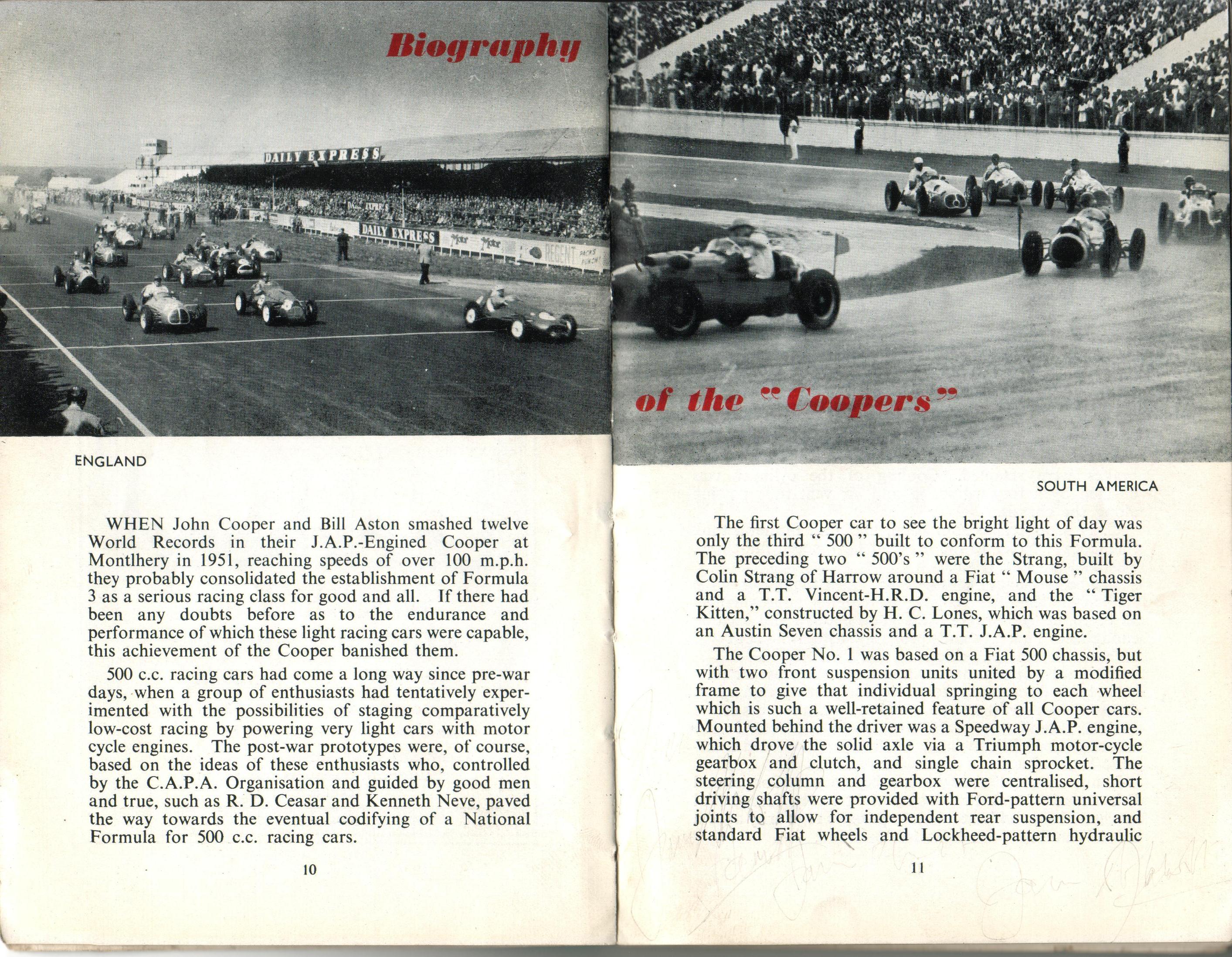
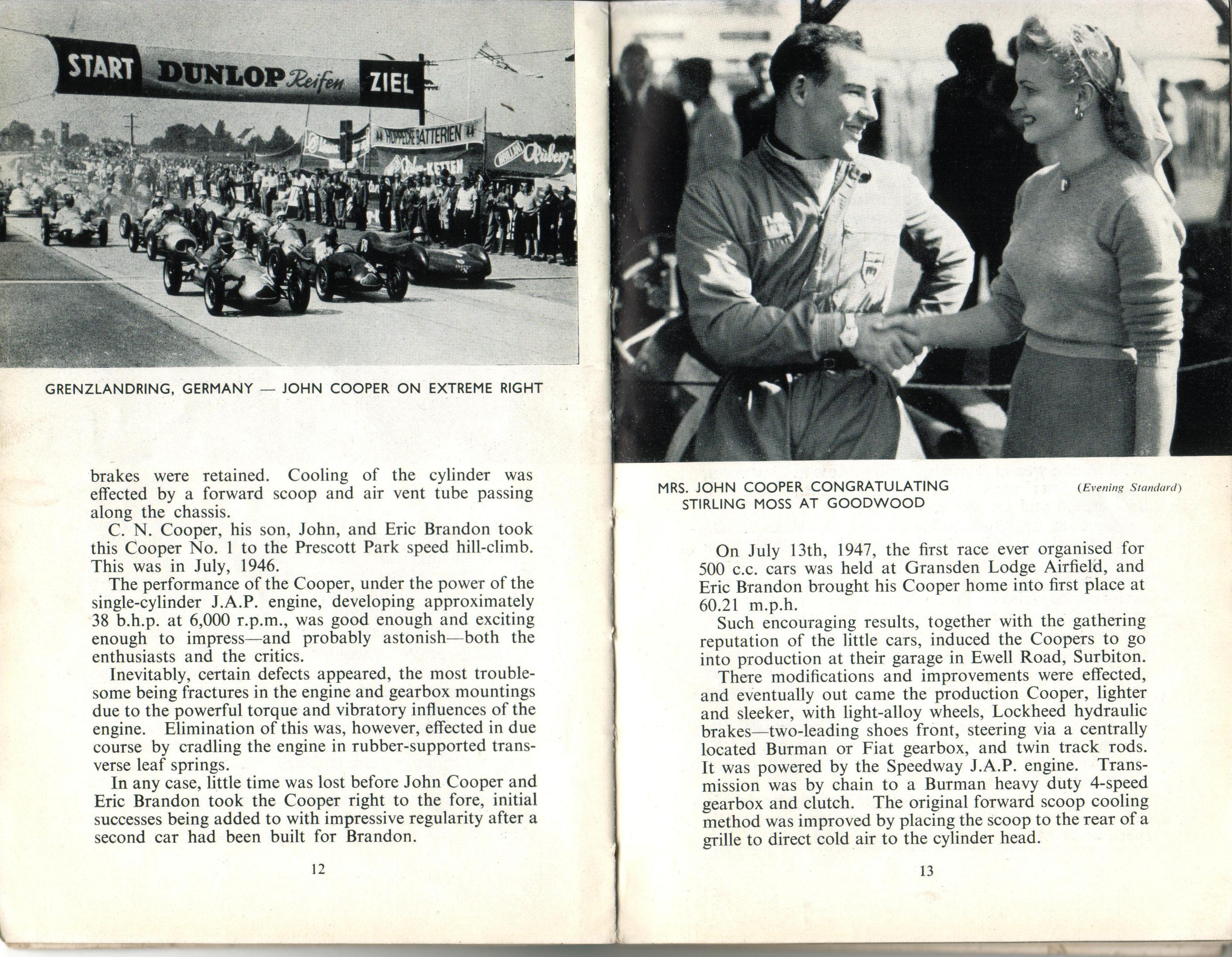
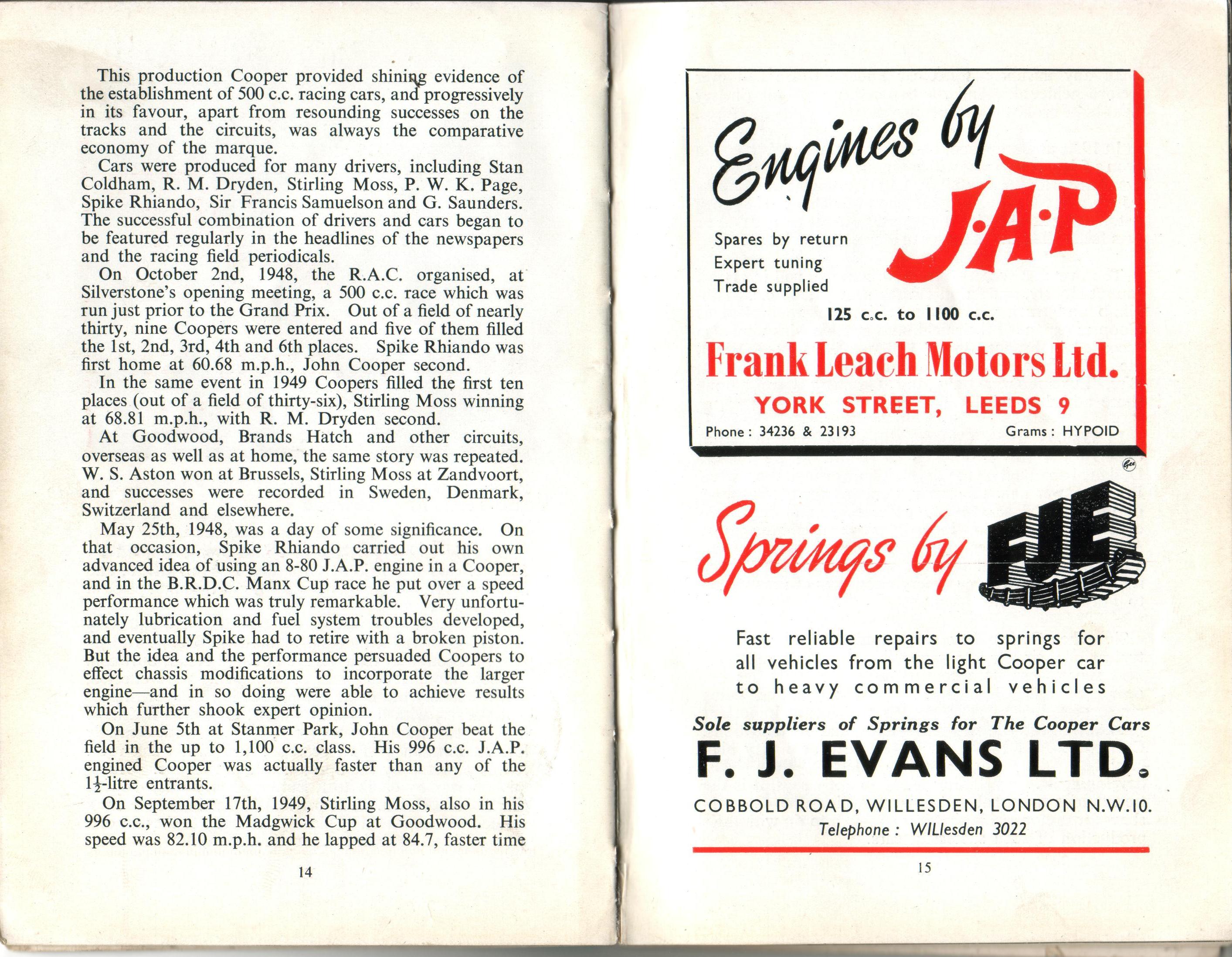
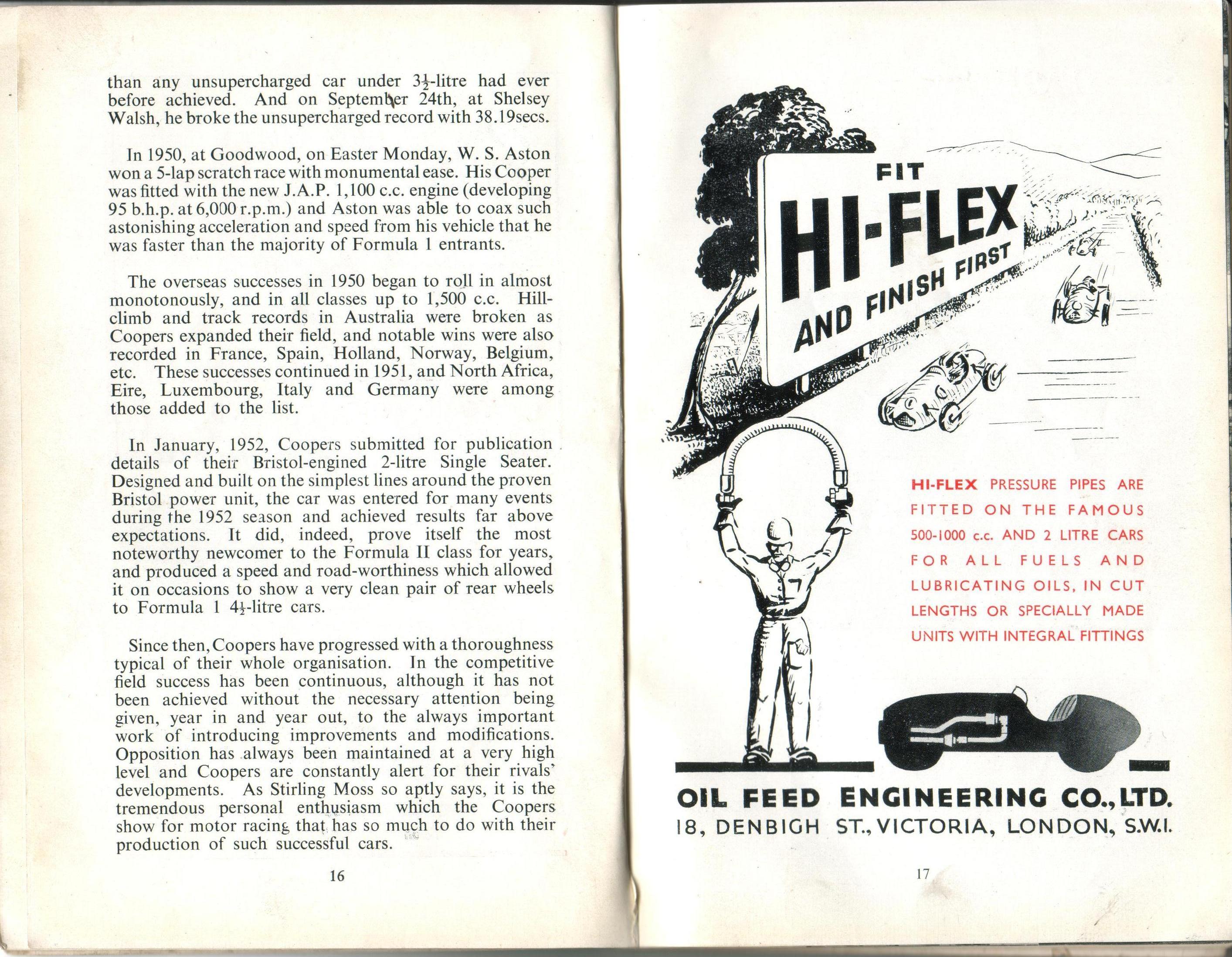
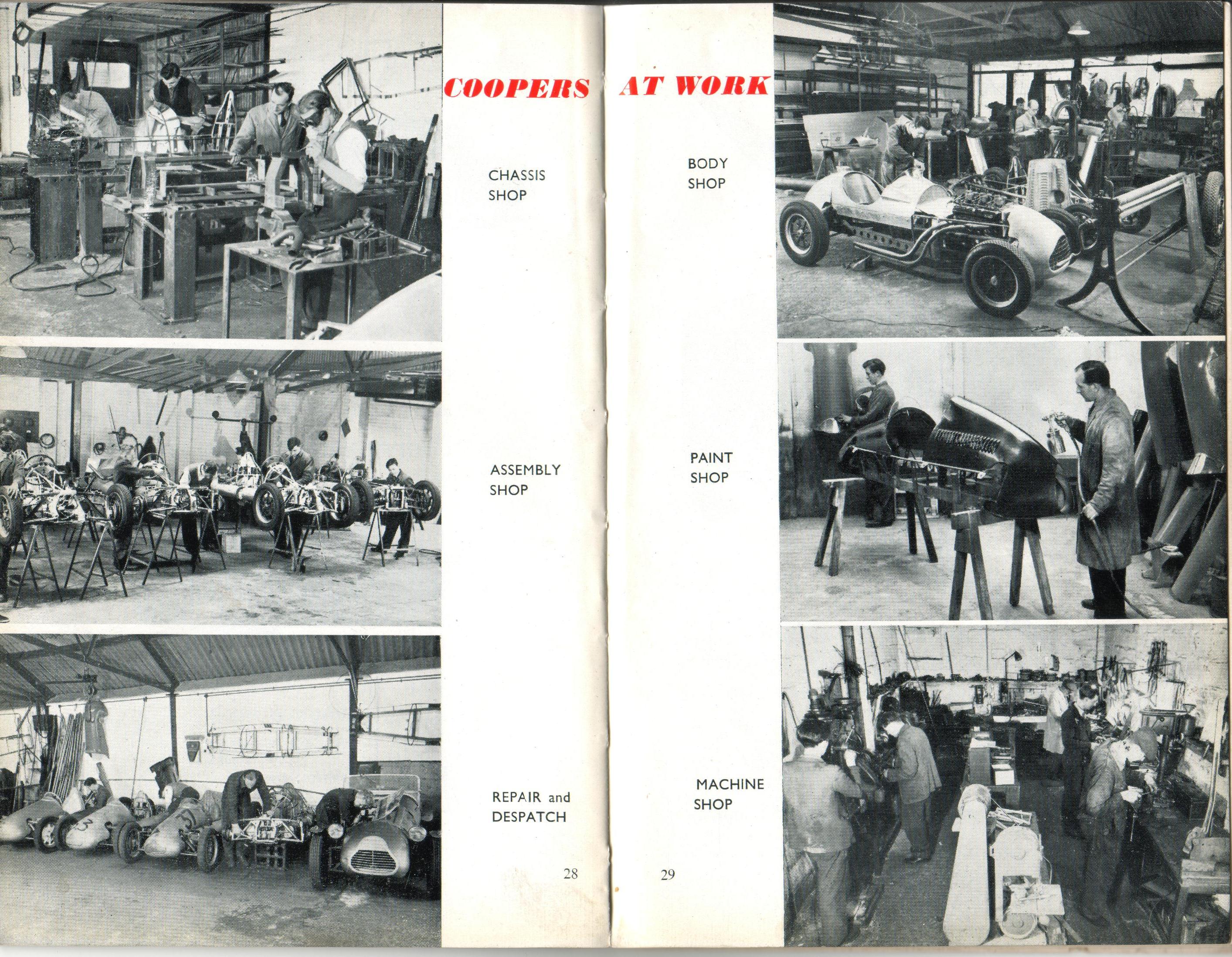
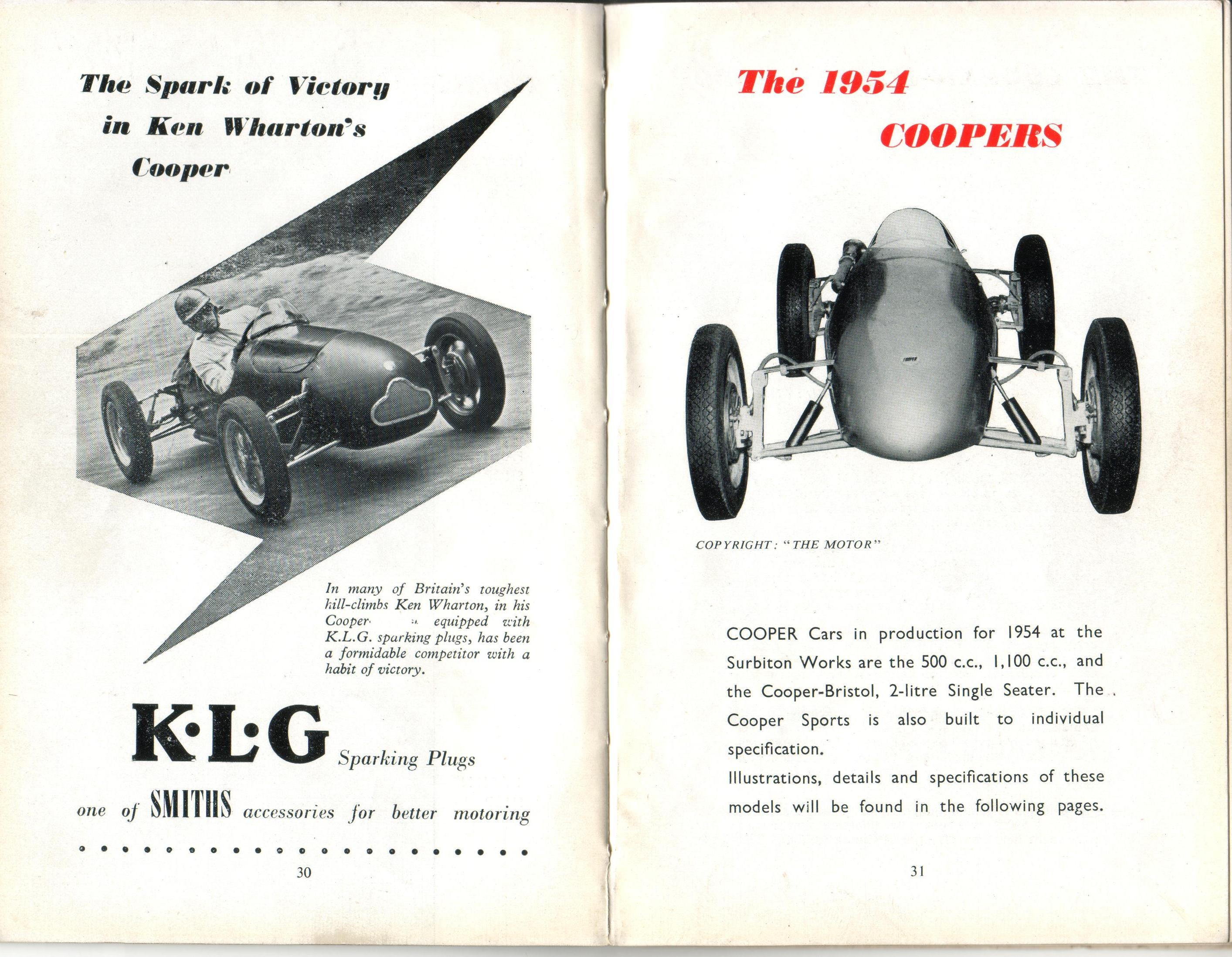
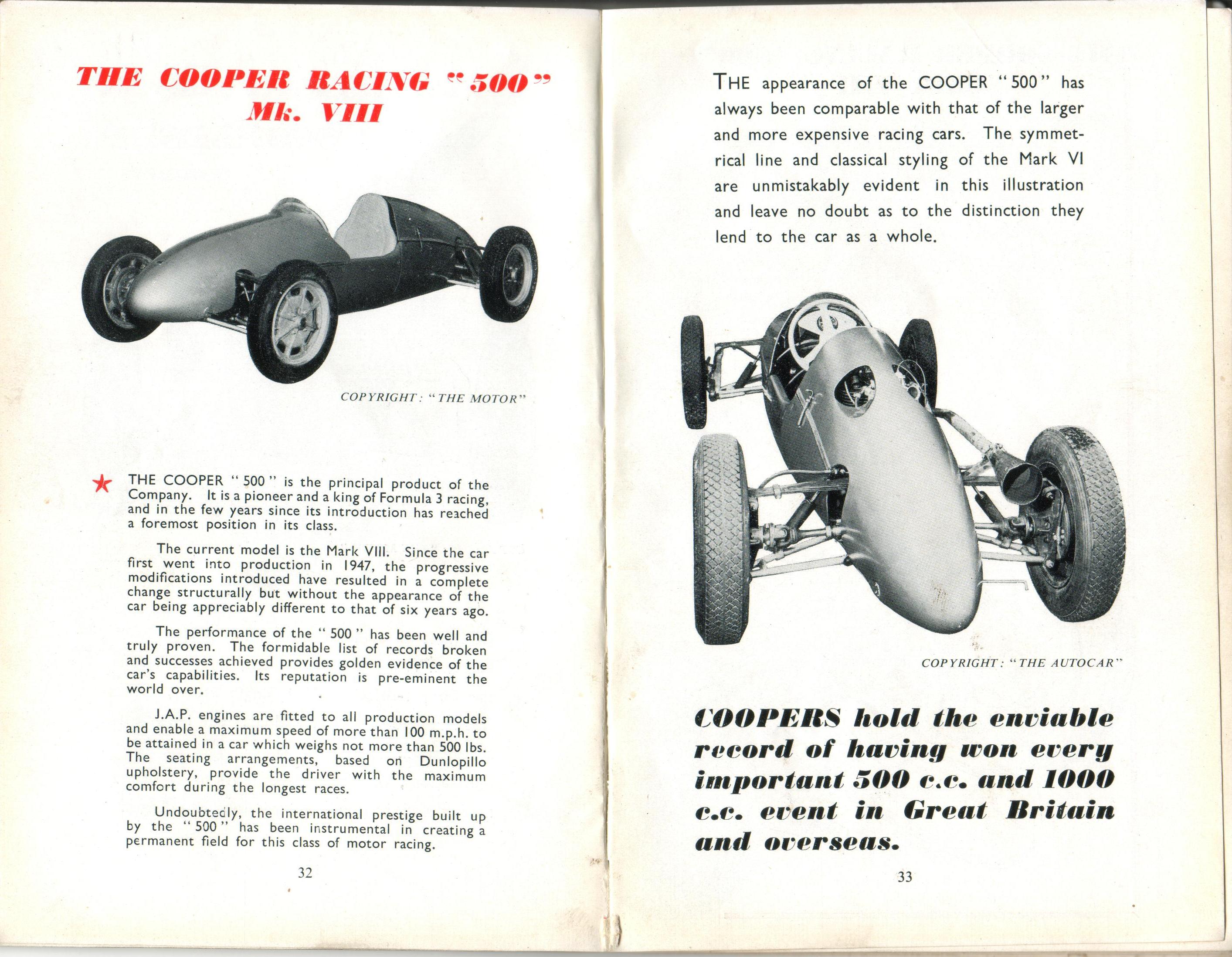
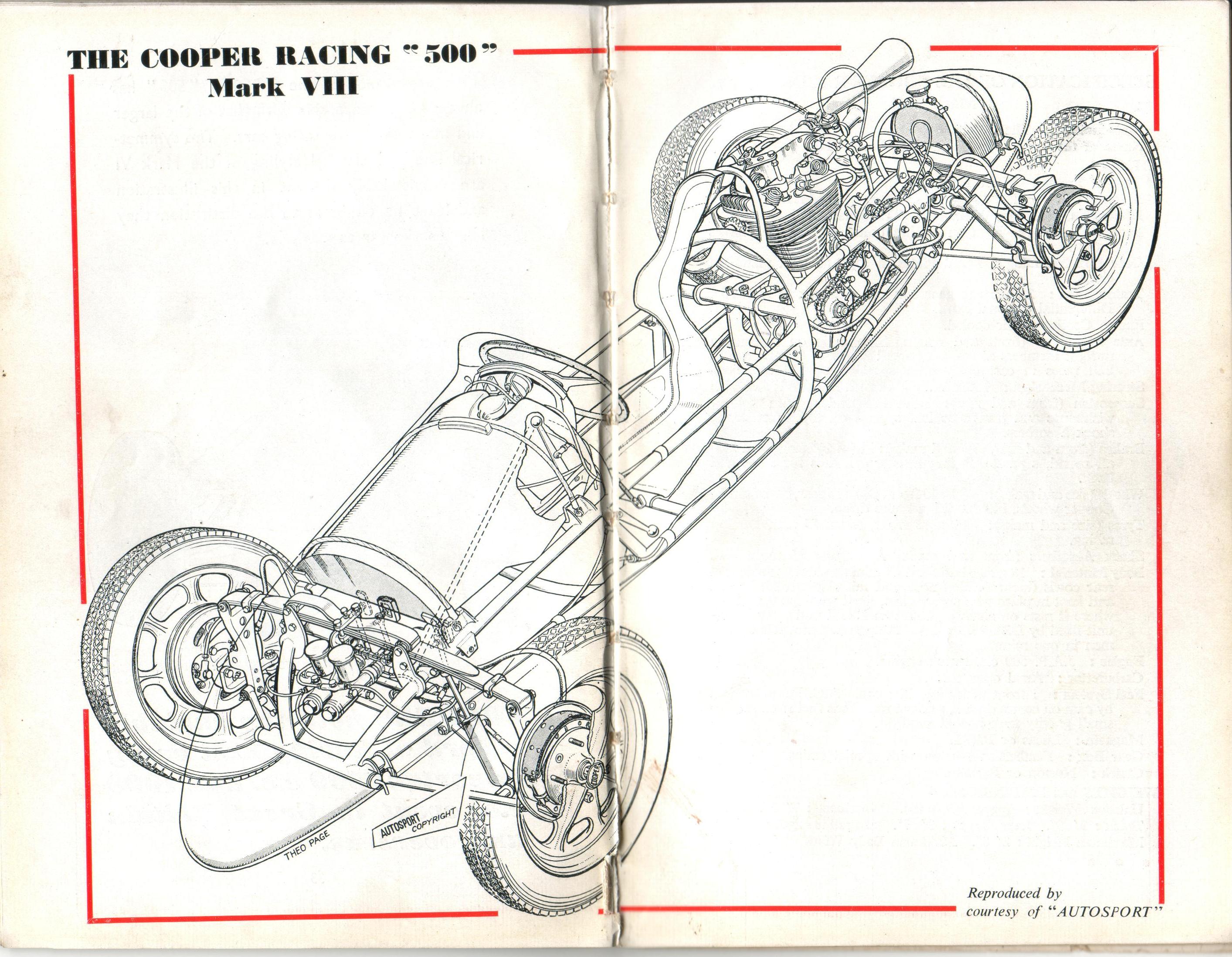
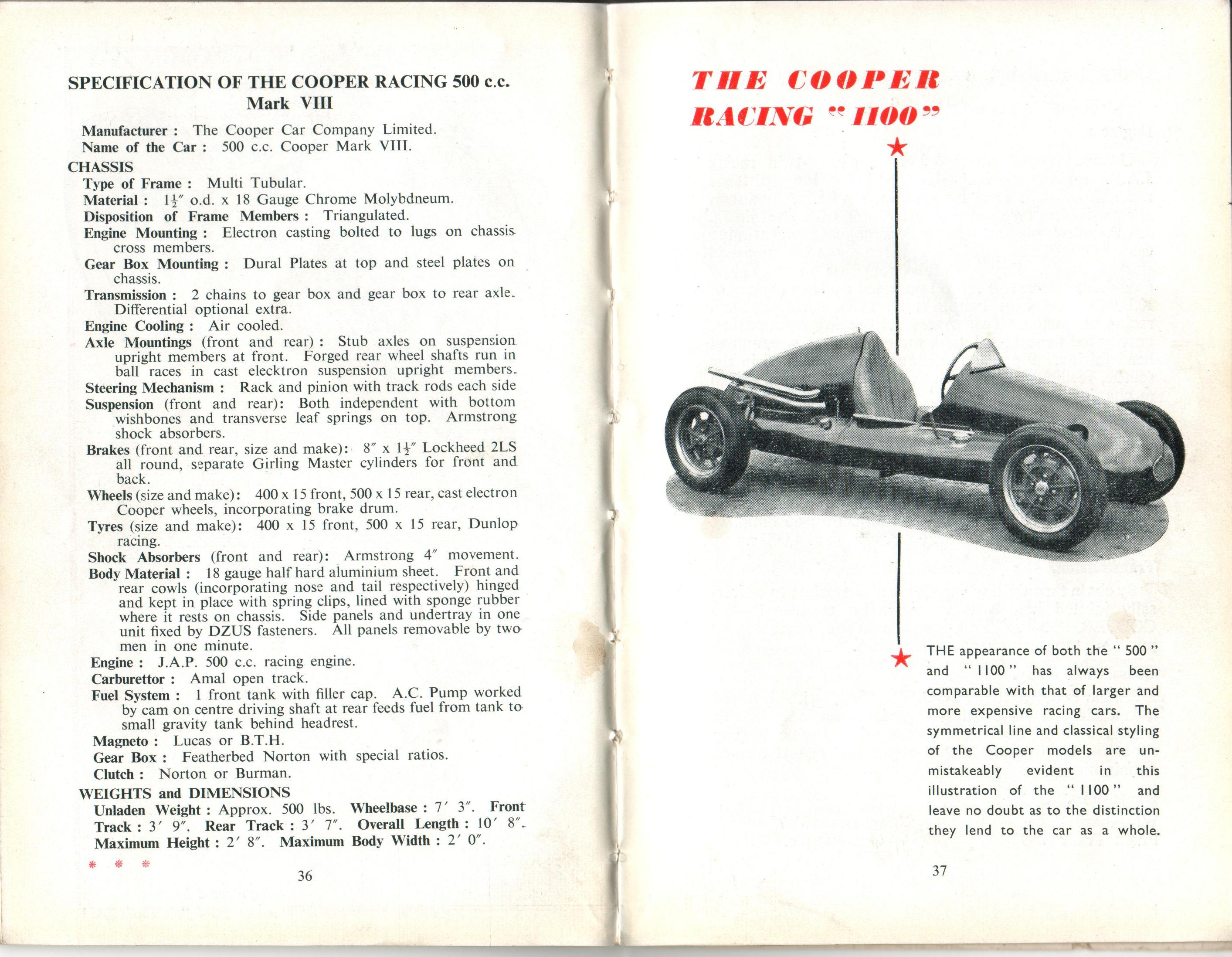
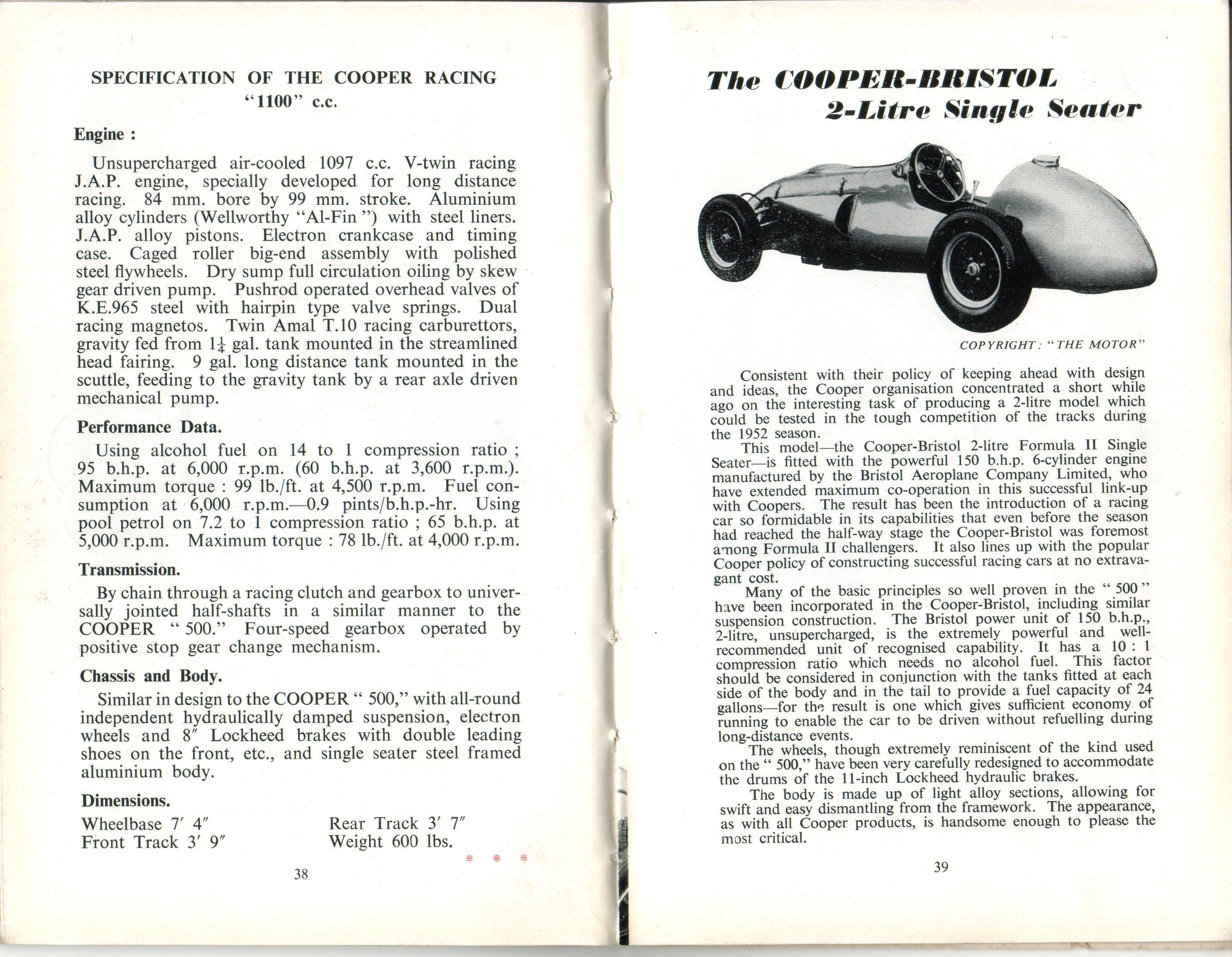 To finish here is a cutaway drawing of the Cooper Bristol; the rest of the handbook is a list of Cooper successes from 1946 to 1953.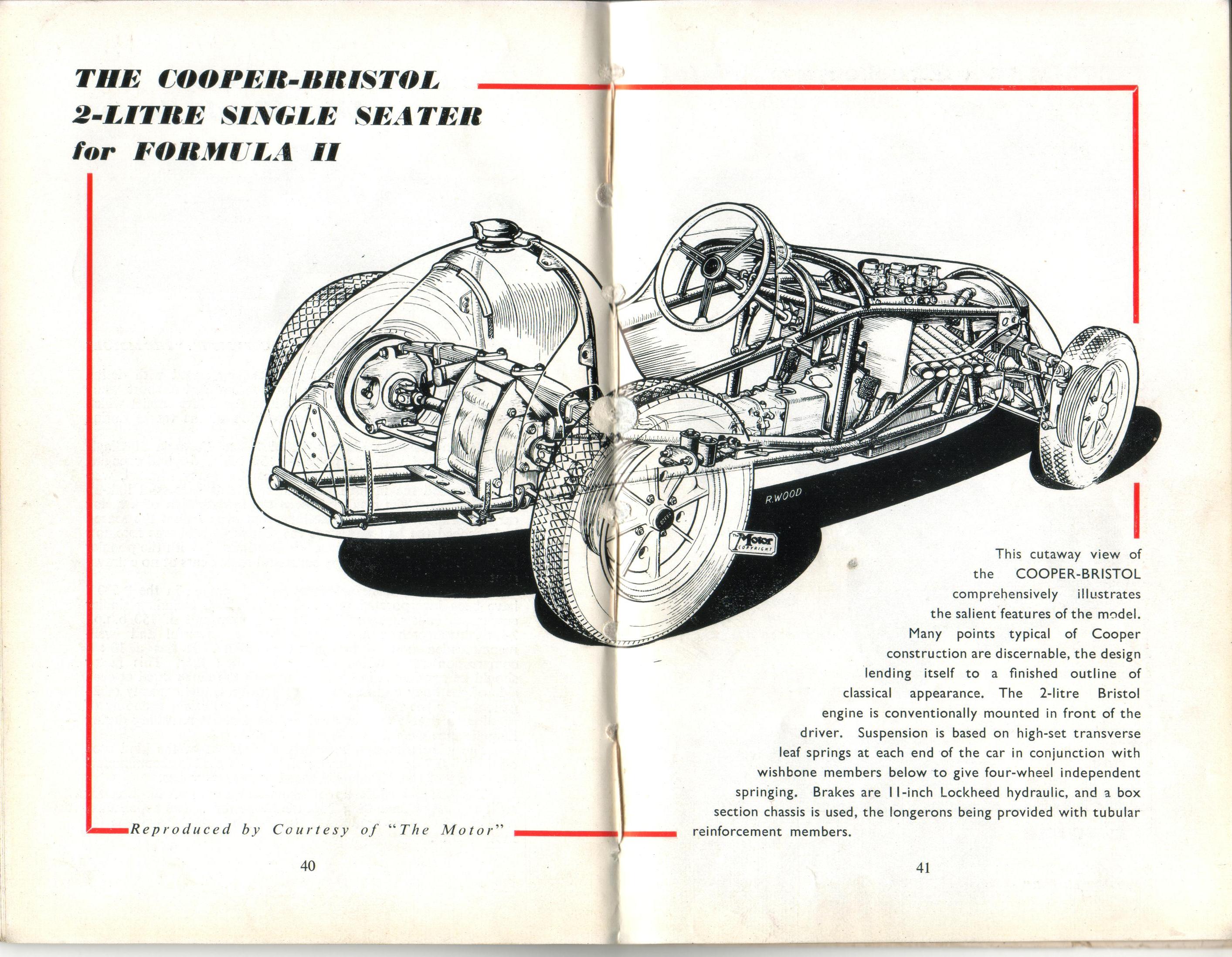
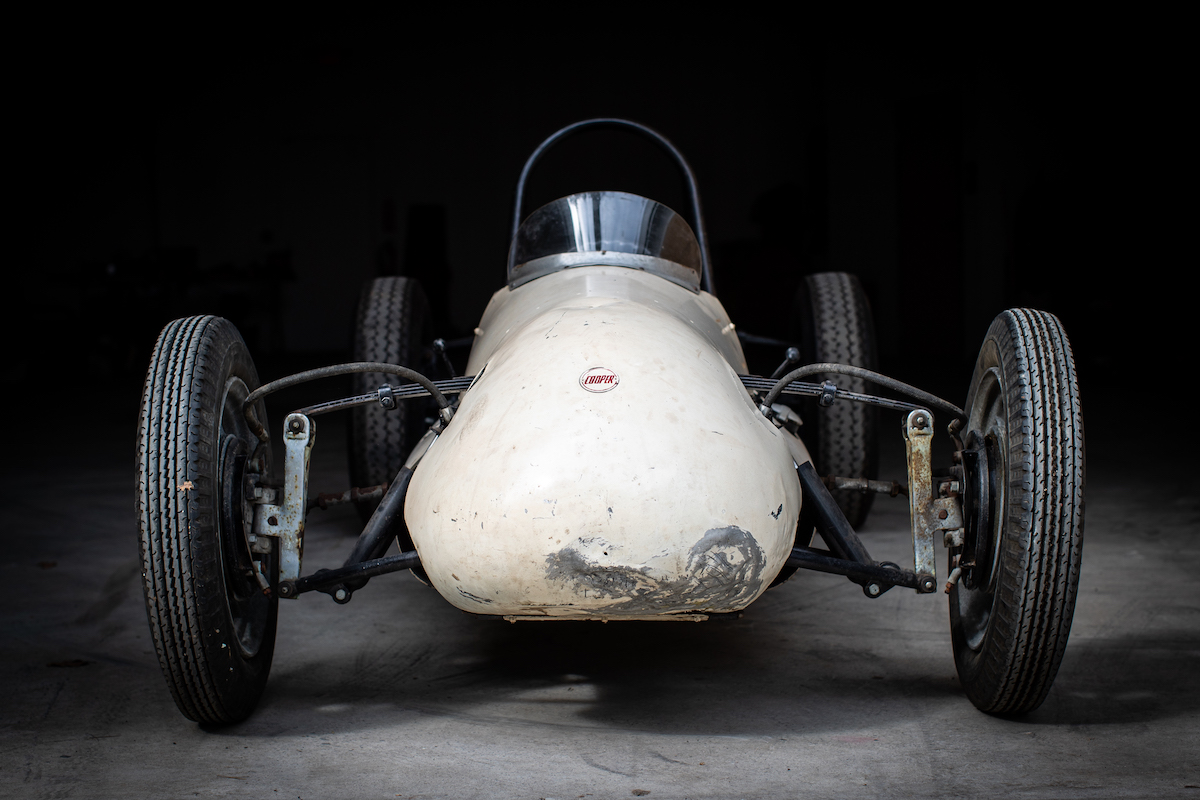


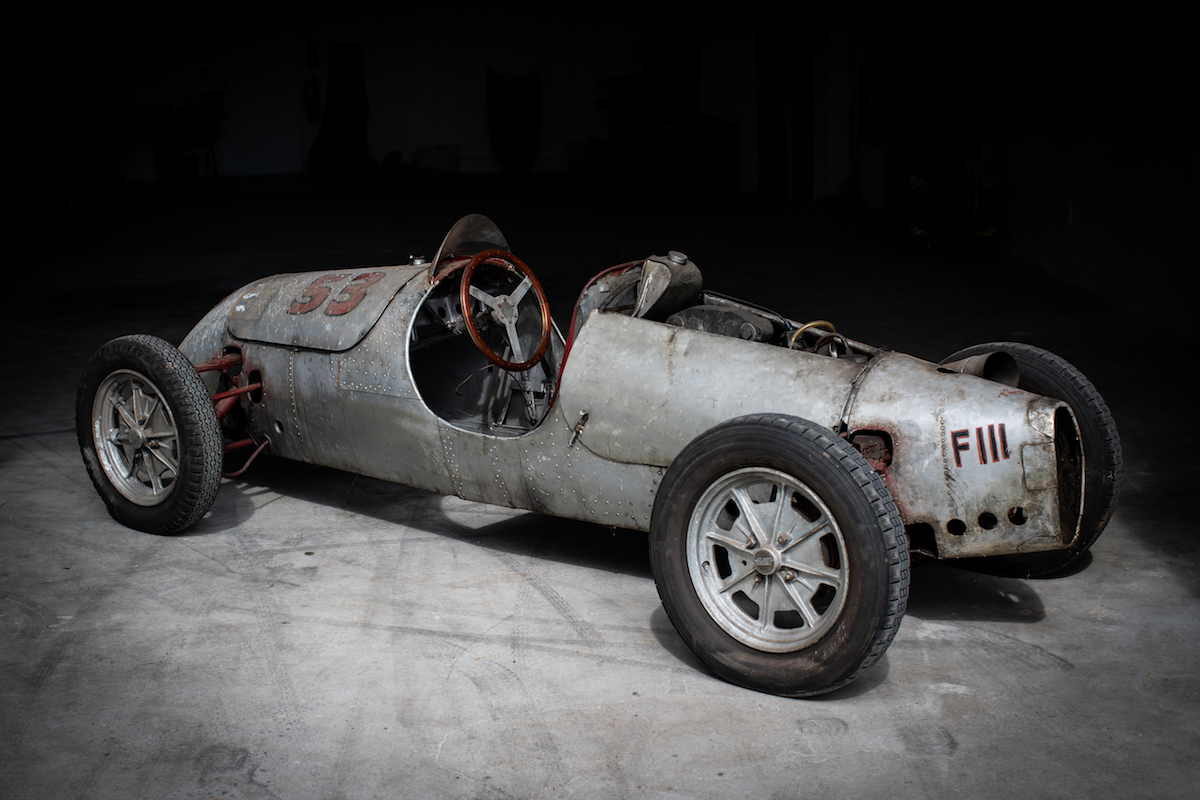
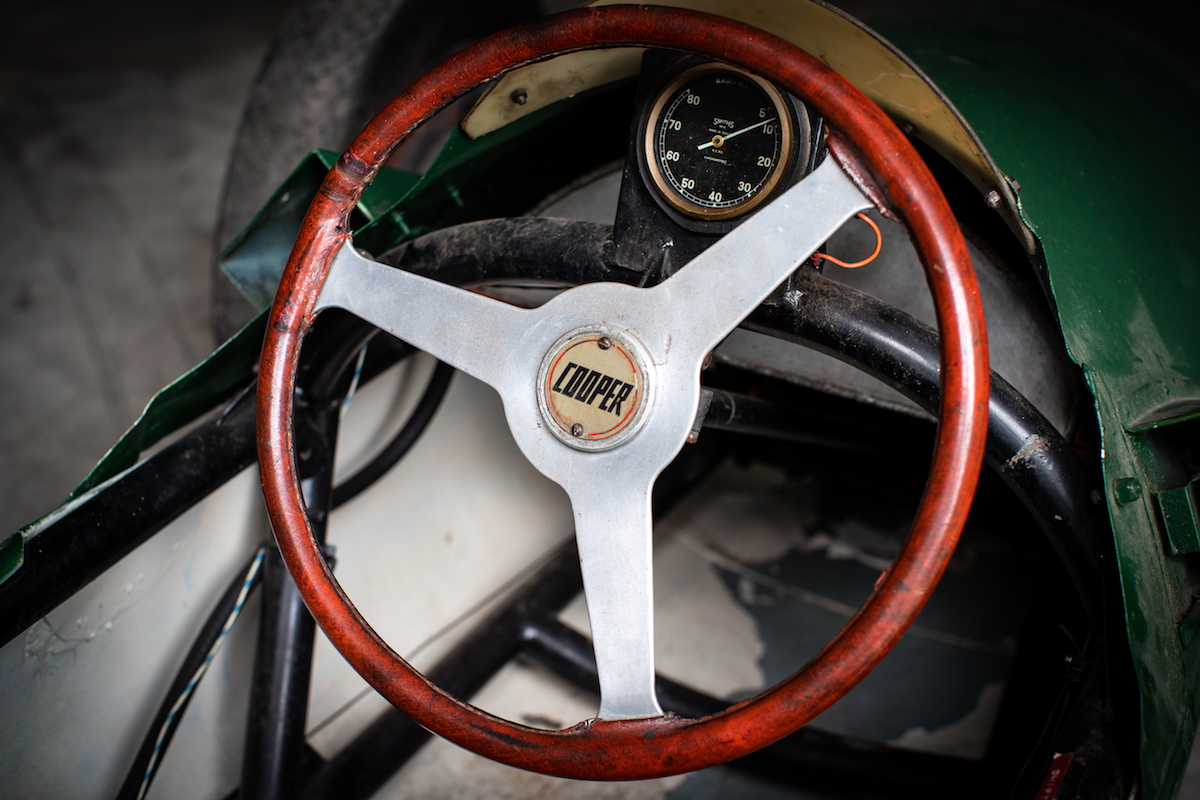
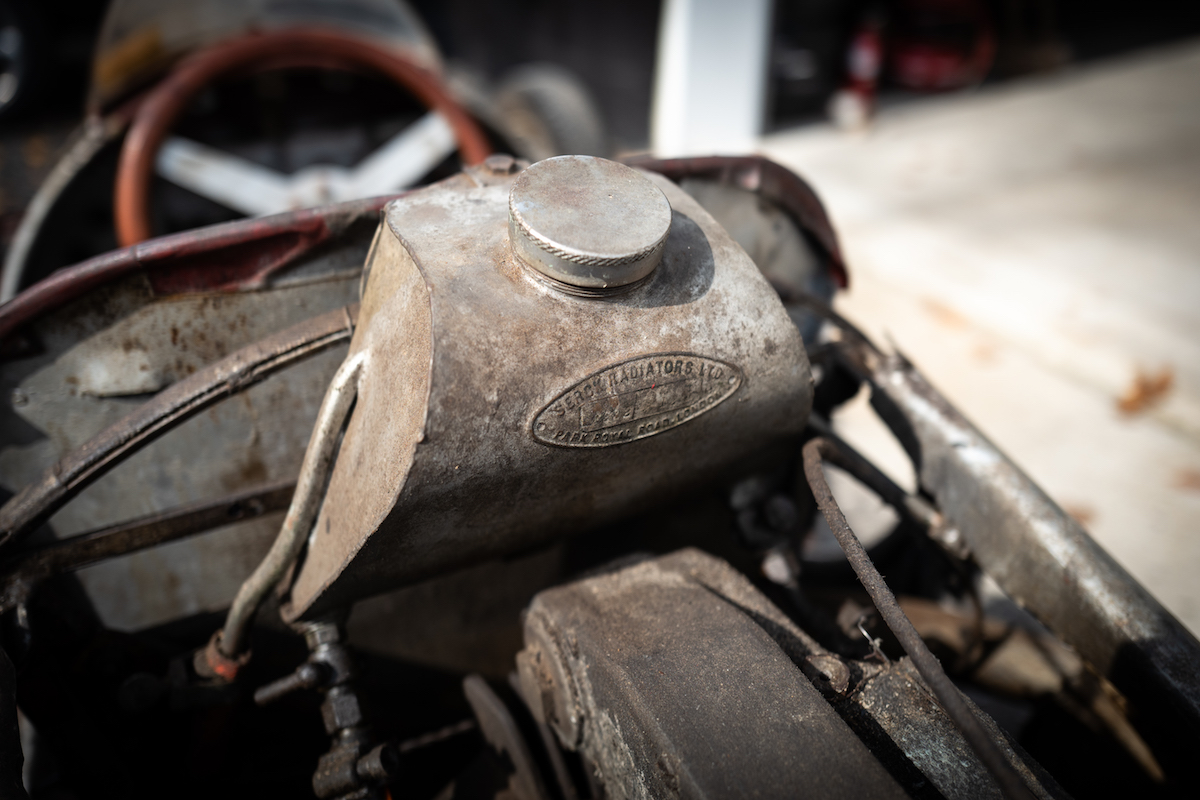
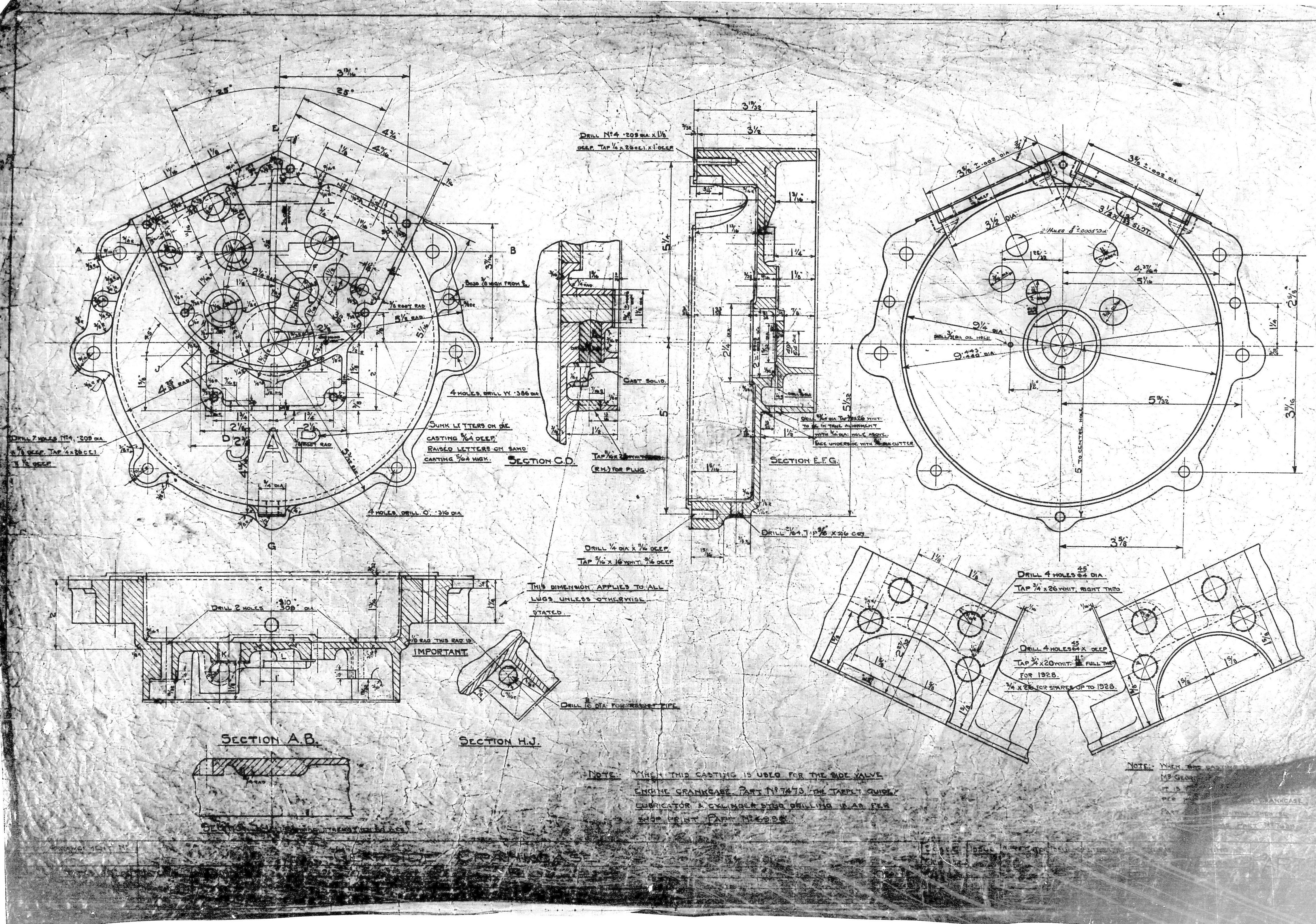 Above: Drawing 7405
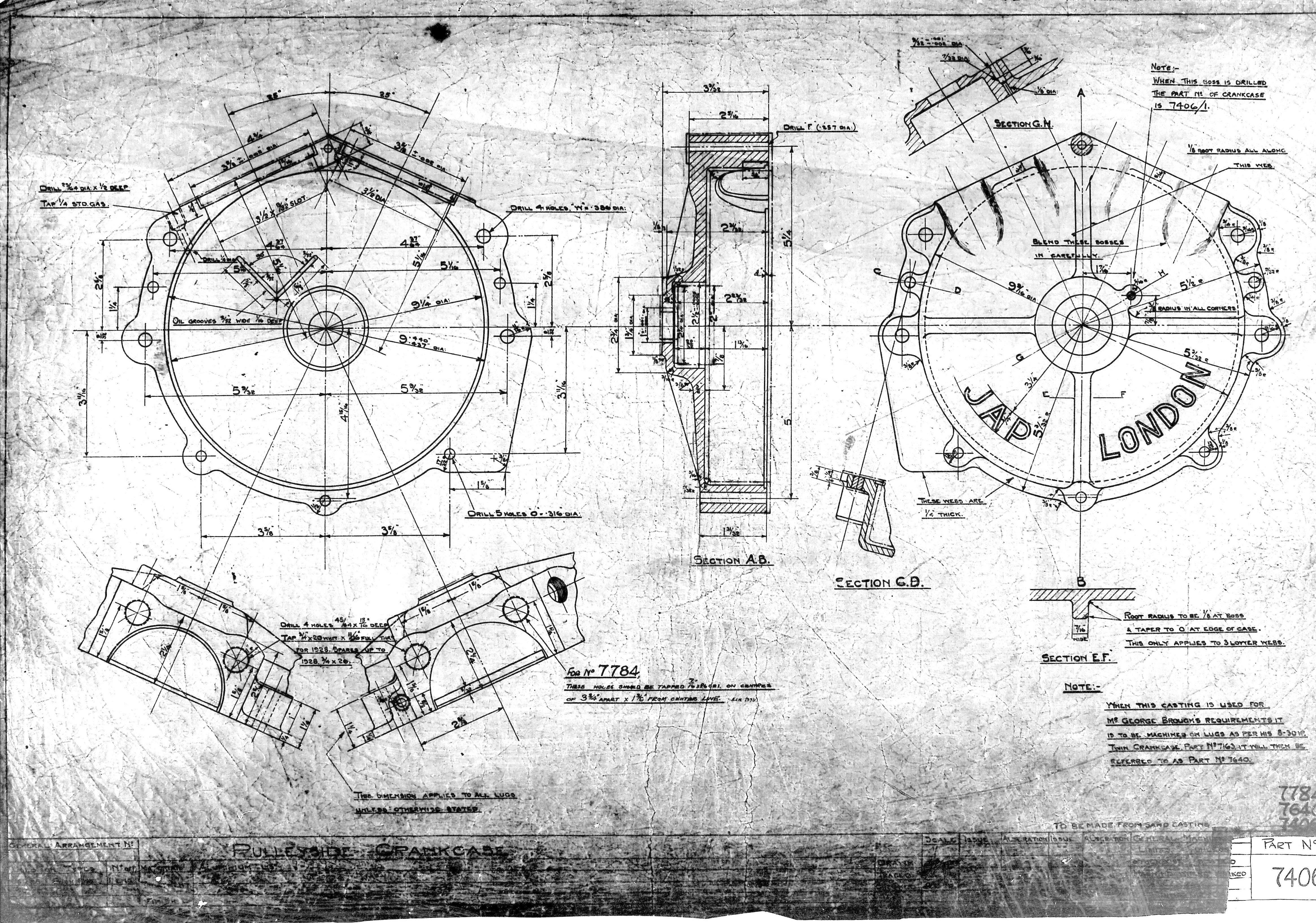 Above: Drawing 7406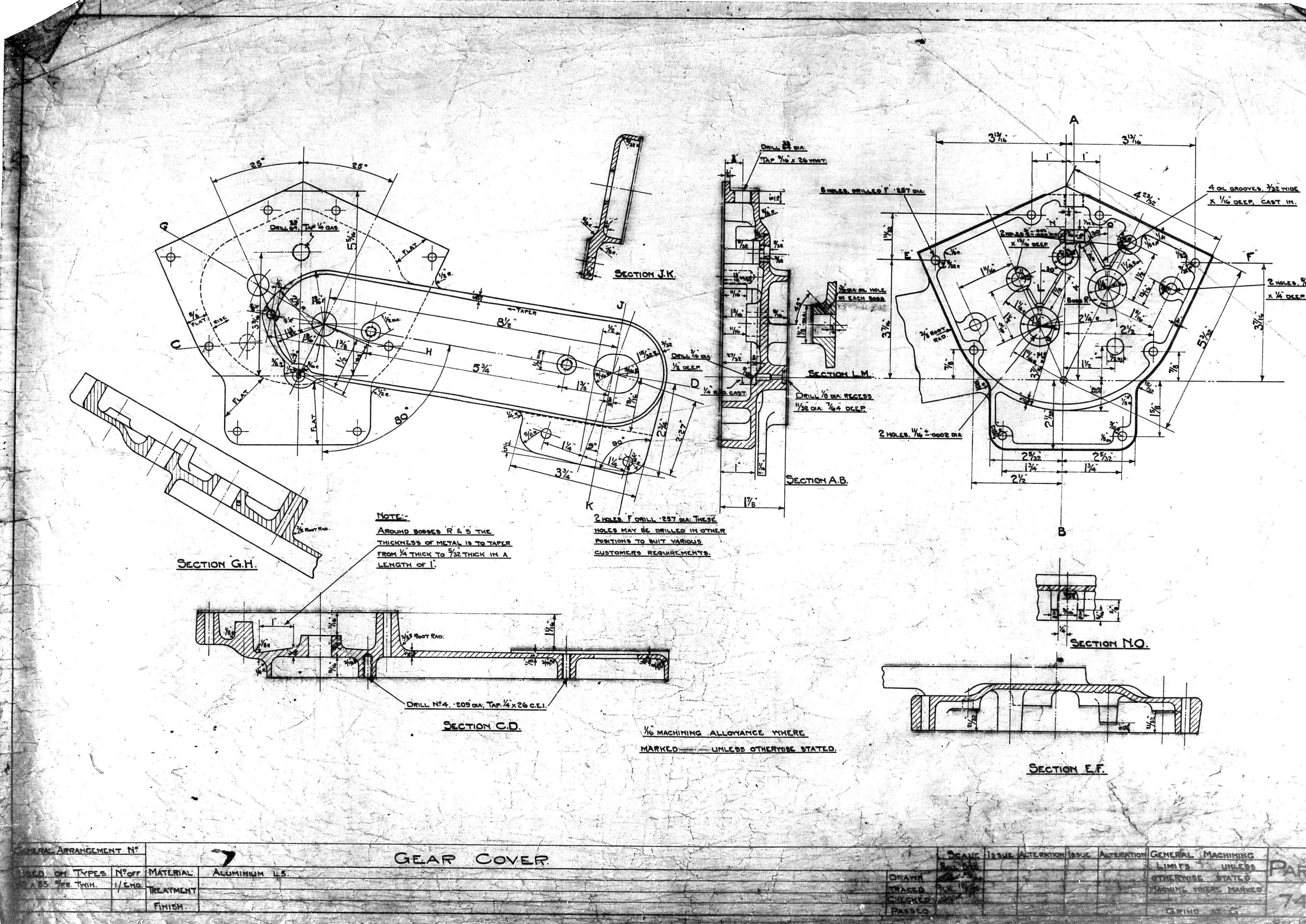
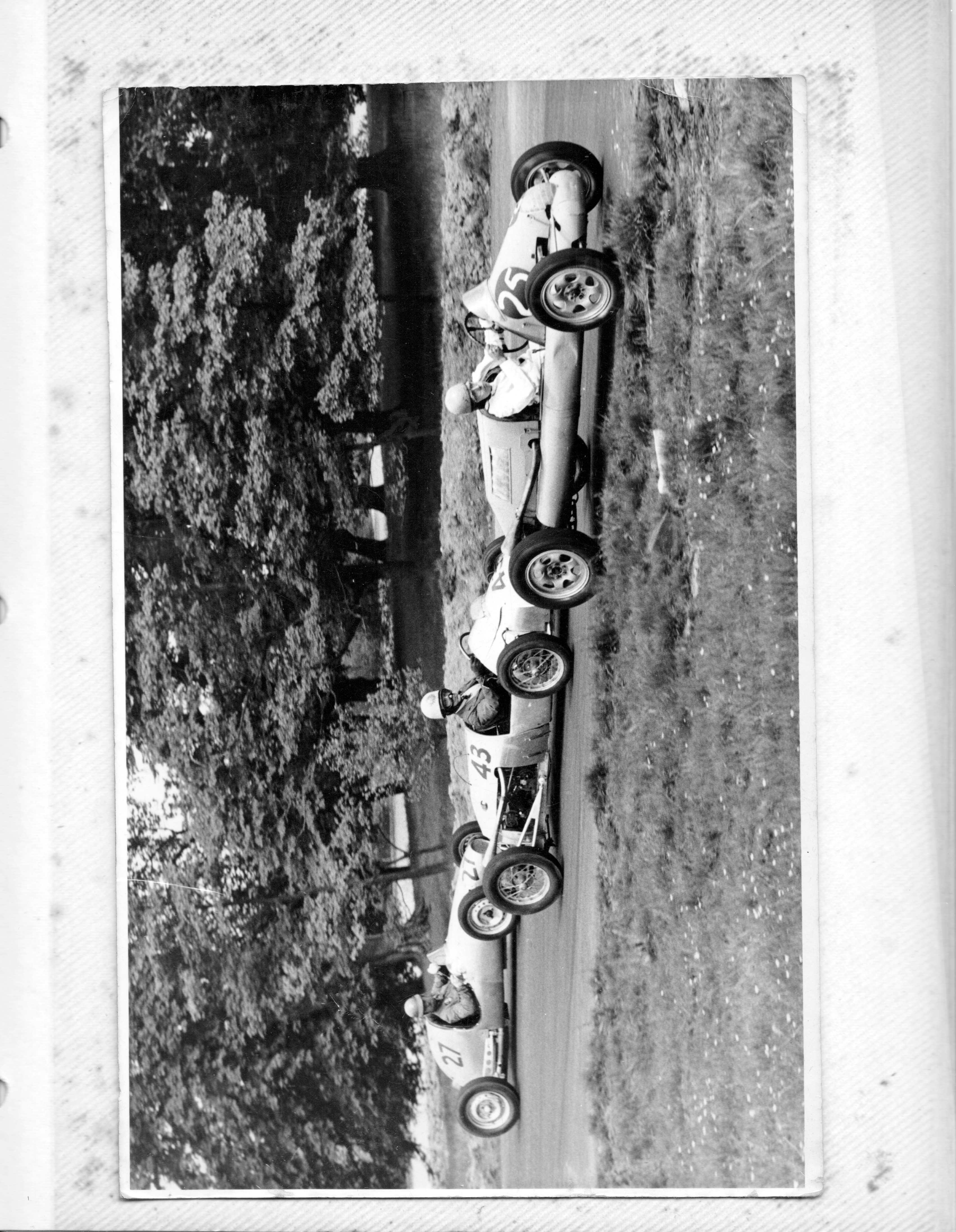
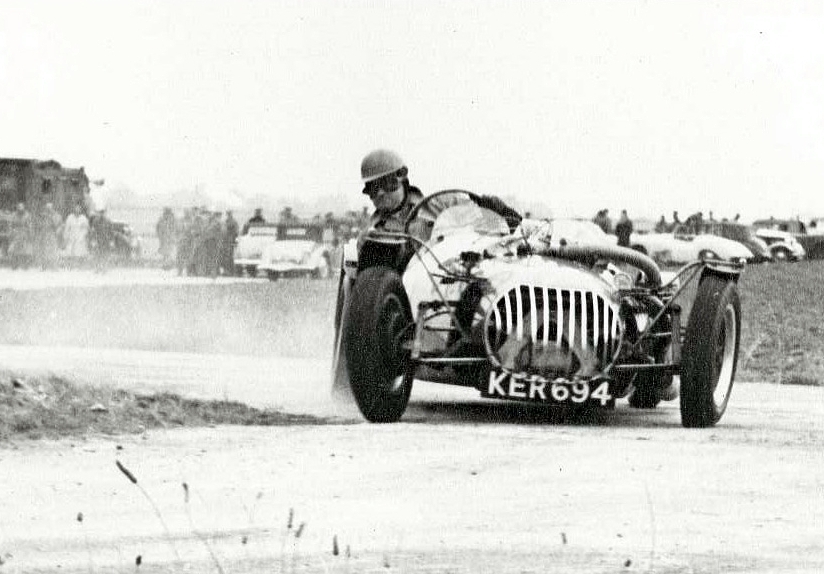
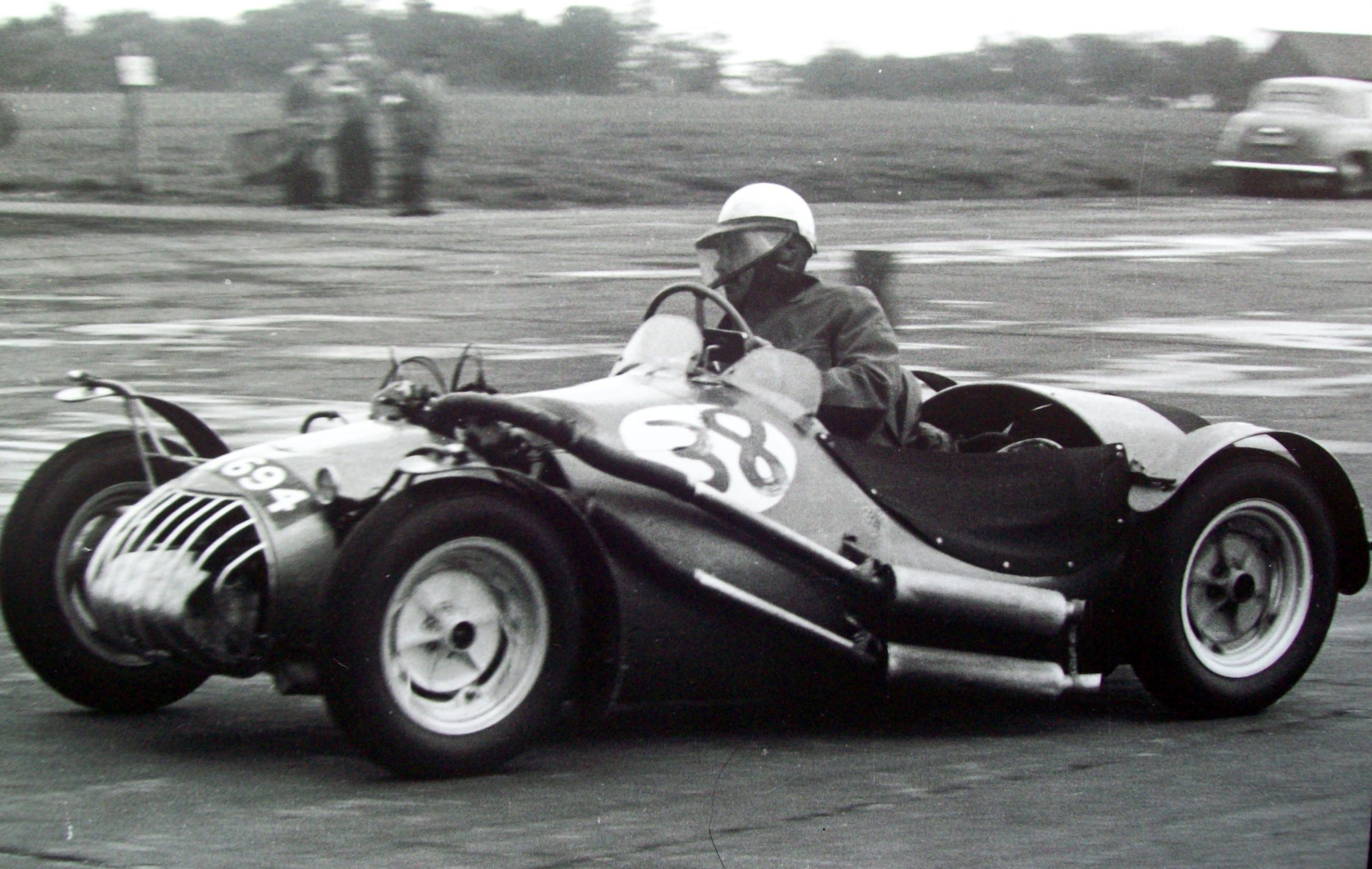
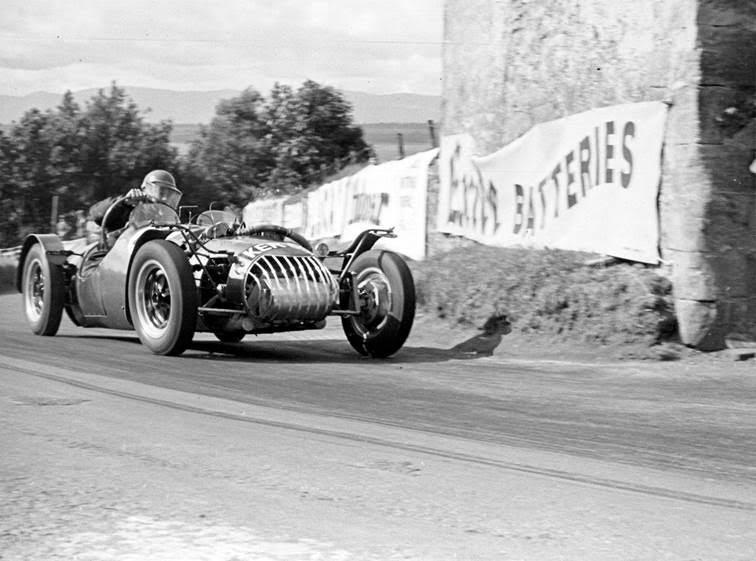
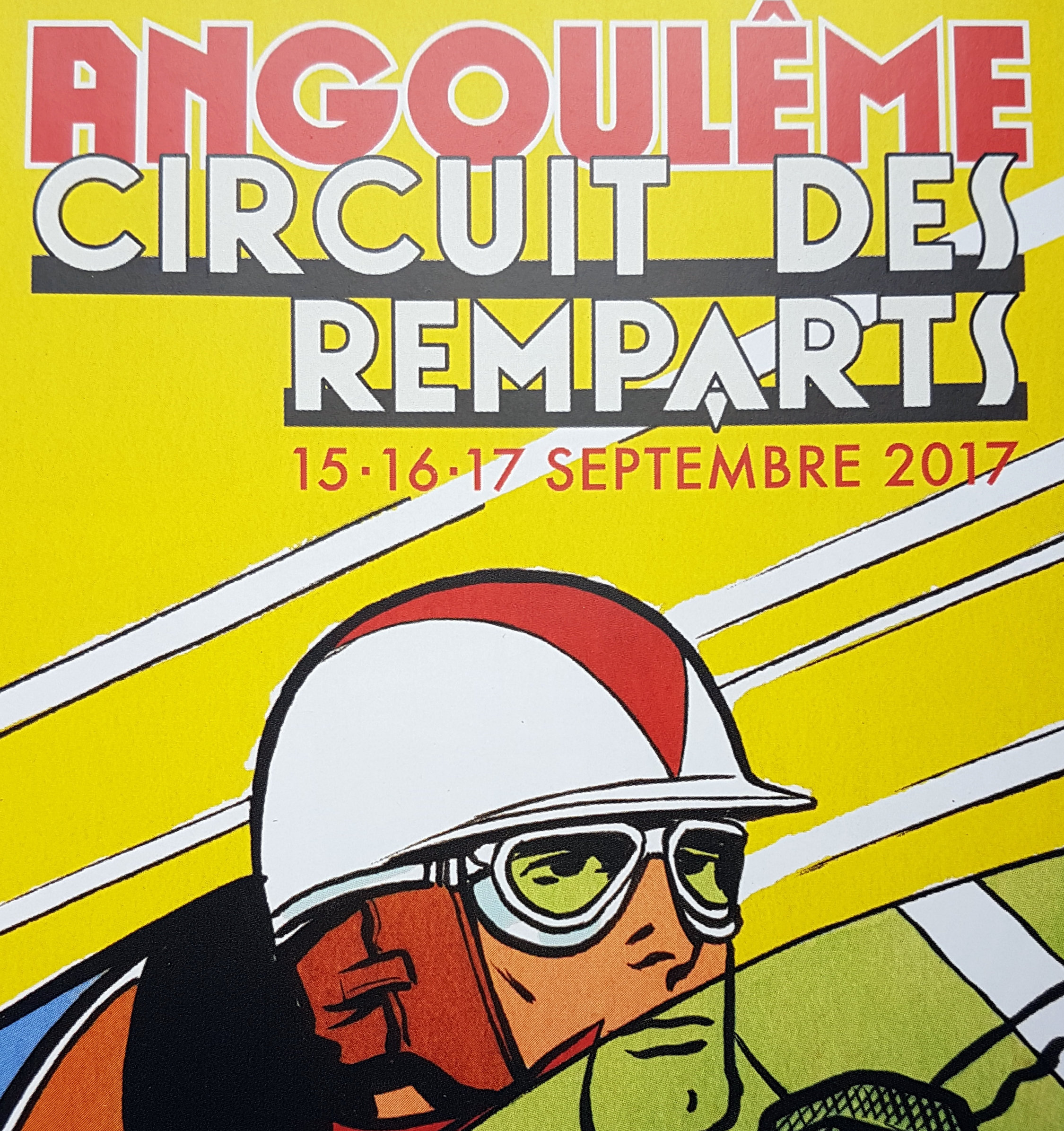
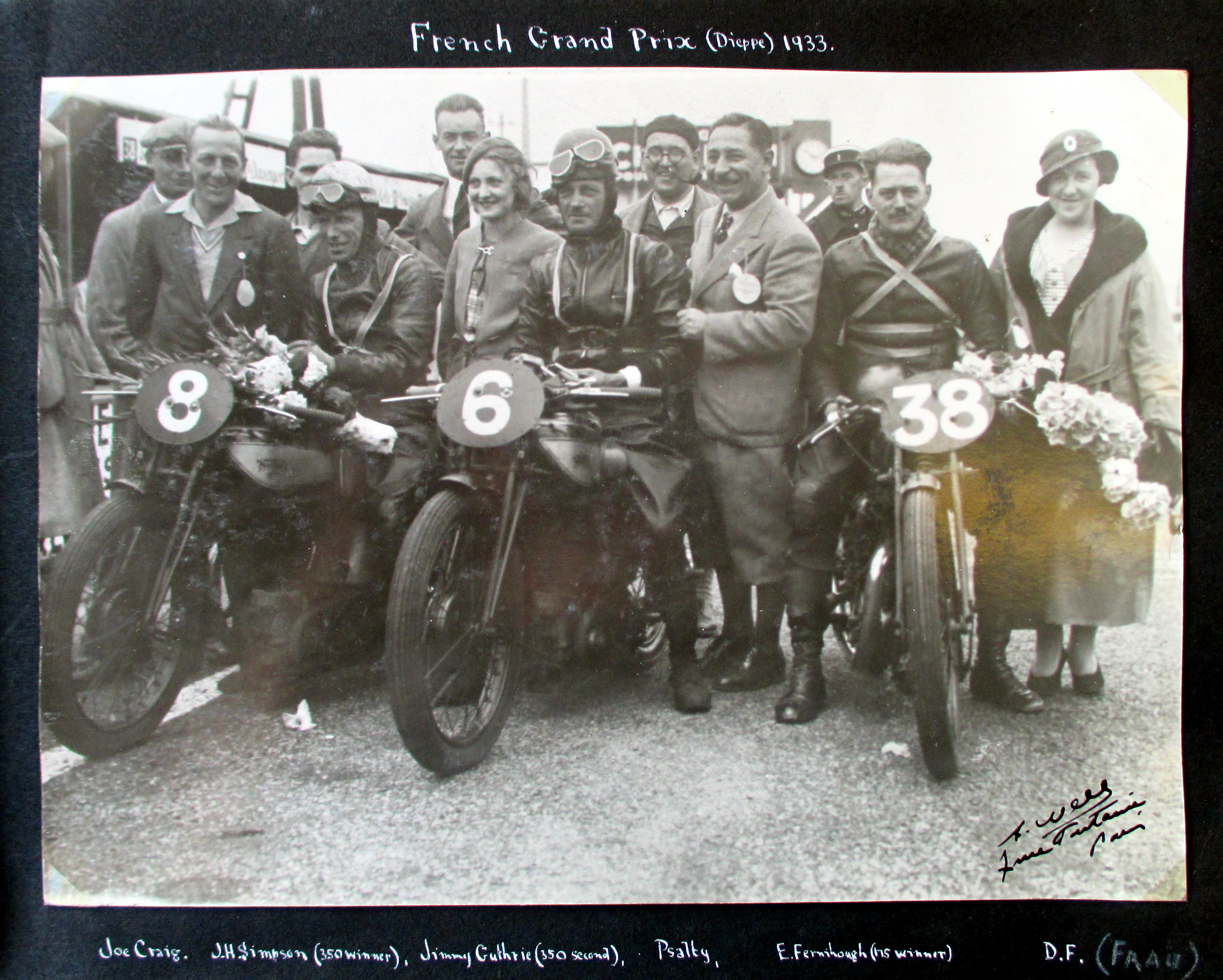
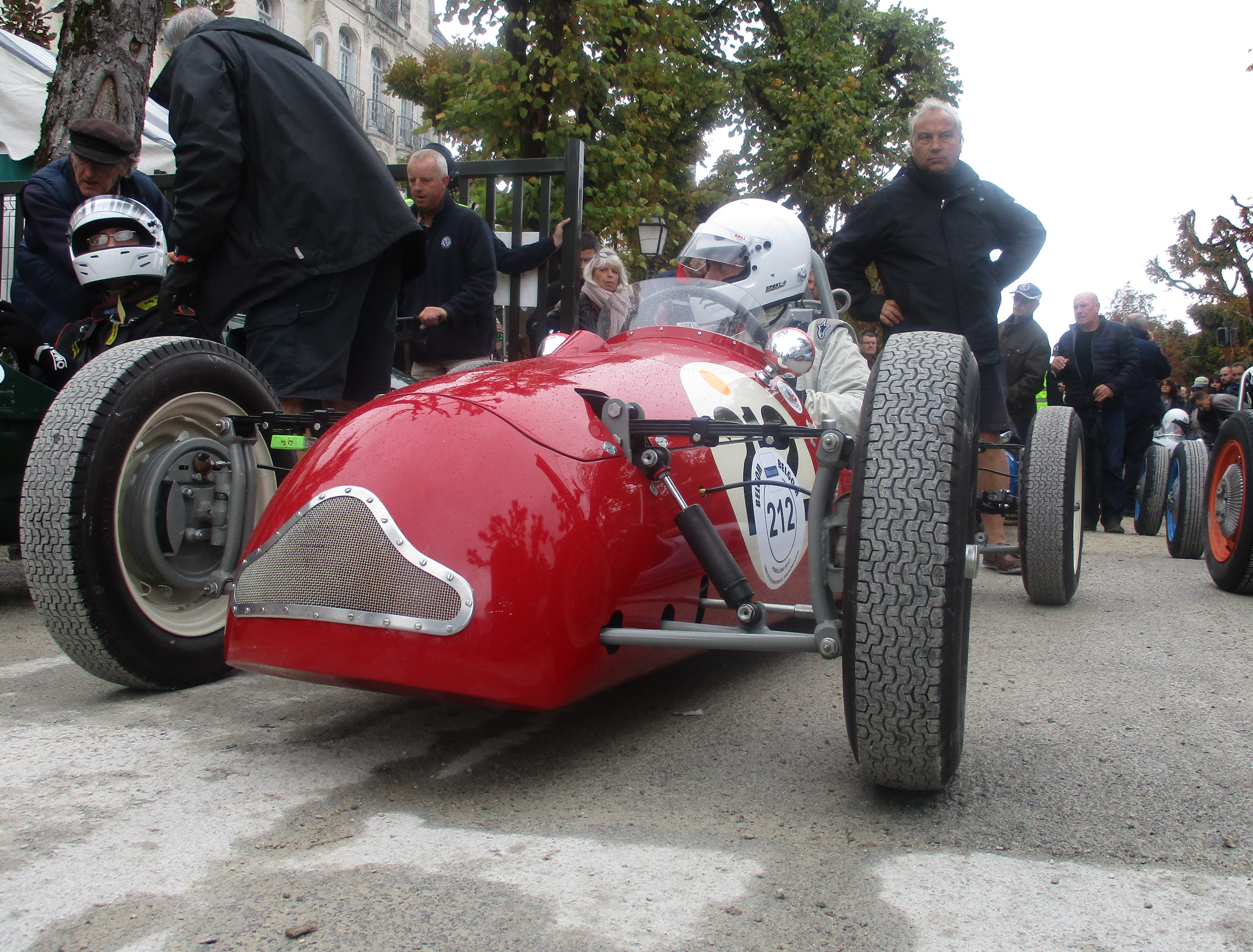
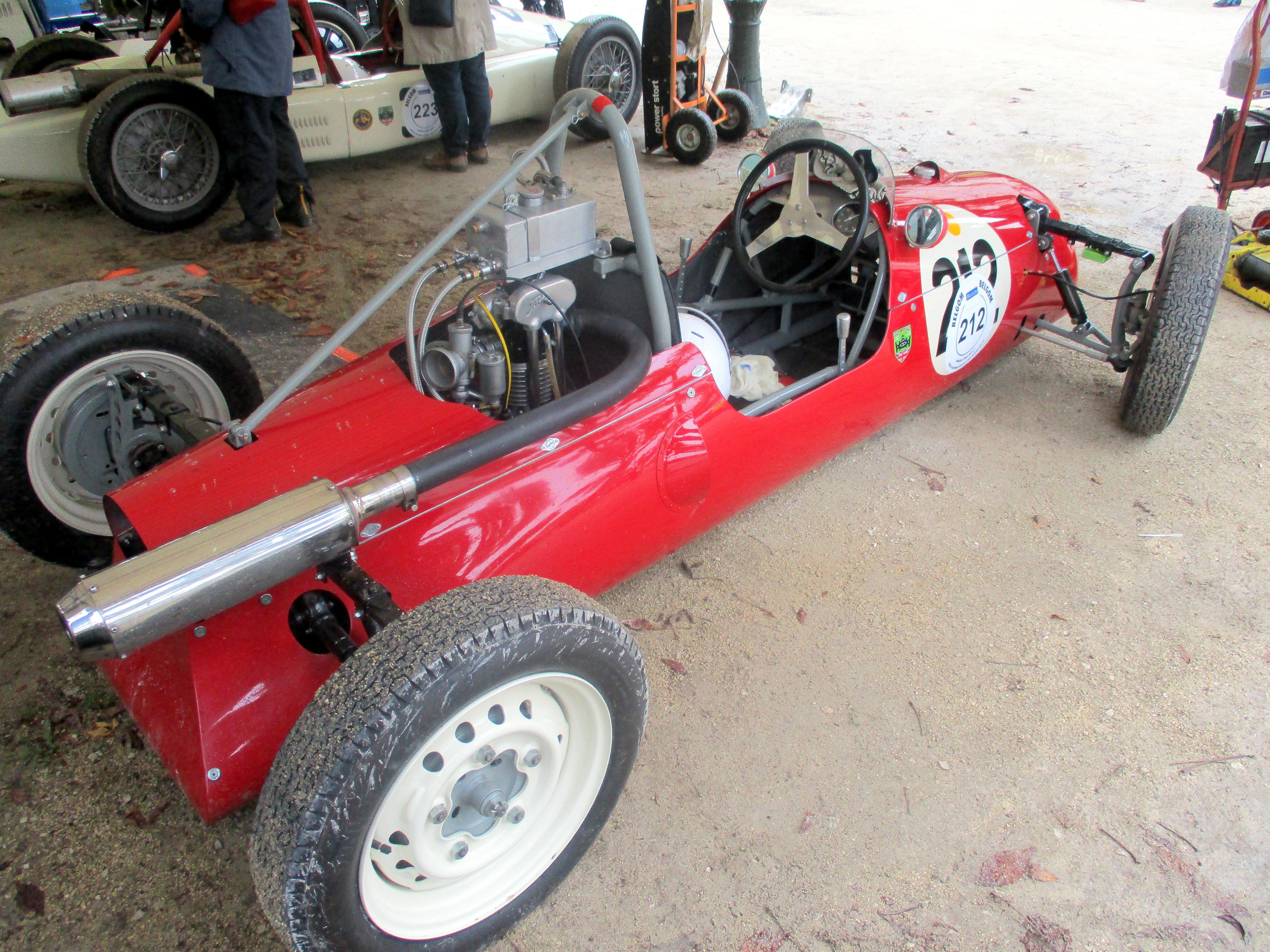
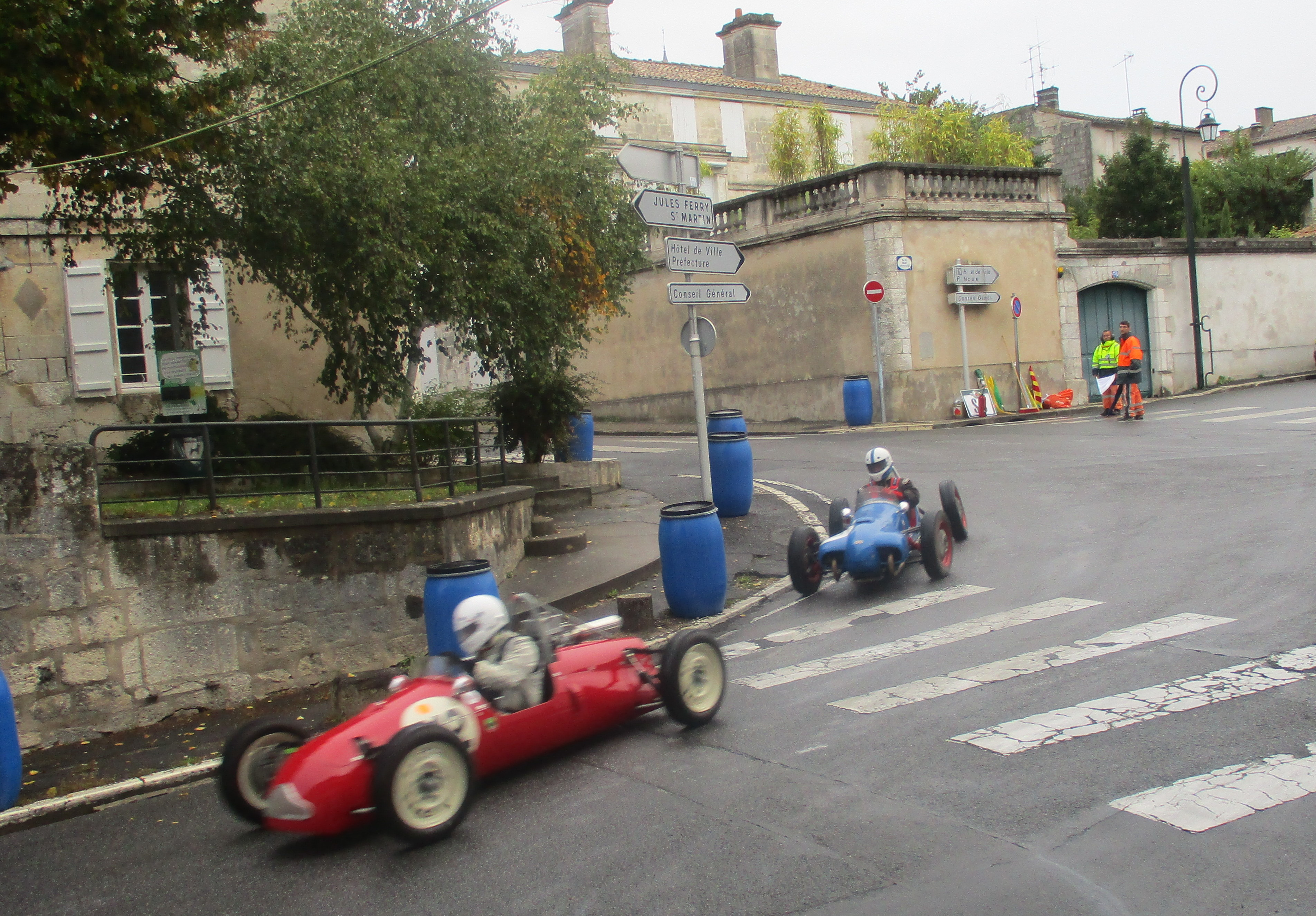
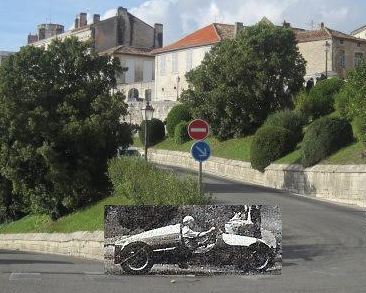
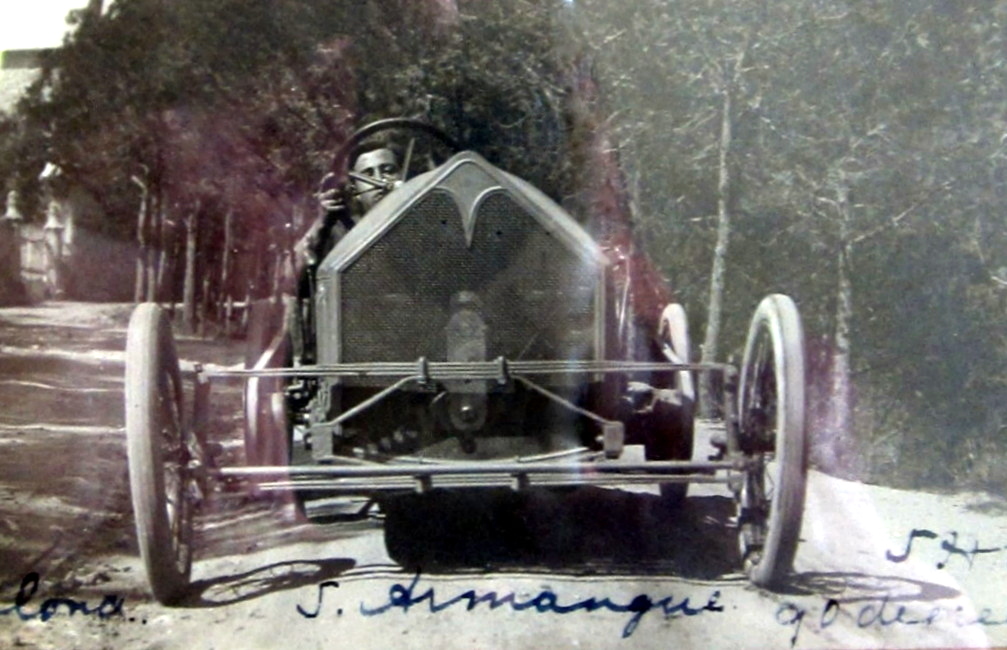
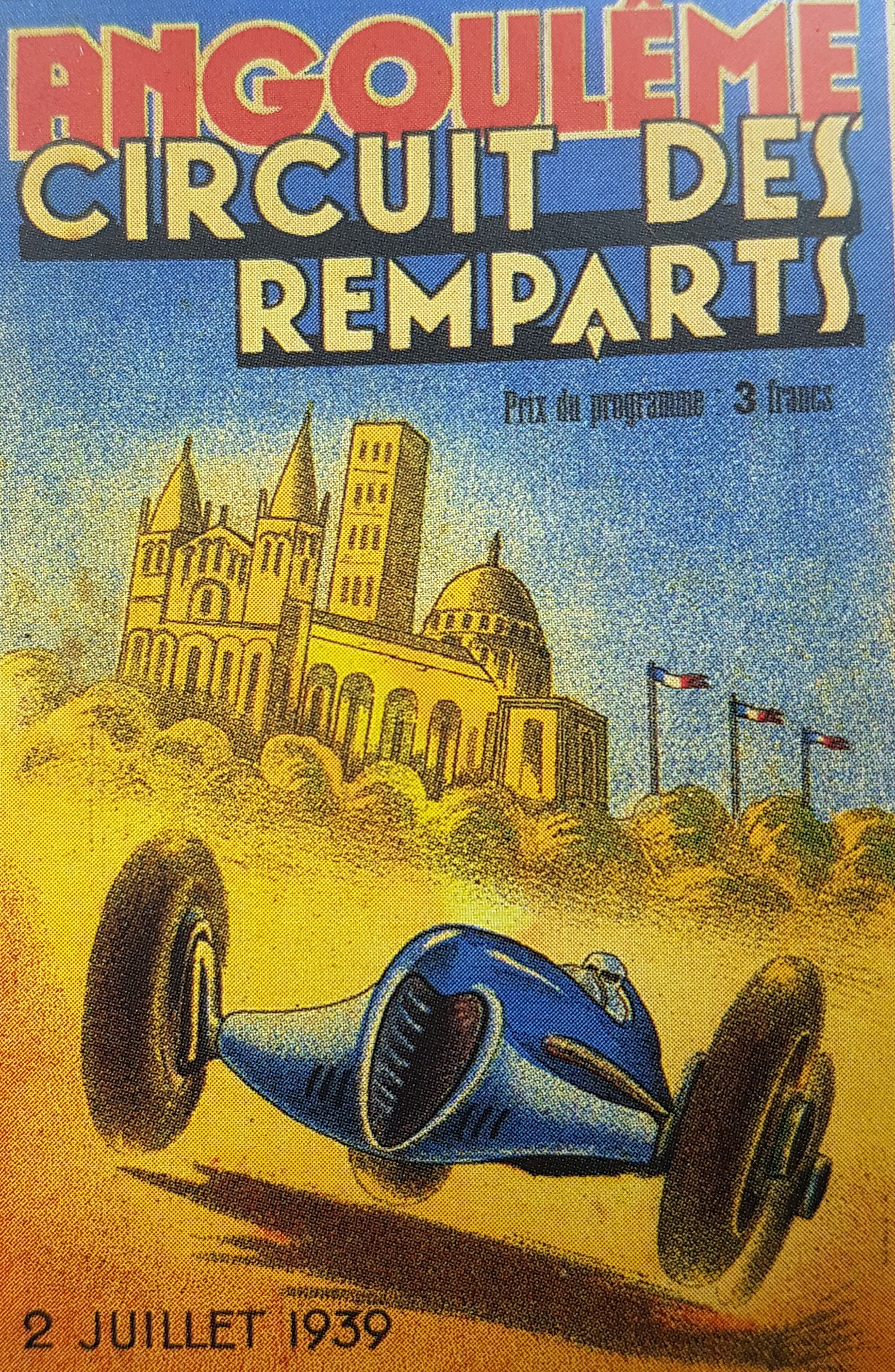 for grand prix cars was won by the great French hero Raymond Sommer in an Alfa Romeo 308. Racing recommenced in 1947 and continued until the Le Mans tragedy year of 1955. In 1978 the meeting was revived as a historic event and has continued ever since.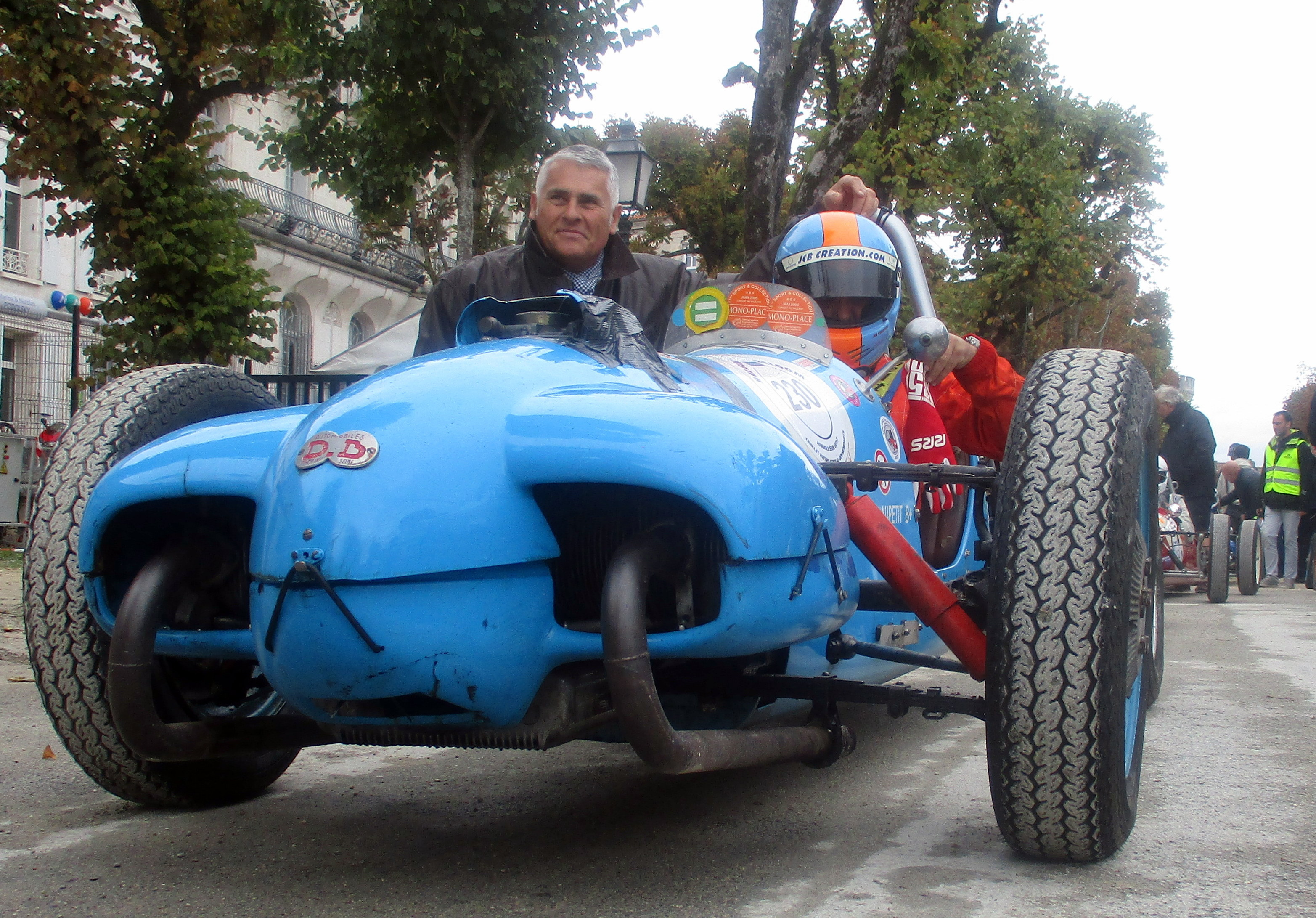
 RECENT POSTS