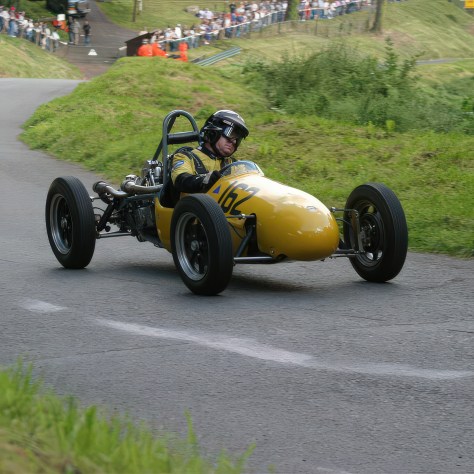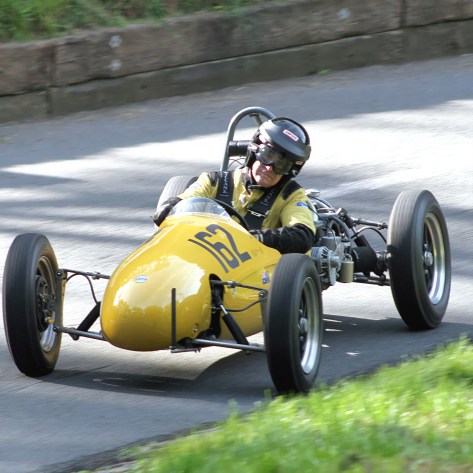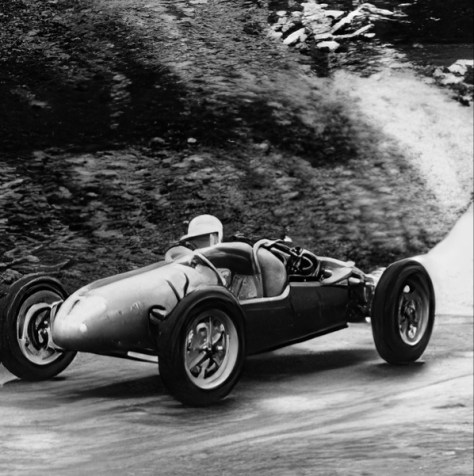
Category Archives: Uncategorized

A BRIEF HISTORY OF THE JAP SPEEDWAY AND CAR ENGINE

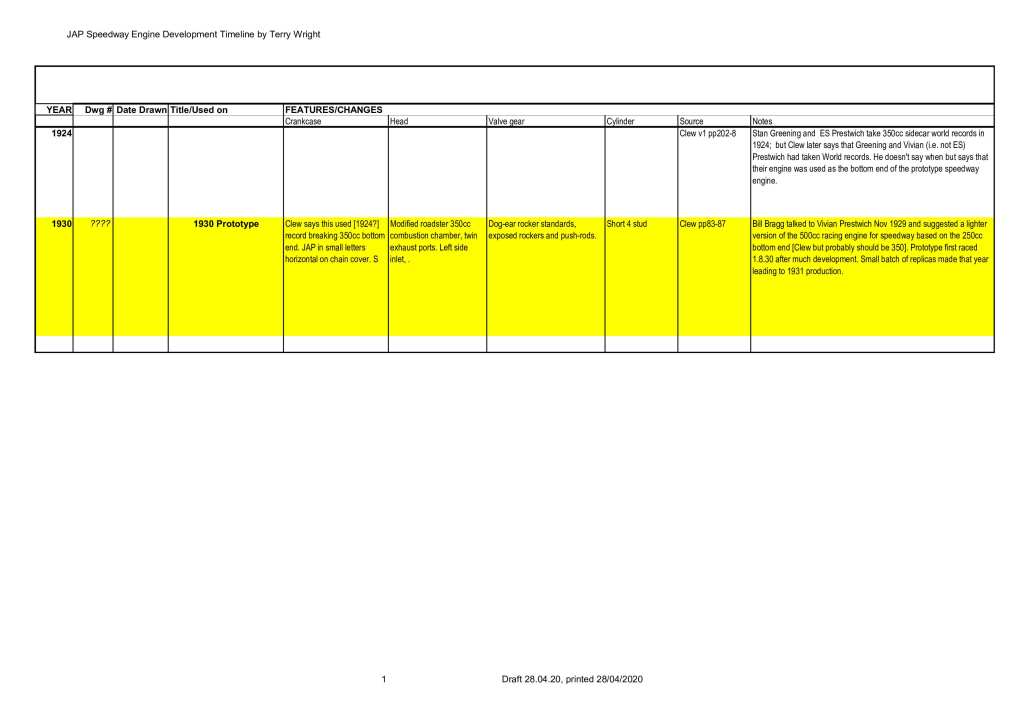
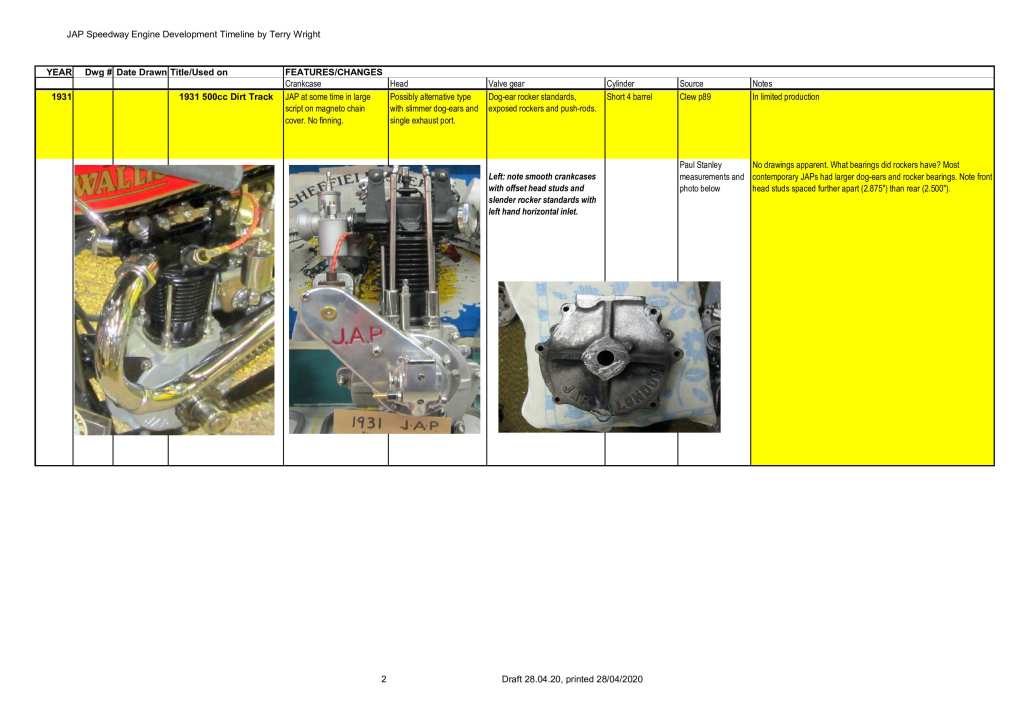
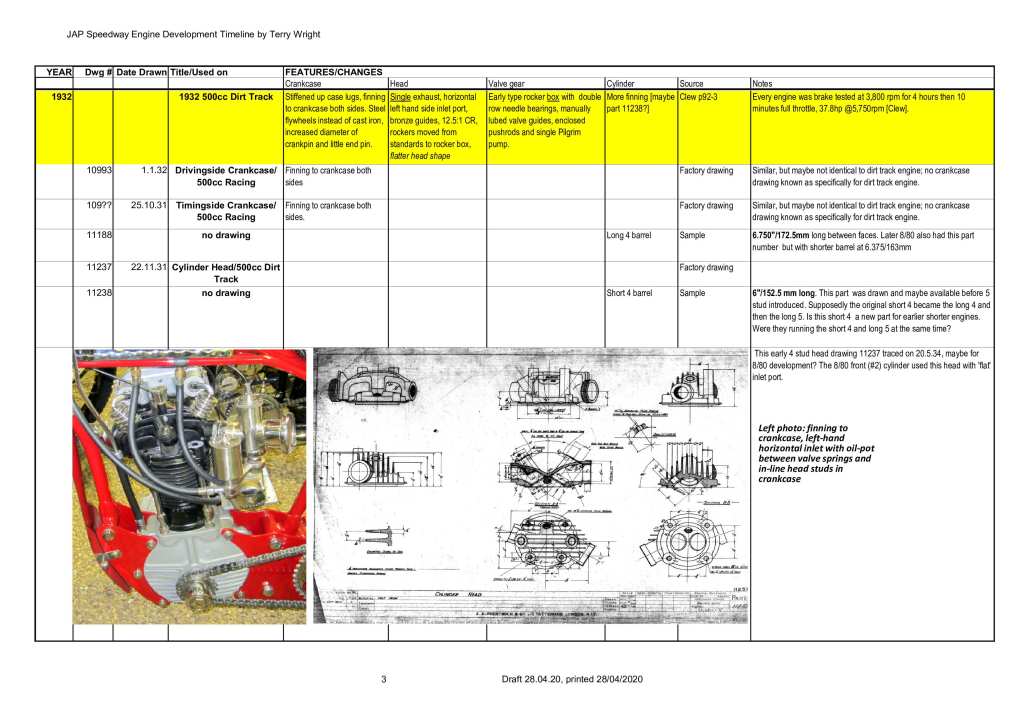
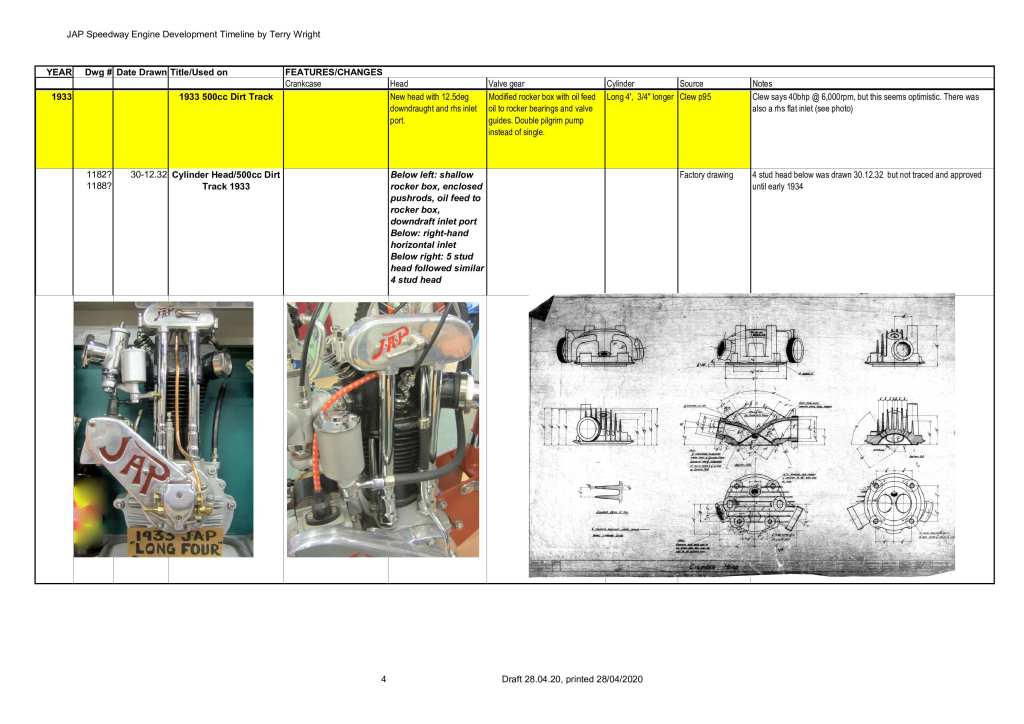
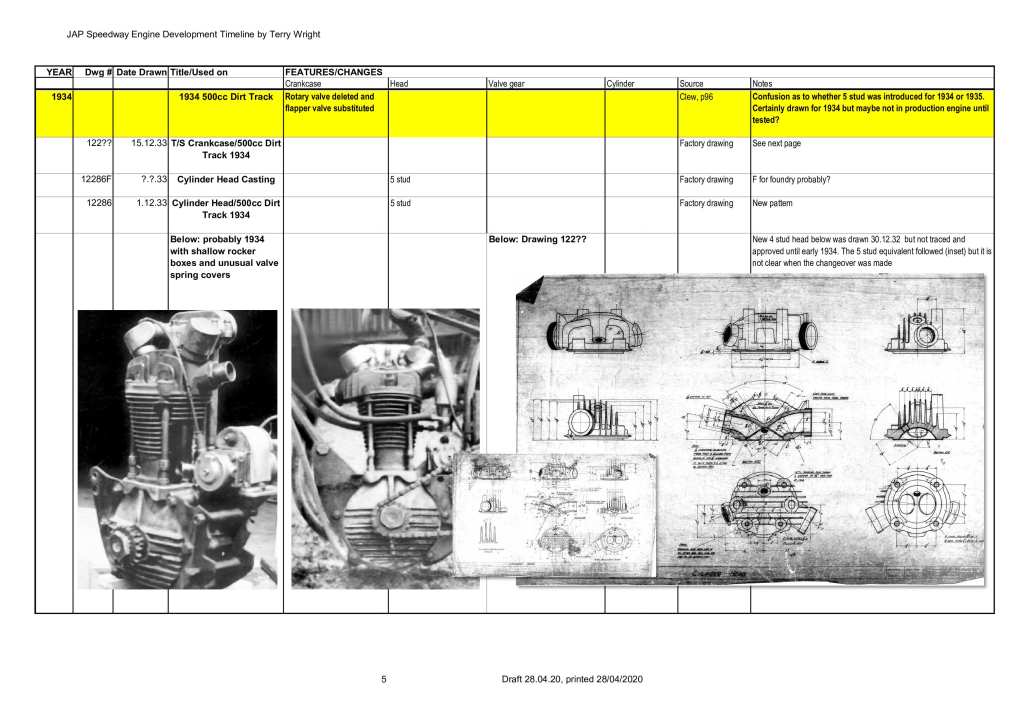
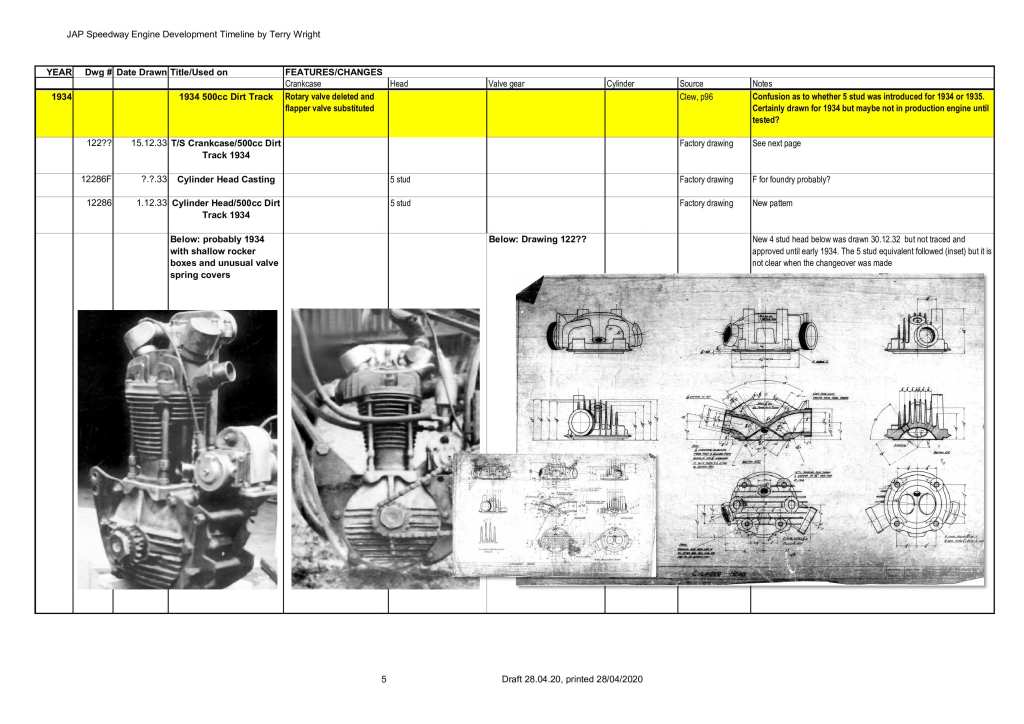
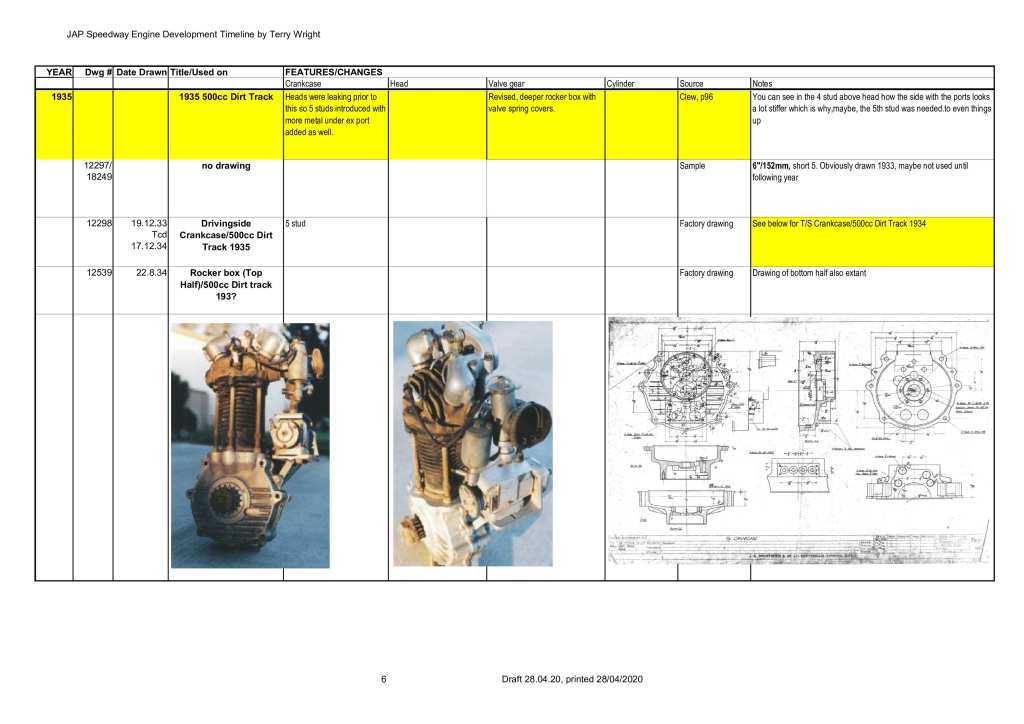
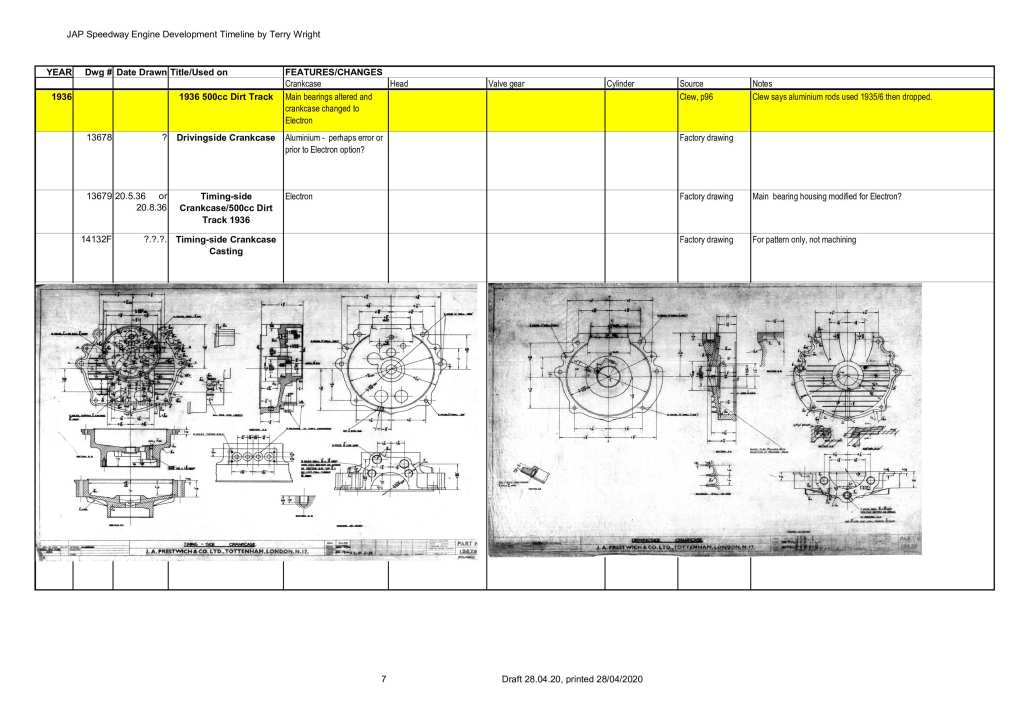
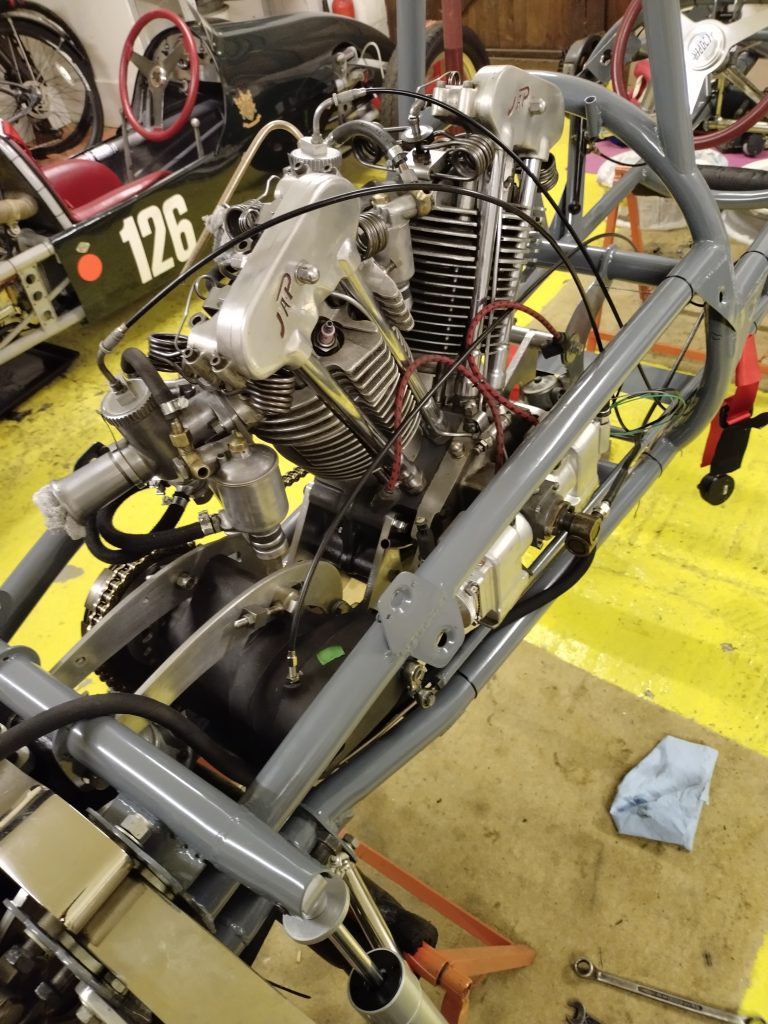
The following pages trace the development of the JAP speedway engine from its inception through its glory years in the 1930s, 1940s and 1950s. The drawings are copies of factory drawings which were on a roll of microfilm found in a Wolverhampton street probably near the Norton works where the remnants of the JAP company had been moved after its London works were closed in 1963. J. A. Prestwich Industries Limited was liquidated in 1964. The text of the embedded pages can be read at an enlargement of 300% or more on a laptop and more easily at 500% with a larger monitor.

WELCOME TO THE COOPER IMP

by Stan Benbrook

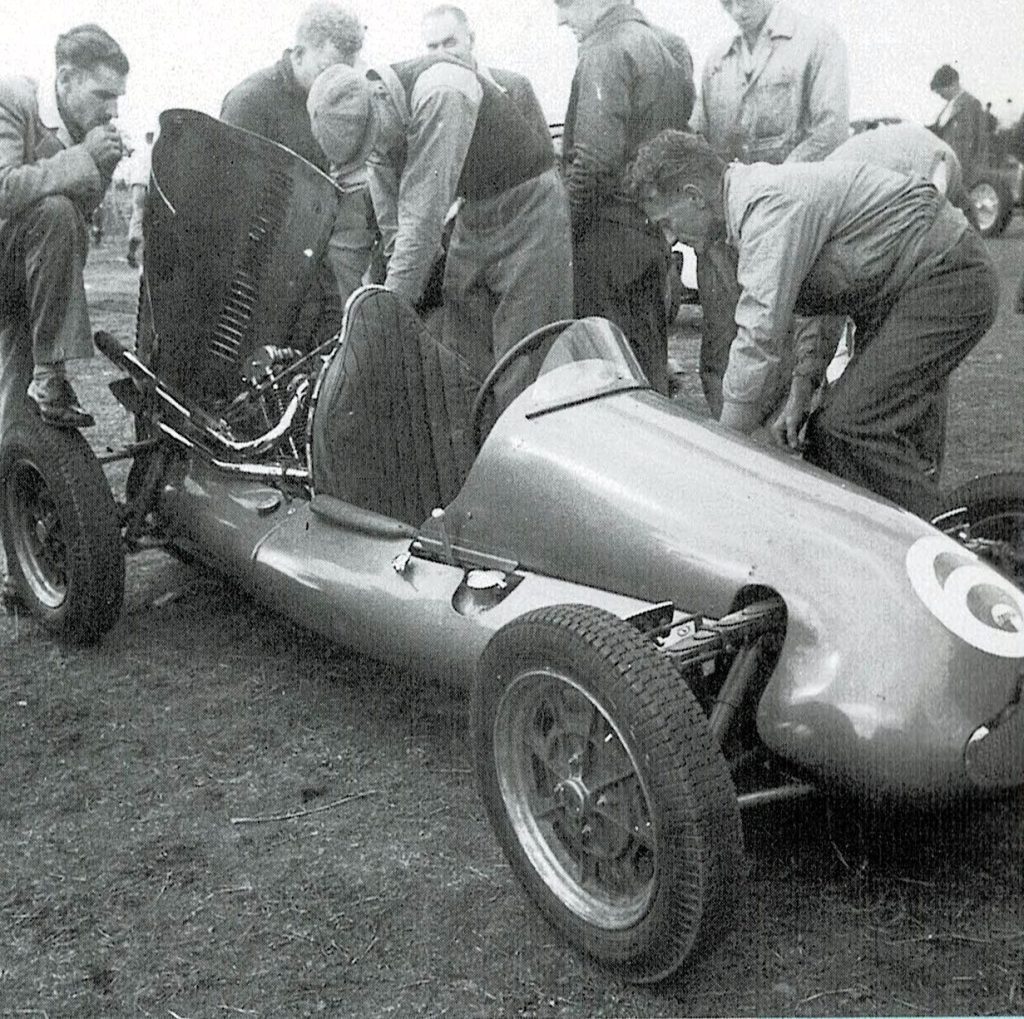
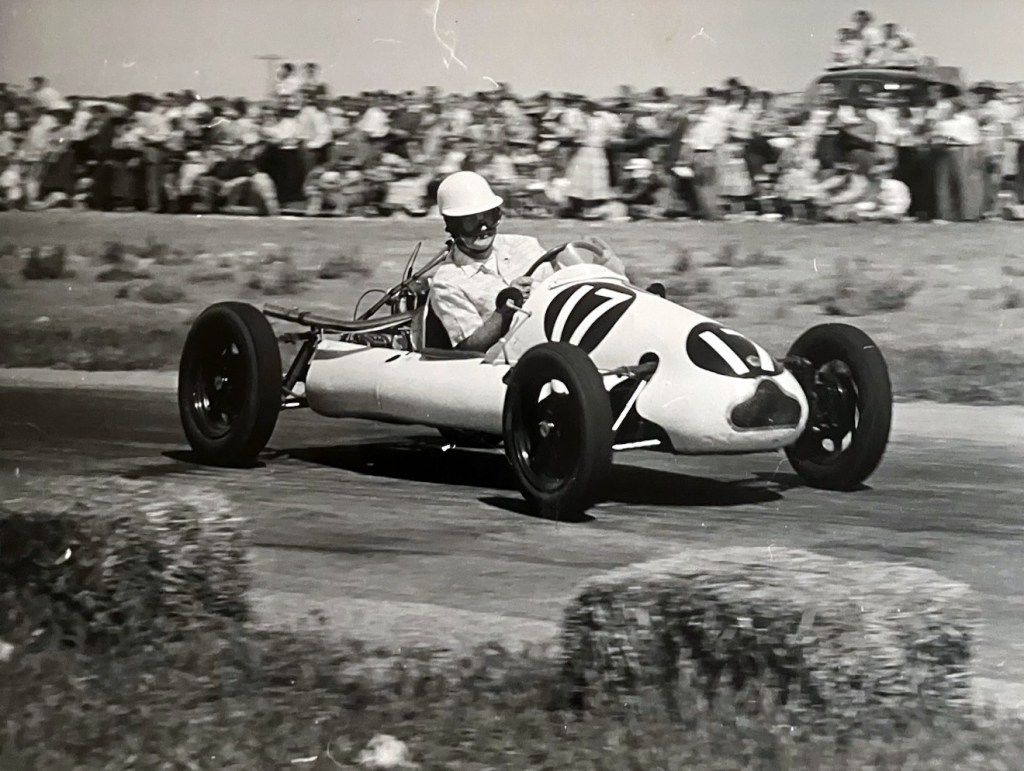
Ron Frost and Arnold Stafford, who raced as Ecurie Pomme, imported two new 1954 Cooper Norton powered Mk8 cars to use during the 1955 New Zealand international motor racing season. Ron Frost raced this car Mk8/26/54, and Stafford the sister car (Mk8/27/54) which was campaigned for many years by Graham Brayshaw and was recently sold to an English owner.

The first race of 1955 was the NZ Grand Prix at Ardmore and Ron completed 89 of no less than 98 laps before retiring with gearbox failure. With no Wigram Trophy race in 1955, the next race was at Mariehau, a road course in suburban Christchurch. Frost was in the lead when his engine seized on lap 25 causing another DNF. The Ohakea Trophy was the next round with Frost finishing in 4th place, a great result amongst almost 60 cars entered. The NZ Champion Road race followed on the streets of Dunedin. Both Coopers qualified on the front row but a first corner pile up ended Frost’s Day while Stafford went on to finish second.

Both Mk8s were then sold to make way for two new Mk 9s that were on their way from Coopers. Bob Hugill was the next owner of the Mk8 and he entered but did not finish the 1956 New Zealand Grand Prix. He raced in the 1957 and 1958 international support races along with many Auckland area races and hill climbs over the next seven years.

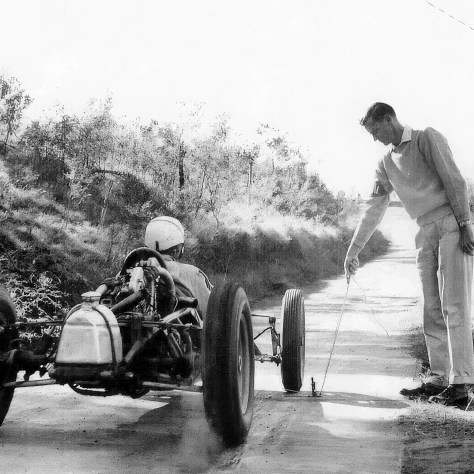
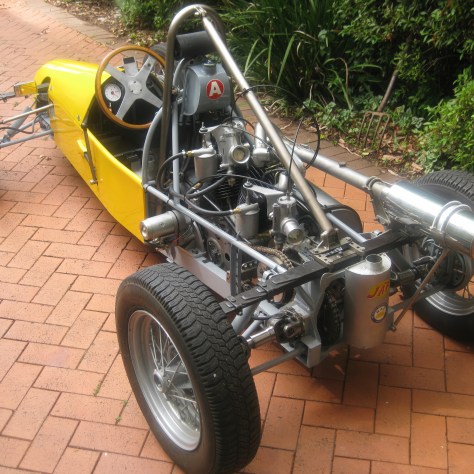
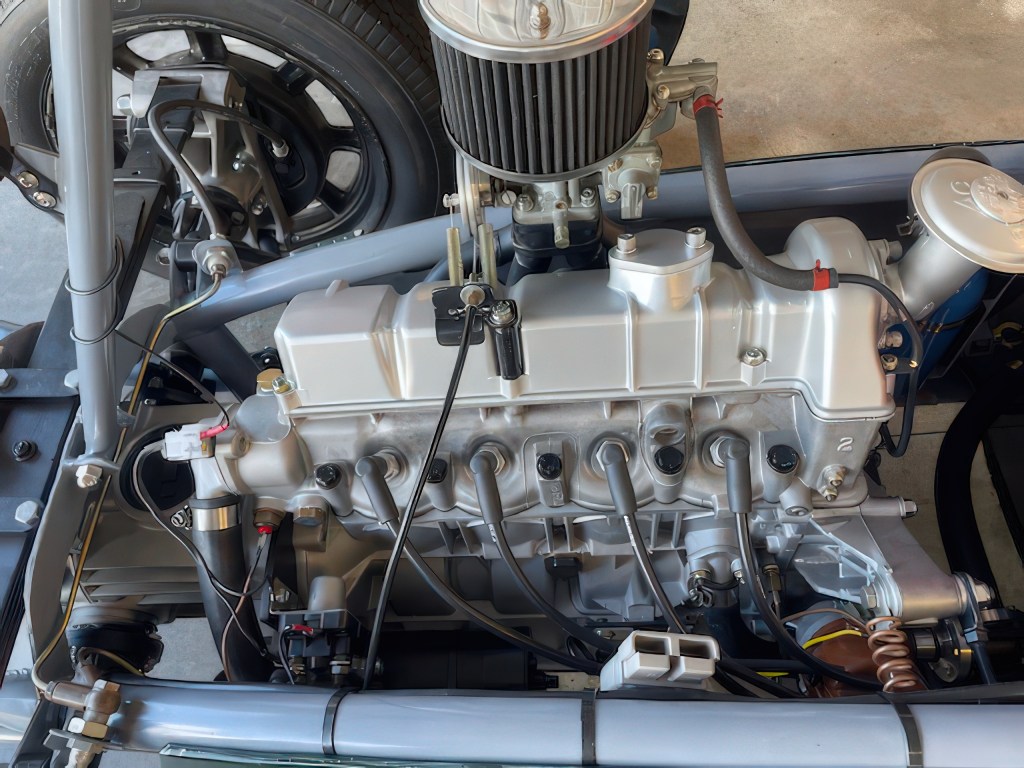
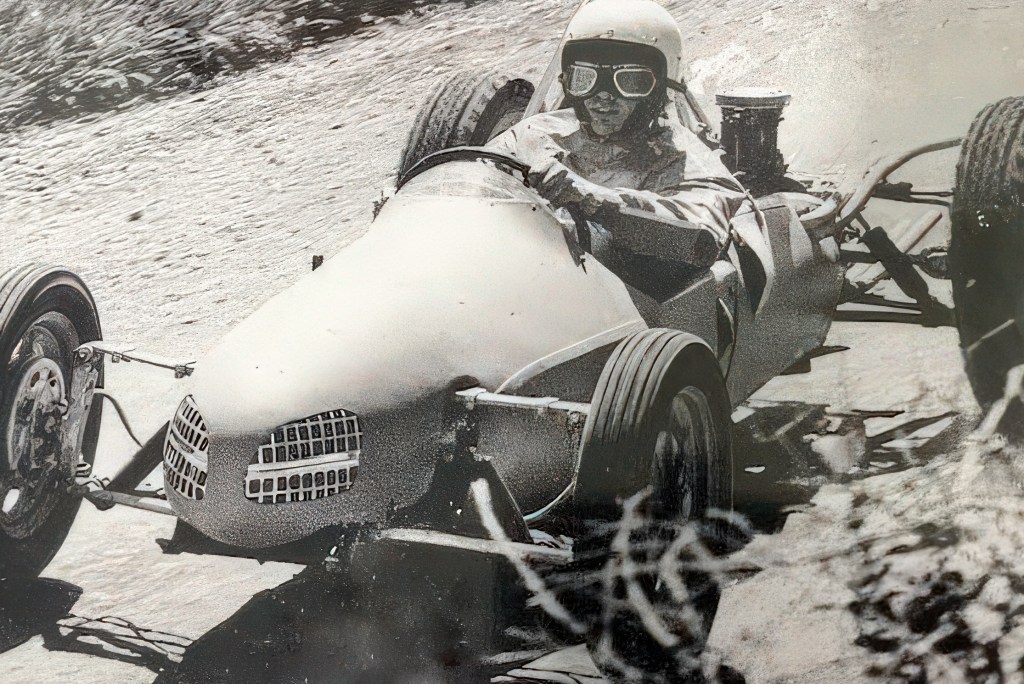
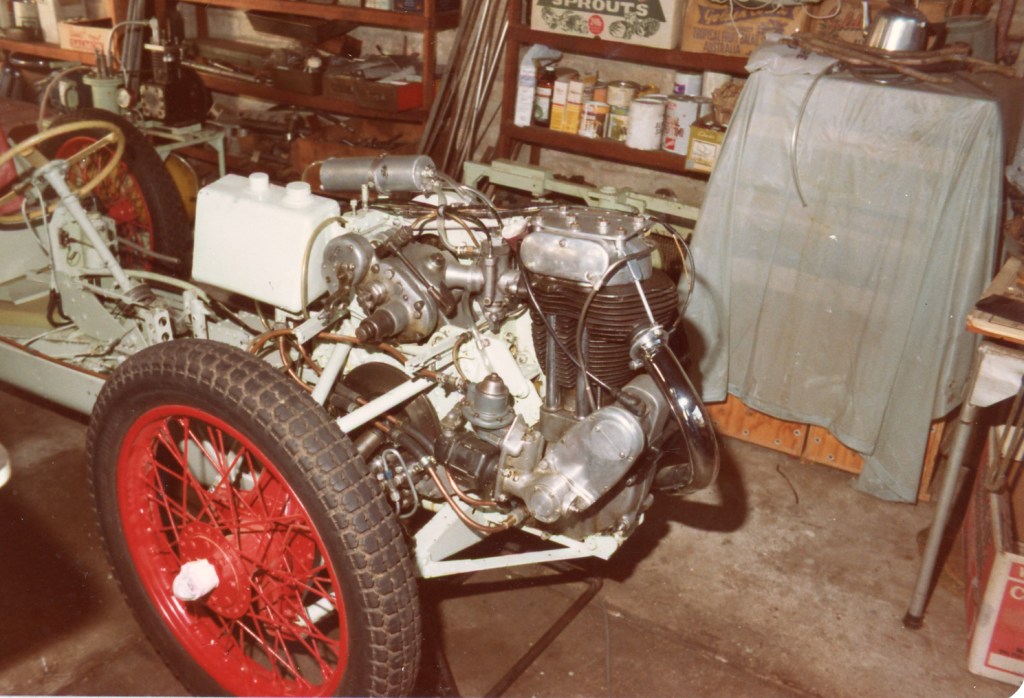
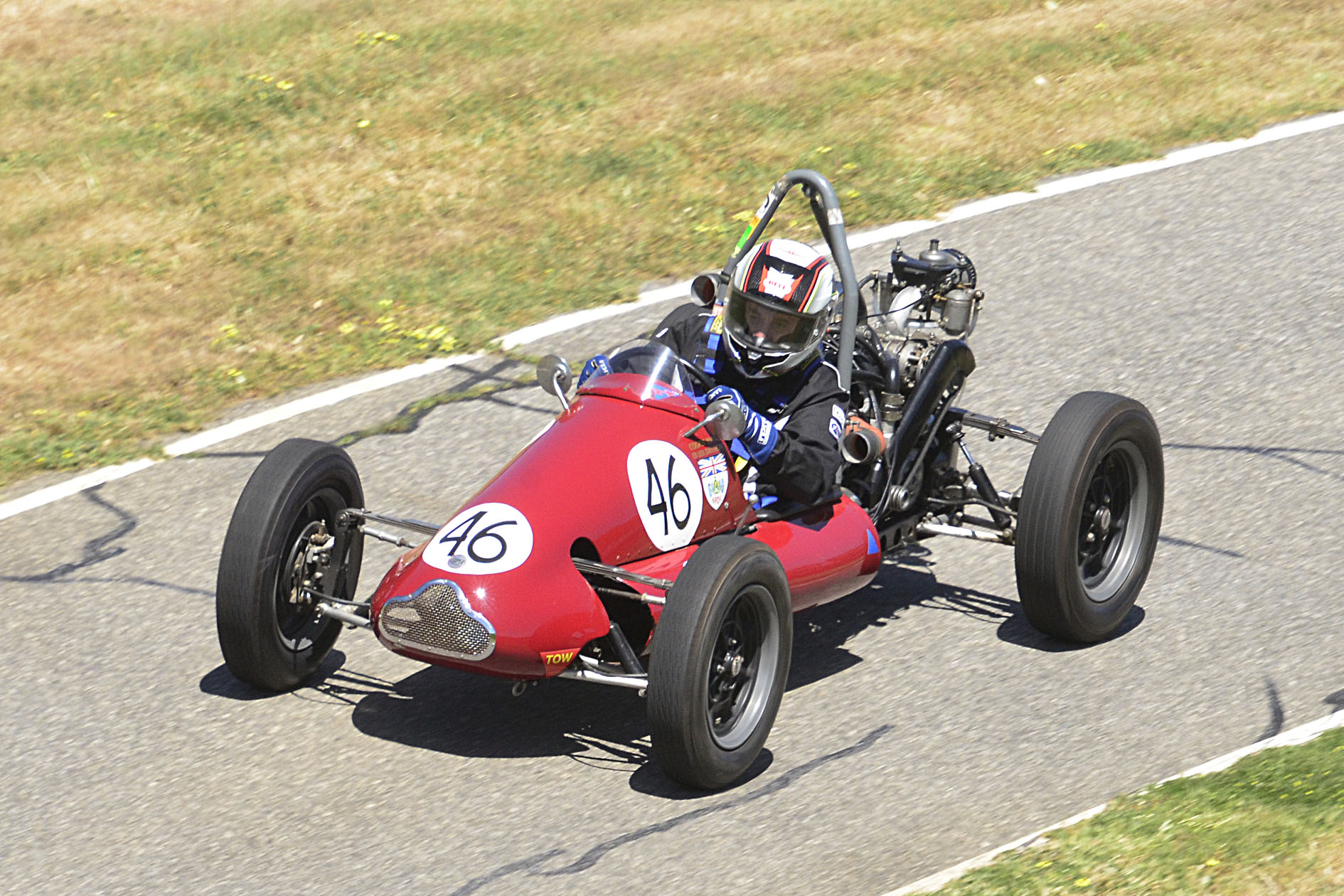
Bob then sold the Cooper in 1962 to Maungaturoto farmer Ian Cullen with a Triumph motor fitted. This proved troublesome on the Northland hills (the far north of the North Island) and he set out to find a more user-friendly engine and settled on the newly released Hillman Imp in 1965 as today shown below. His first event under Imp power was Northland Car Club’s Gold Star hill climb at Puhi Puhi in October 1965. At his next event at Maungatoroto he set FTD. He ran the Northland Car Club events until selling the car to myself in 1972.

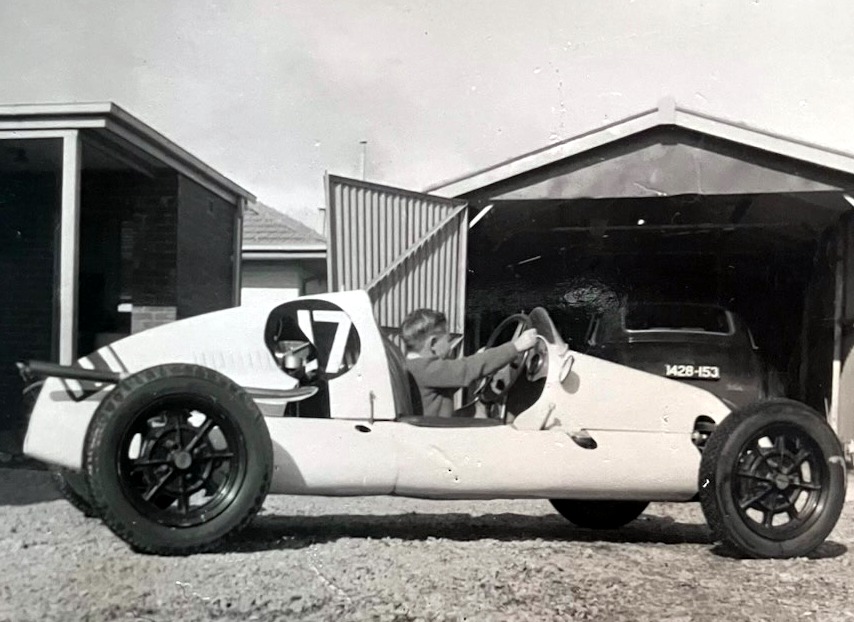
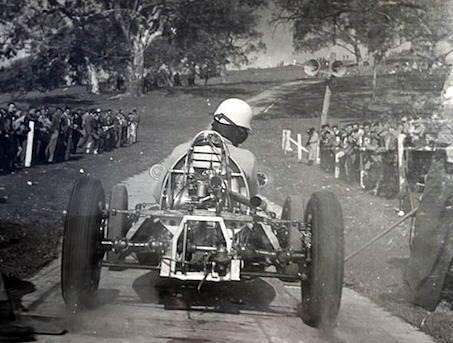
I ran the car on the Northland hills and sprints (above) , also venturing down to run at Auckland University Car Club’s Anderson Farm Hill climbs through 1972-73 before selling it to Les Brown who ran it in Northern Wairoa Car Club events for 8 years.

Colin Waite was the next owner and he owned it for over 40 years. Along with his good friend Alan Woolf he ran the car throughout New Zealand just as historic racing was taking off. With his health declining Colin asked me if I would like to buy it back.

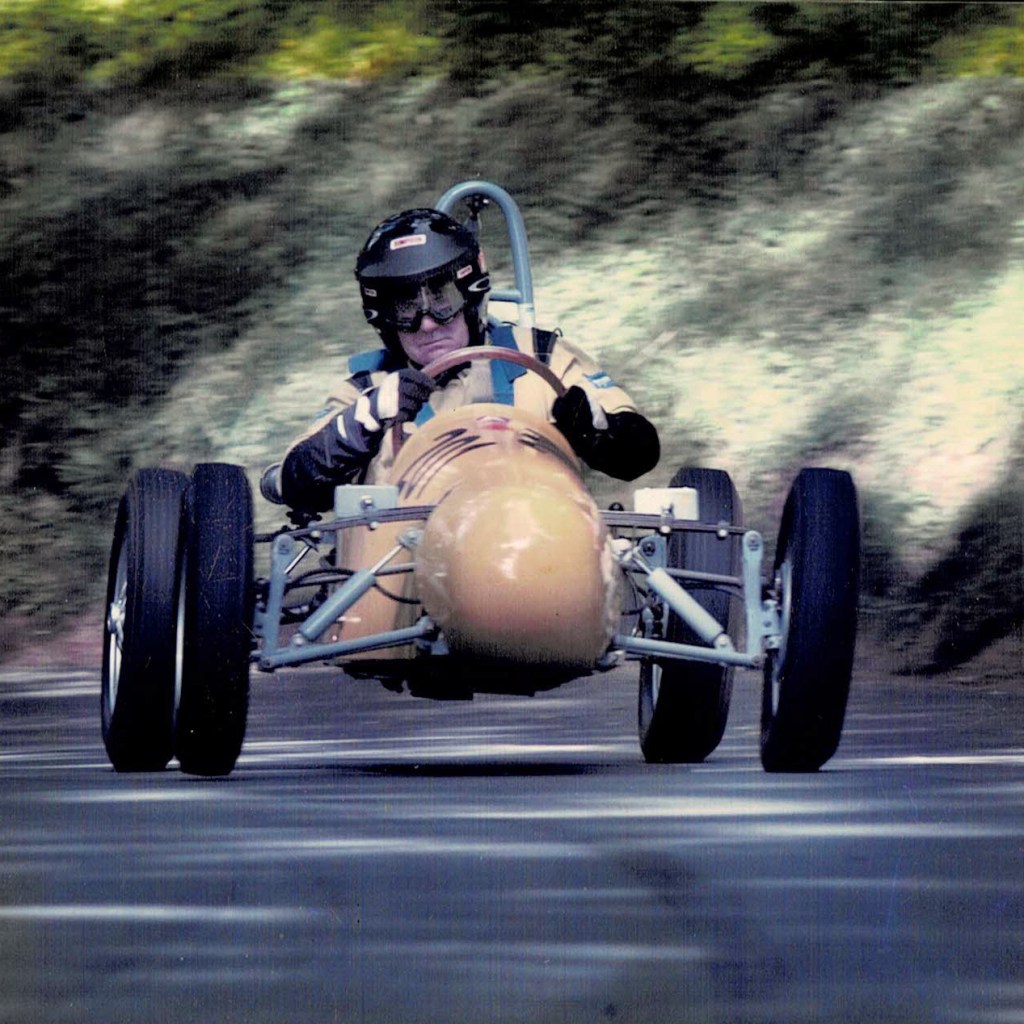
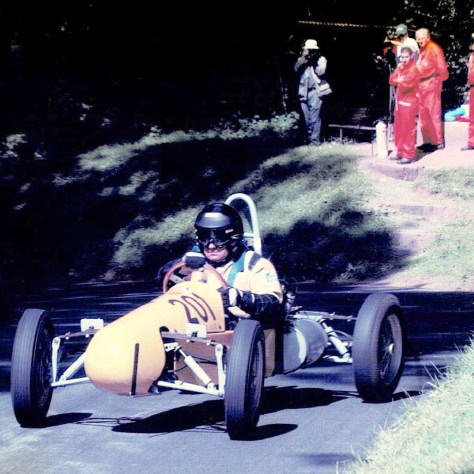
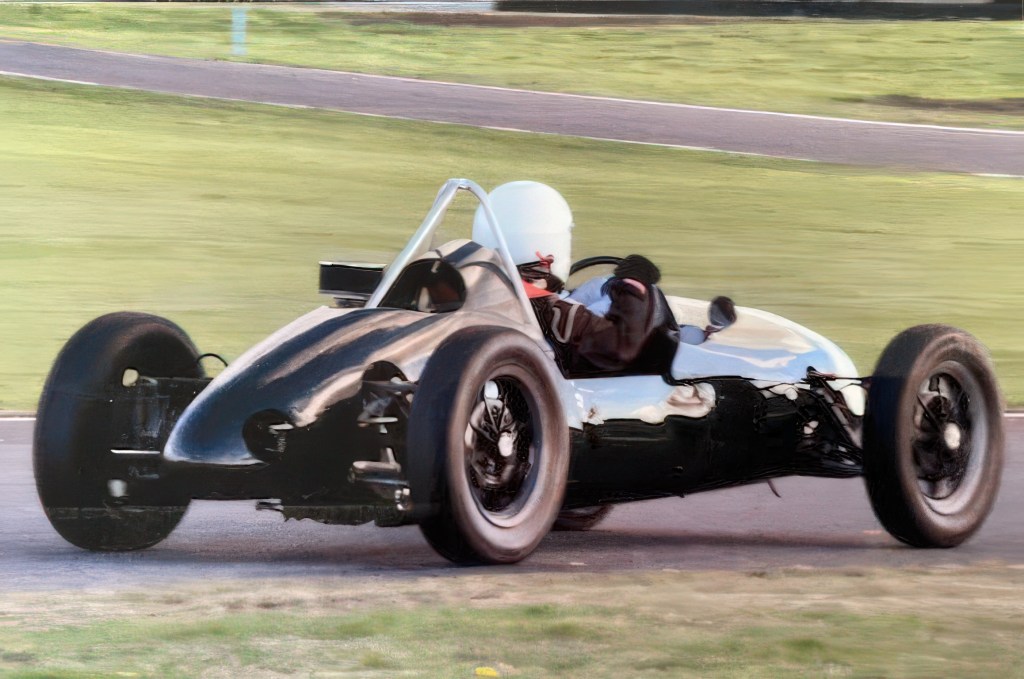
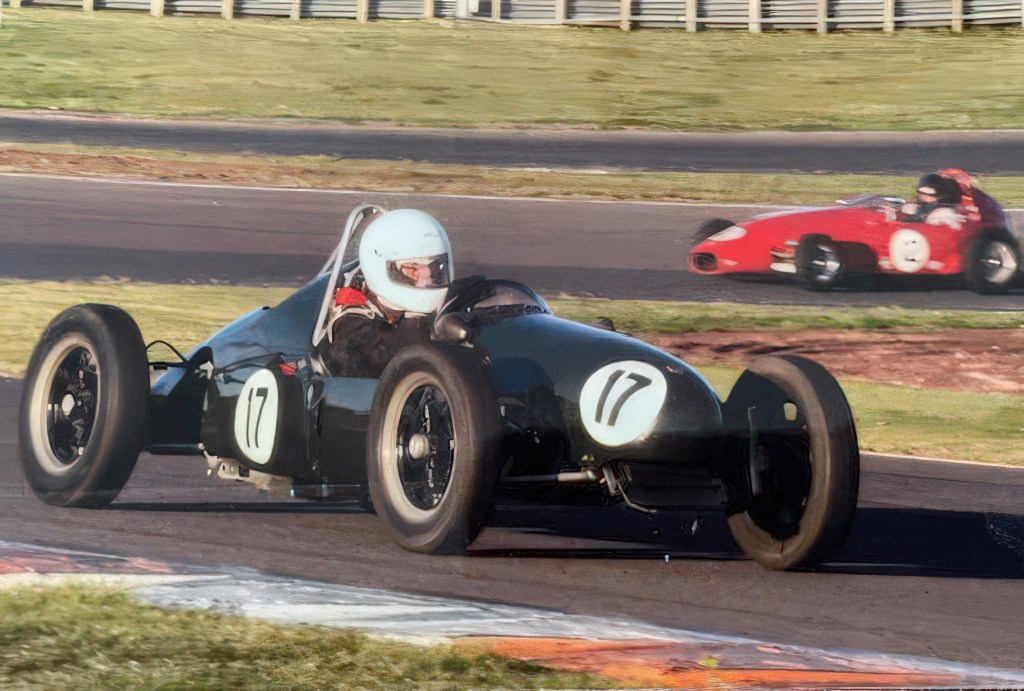
I certainly did, and ran it at Taupo, Pukekohe and Hampton Downs before a complete rebuild which was completed to a very high standard this year. Having settled-in south of Brisbane I have now brought the Cooper to Australia where it will be used in GEAR Queensland events such as the photos below.

OUT OF AFRICA 2

by Terry Wright

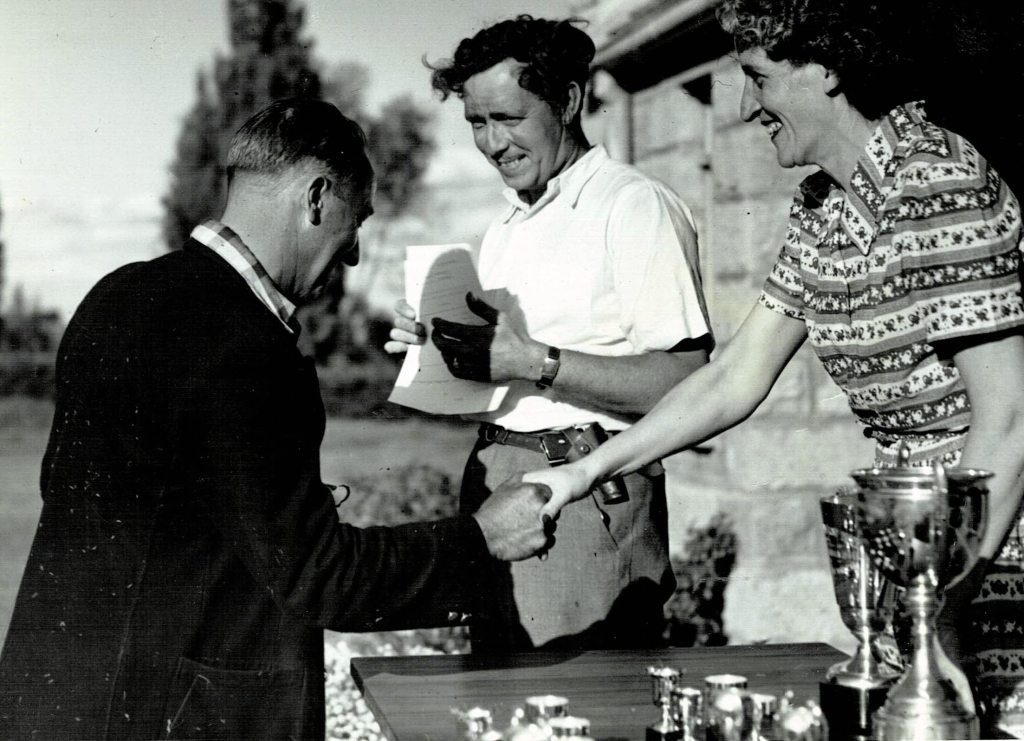
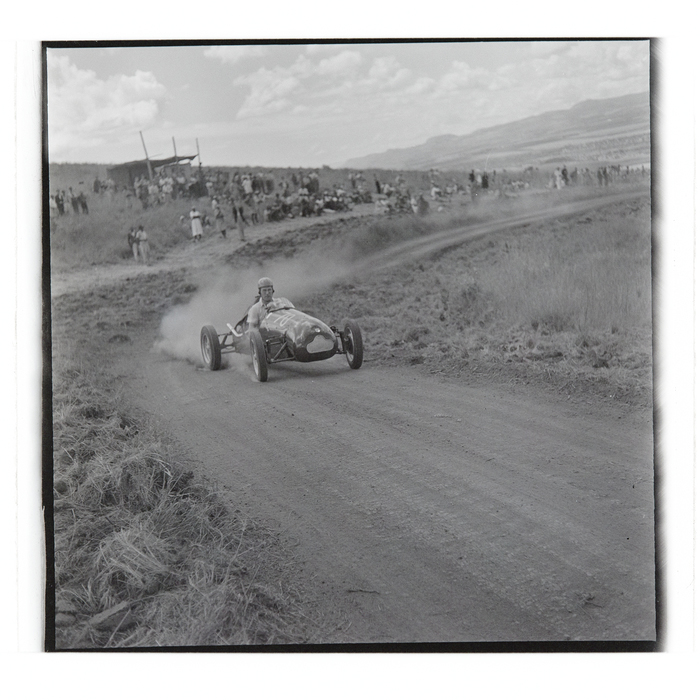
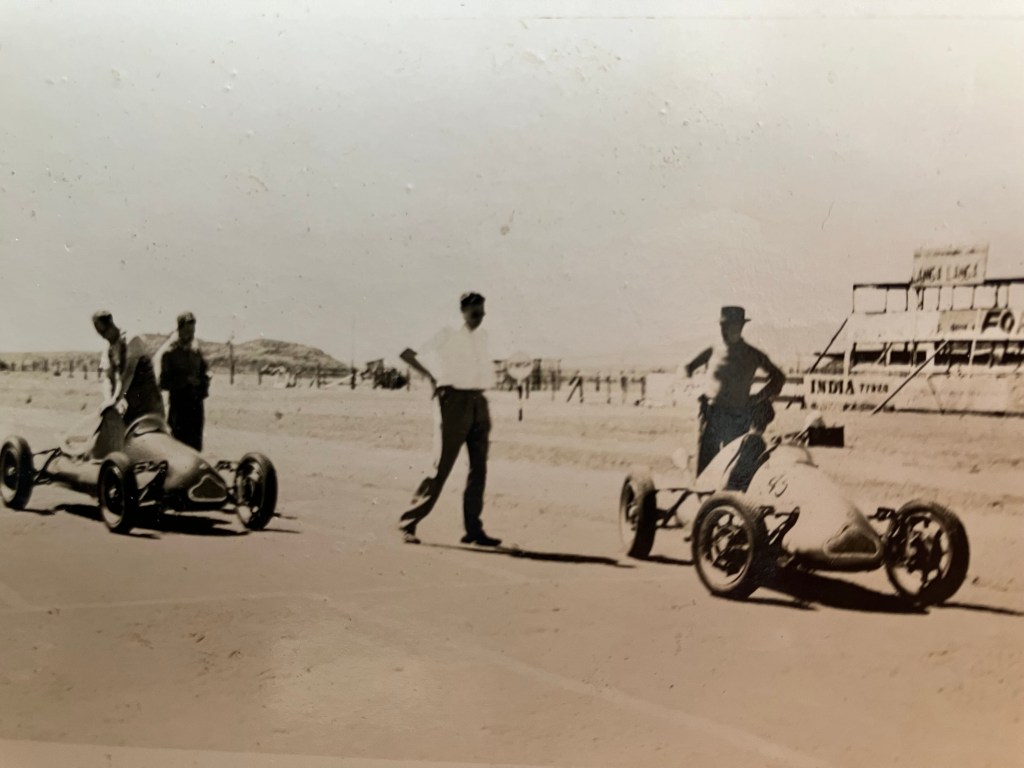
In an earlier post (see OUT OF AFRICA at the bottom of the menu on the left), we wrote a little about Coopers in East Africa.  More recently Mike Barnett has written to us from New Zealand about his stepfather Don Ward who had a sand mining and trucking business in Kenya and later moved to New Zealand. From Mike we acquired a small replica of the East Africa Motor Sports Club Alfred Vincent Trophy for 1953 plus a photo of Don being presented with the replica by the wife of the governor of Kenya, Lady Mary Baring (above). These being Mau Mau times, the club official next to Lady Mary has a holstered pistol on his belt.

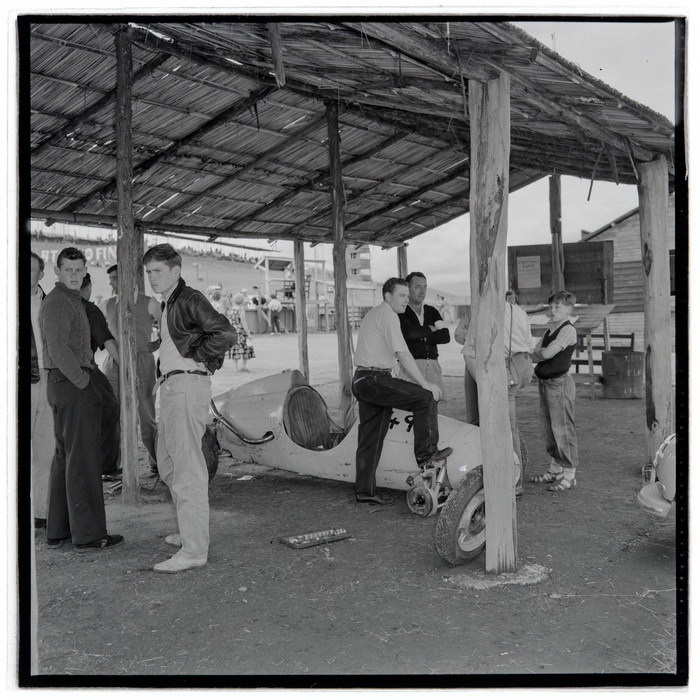
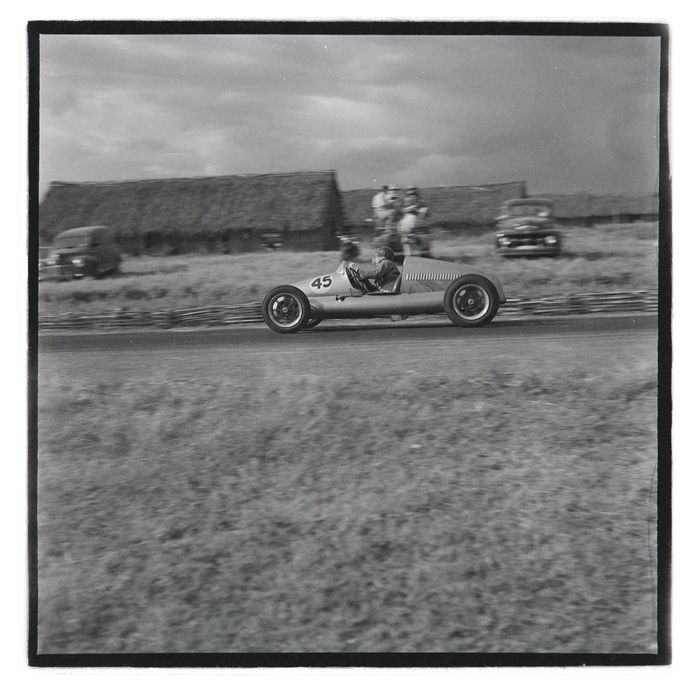
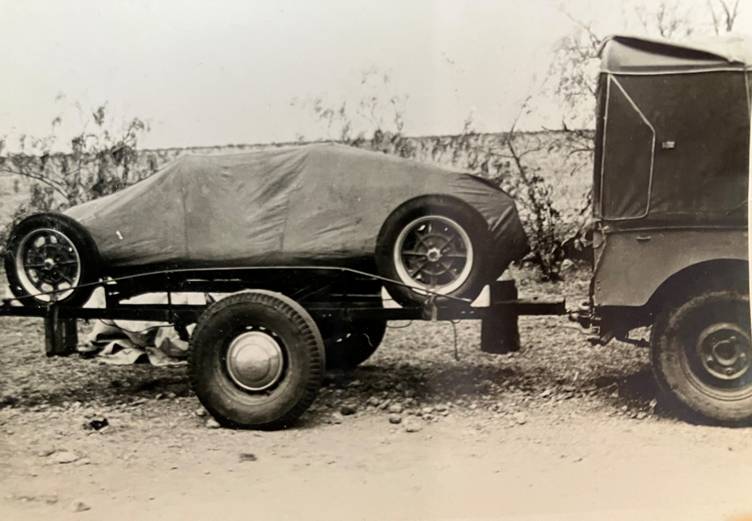
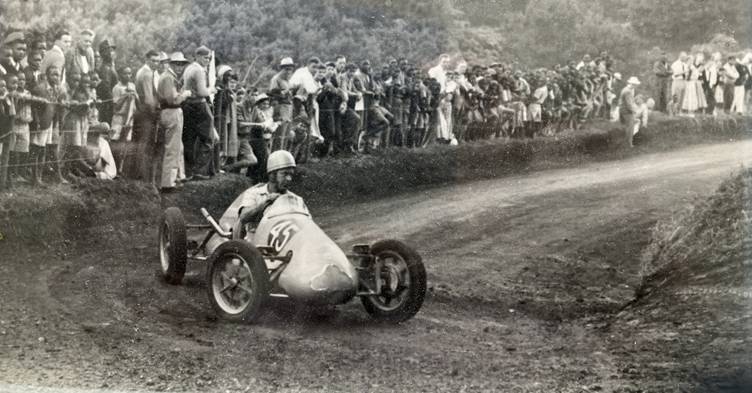
Unfortunately there is no identification of the event or the location on the trophy or the photo but the family information is that Mike had been competing in a Cooper and there is a small number of surviving family photos of his car which was always numbered 45. Mike says that Don moved to Kenya, presumably from the UK, just before the Second World War. He was involved in the campaign after the Italian invasion of British Somaliland in 1940. After the war Don recovered damaged vehicles from Somalia and started a lucrative sand mining and trucking business in Kenya. In the 1970s he moved to Napier in New Zealand.

The trophy presentation photo has the photographer’s name on the back – Charles Trotter Nairobi – and so we looked him up on Google and found plenty of information with a substantial Wikipedia entry from which the next few paragraphs are drawn.

Charles Trotter was born in Scotland in 1923, but at the age of three months he and his mother Margaret returned home to Uganda, where his father James worked in the Land and Surveys Department. With a break for war service, James had been with the same department in Uganda since graduating from Cambridge in 1912. Margaret had gone out to Kenya as a Post Office clerk in 1918, and was later transferred to Entebbe, where she met James. They were married in 1921 and remained in Uganda for over a decade before moving to Nigeria in the 1930s.

For the first 6 years of his life, Charles accompanied his parents on a near-permanent safari owing to the itinerant nature of his father’s work. In 1929 he returned to the UK to attend boarding school, and after serving as a captain in the Royal Engineers during WW2 he joined the Guernsey Star in 1948 as a junior photographer. After studying for two years at the London School of Photo Engraving and Lithography, he obtained a first-class pass in the City and Guilds exam.

Charles returned to East Africa on the SS Kenya’s maiden voyage in 1951 at the age of 28, capturing life on board ship as the first assignment of this phase of his career. He made Nairobi his home for the following 11 years, during which he established himself as a leading commercial photographer. Although his income was derived chiefly from advertising and promotional work, he also captured images of British-Kenyan high society, royal and ceremonial events, industry, safari, sporting fixtures and landscapes, travelling extensively around East Africa.

One of Trotter’s great passions was said to be motorsport, and he was an official photographer of the East African Safari Rally. He also photographed numerous celebrities, as well as Princess Elizabeth and the Duke of Edinburgh on their tour of Kenya in 1952. The Trotter archive, which includes his parents’ photographs, is housed in the British Empire and Commonwealth Collection at Bristol Library and can be found online at https://becc.bristol.gov.uk/records/2001/090. Many thousands of his images have been scanned and are available to download with a creative-commons copyright.

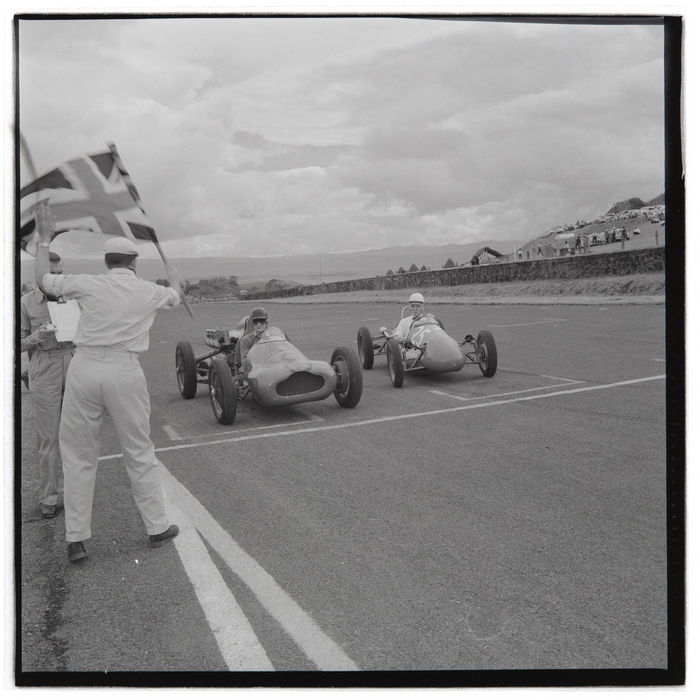
A search of the Trotter archive has thrown up a number of Kenya motorsport events, although strangely not the one in question, but there are various events with Coopers to be seen. These include Langa Langa races in October 1952, Menengai hillclimb in July 1954 and Nakuru races in December 1958.

Originally built during WW2 to train lorry drivers, Langa Langa was closed in 1953 after a fatal accident to a Jaguar driver during the October 1952 meeting. Once the Mau Mau troubles had subsided a new track was opened not far away at Nakuru, north west of Nairobi in 1956. It is believed to have survived for the best part of 20 years.

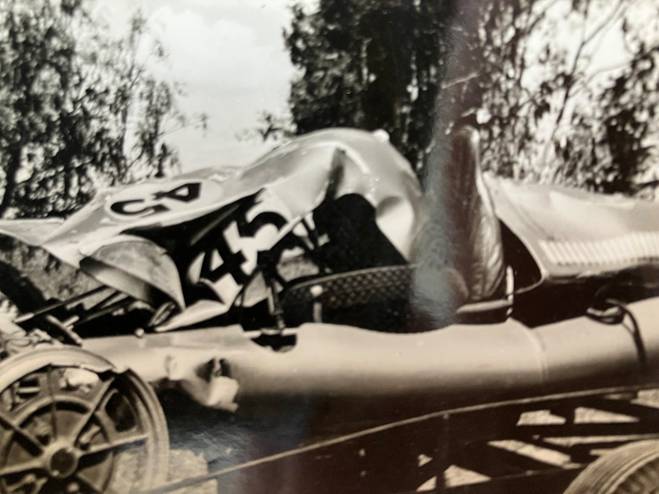
The Ward family collection of photos always show Don’s Cooper as #45 in a variety of events which aren’t named and there is one of this car almost literally flattened in what must have been a horrendous accident. One might guess that a trailer rollover was the cause and it seems unlikely that the car would have survived although probably bits of it did.

The evidence in the above sources suggests there might have been the following distinct Coopers competing in Kenya at one time or another:

Below: Mk2/3/4, #70, dark-tone colour, driven by Chris Little at Menengai hillclimb on 4.7.54 (Trotter collection).

Above: Mk2/3/4, #49, light tone colour, seen with damaged suspension in the Nakuru circuit paddock on 21.12.58

Below: Mk5/6, mid-tone colour, driven by (no first name) King at Langa Langa races on 13.10.52 (Trotter collection). A Jaguar driver was killed at this meeting and the circuit was closed in 1953.

Above: Mk2/3/4, #45, mid-tone colour, Don Ward, at Menengai hillclimb on 4.7.54 (Trotter collection).

Below: #25 mid-tone colour, unknown driver in a match race at Nakuru circuit 21.12.58 (Trotter collection).

Above: Mk5/6/7, #nil, dark-tone colour, photographed with #45 above at (presumably) Nakuru (Ward photos). A dark-tone coloured car (Bob Gerrish #9) is shown in an earlier post (Out of Africa 8/05/2017) and may be this car on the left.

Somewhat to the writer’s surprise it seems that there were maybe no less than four or five Coopers competing in Kenya in the 1950s although probably not all at the same time. There are rumours of a JAP twin-engined car but no firm evidence yet.
Here are some more of Don Ward’s Cooper photos which show a little of colonial life with a Cooper in Kenya in the 1950s. The last of these suggest his car was wrecked.

The End

More information about Kenya Coopers would be welcome via the Loose Fillings Facebook page https://www.facebook.com/LooseFillings

LUNCH WITH A THREE TIMES COOPER CHAMPION Part2

By Charles Reynolds

Charles Reynolds continues his account of what he heard at lunch with British Hillclimb Champion 1958-60 David Boshier-Jones.

The next RAC hill-climb championship round of 1957 was at Bouley Bay in Jersey in mid-July. This was another new hill for David at 1011 yards, much of it on concrete which had been laid during the German occupation with an S bend and 3 hairpins. The concrete was incredibly slippery and the organisers were often obliged to cancel the event if they though it was going to rain. David finished 5th in his class which he thinks wasn’t bad considering the unique nature of the hill. After the meeting the family had a good holiday in Jersey, something which then came a bit of a tradition.

David missed the next RAC round at Craigantlet and took the V-twin to Shelsley Walsh on 31 August where he won the ‘up to 1500 cc racing car’ class but didn’t perform well in the championship runs. This event wound up his hill-climb programme for the year with him finishing 4th in the championship. The racing arrangement with Robin Jackson hadn’t worked that well and he decided to concentrate purely on hill-climbs in the future.

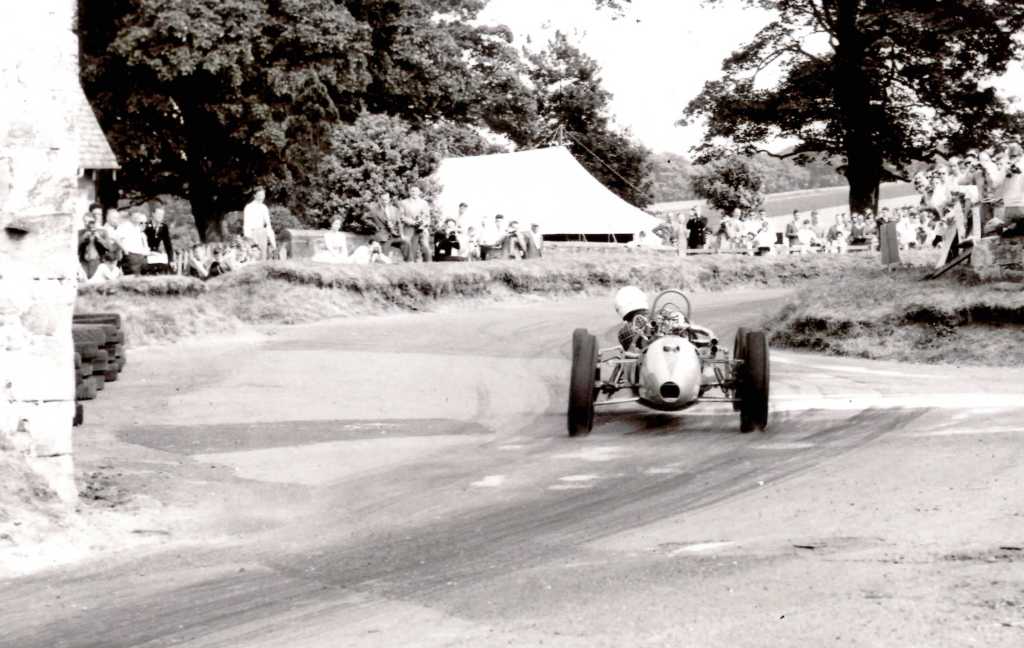
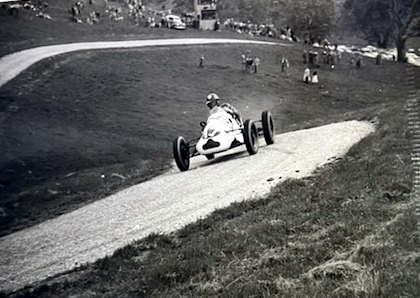
David and the Cooper-JAP negotiate the tricky dog-leg through the ‘çourtyard’ at Bo’ness near Edinburghyear not known

The 1958 season kicked -off with the traditional May meeting at Prescott. The weather was perfect, the orchard was in blossom and David took BTD with a new hill record of 42.27 secs.

The 2nd national round was at Shelsley Walsh a week later. In total contrast to Prescott, the meeting was thoroughly wet and in the slippery conditions David was 2nd to Tony Marsh’s Cooper.

Then in July he went all the way to the next national championship round at Rest-and-be-Thankful. This was a long two-day journey for them, using the old A6 over Shap Fell in Westmorland and via Glasgow to Arrochar near Loch Lomond. David enjoyed the hill though; it was very fast on a bumpy but mainly straight road (originally Roman military) where you had to make sure the car landed squarely without backing-off. They used Continental tyres at the time which were quite compliant and helped absorb some of the roughness. The main straight lead to a left hander and a tight hairpin before the finish. Tony Marsh, who was David’s main rival, was at Rheims contesting an F2 race that weekend, but his other close rival Michael Christie was in Scotland and David managed to beat him by over 1½ secs.

The following weekend David went to Westbrook Hay near Hemel Hempstead north of London for a club event where he took BTD and then had a two-week break before the annual visit to Bouley Bay which was at the opposite end of the British Isles from Rest-and-be-Thankful. Here he managed to accumulate worthwhile points as neither Tony Marsh nor Michael had entered, and he managed to set both BTD and a new hill record.

In the nature of the dispersed British Championship, next was Craigantlet in Northern Ireland in August and it was here that David made what he calls the one major driving error of his career; he was going for the hill record on his second run when, with the engine revving hard to try to clear an annoying misfire, he misjudged one of the corners on the high-banked public road course and overturned the car. He was taken by ambulance to Belfast General Hospital where, on the way, he recalls having to tell the driver to damned-well slow down – he was driving like a kamikaze pilot and had already nearly caused a few incidents at junctions. David was kept in for observation at the hospital then released after a couple of days, battered and bruised but sound.

Thankfully, the car wasn’t too badly damaged as two weeks later it was at Shelsley. Here Tony Marsh was entered and just beat David, taking a new hill record. Shelsley is a power hill and David always felt as if his car was struggling going up to the Esses and then over the line, so making up time through Crossing and Kennel at the bottom was critical.

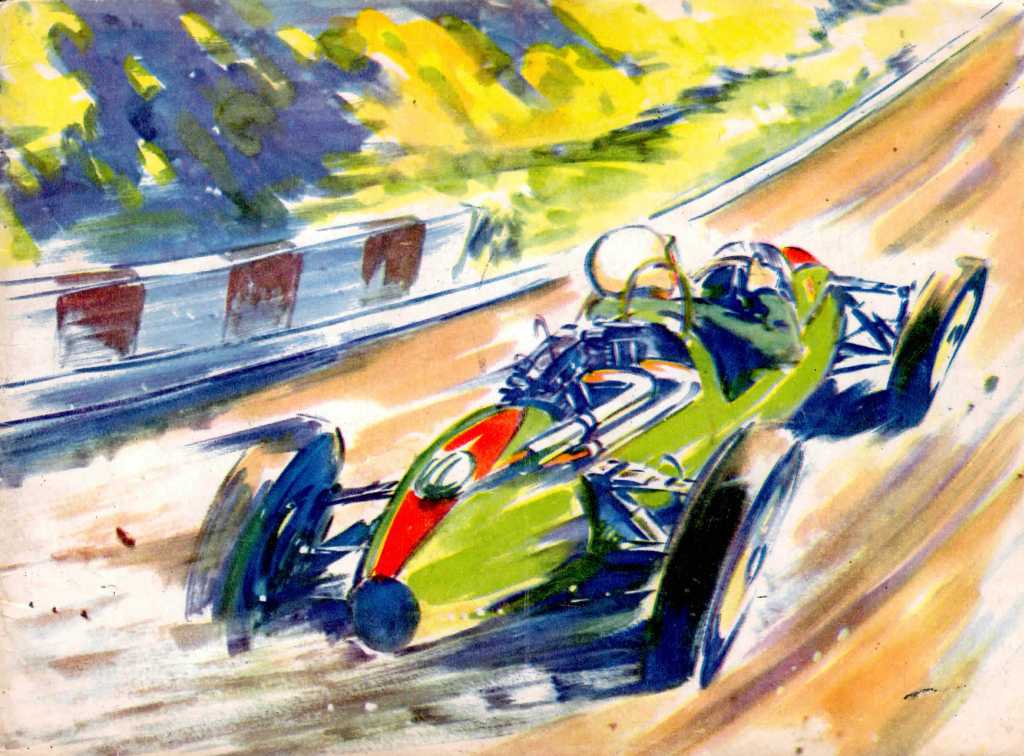
From the cover of the Castrol Achievements Yearbook for 1959 – David Boshier-Jones’ second championship year.

The conclusion of his year was at Prescott on 14 September where David made BTD after breaking the hill record on 3 successive runs and comfortably beating Tony Marsh. He had won his first RAC Championship at his favourite hill, the nearest major venue to home, with a garden party atmosphere and in fine weather. He records that he was elated! Ten events in the year was well under half the number of 500 events he had contested three years earlier. Nonetheless, he had enjoyed the year, the car ran reliably, and he had achieved his goal for 1959.

With car reliability and competitiveness being excellent the previous year, David decided on another season on the hills for 1959 with the Cooper, keeping the services of Robin Jackson to look after the engine. As a ‘warmer’ he went to Lydstep Haven on 21 March and finished 2nd to Tony Marsh for both BTD and in the ‘up to 1500cc racing cars’ class. Prescott was the first RAC championship round and, as can so often happen, the meeting was very wet..

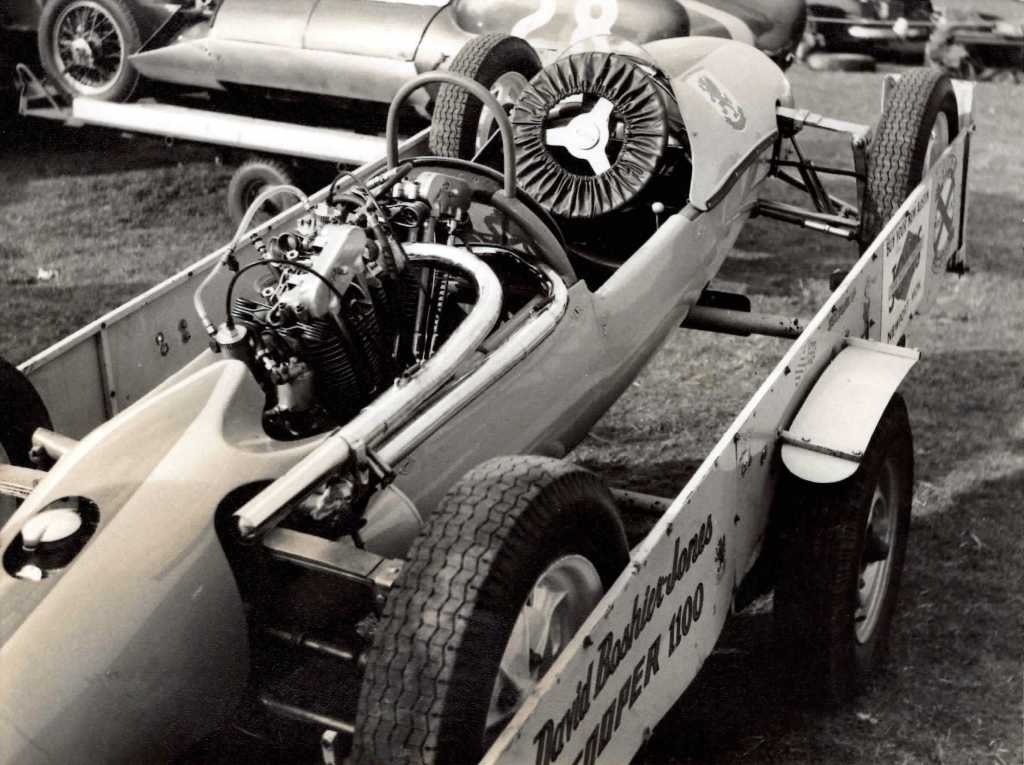
The championship car on a very neat, if open, trailer

Shelsley Walsh in June was thankfully dry and this time David again set BTD and beat both Tony Marsh and David Good. Like Michael Christie’s, David’s Cooper was beautifully prepared and he drove it with great verve – he suffered from a congenitally deformed right forearm and hand but managed to hold the steering wheel with that arm whilst changing gear with his left hand.

Bouley Bay was the next championship event, followed by Craigantlet. In Jersey David again set BTD after David Good crashed on his first run and Tony Marsh was absent. Whilst in Ireland, following a wet practice, the road dried and David broke the hill’s long course record at 1min 8.74 secs. In the championship, he was now uncatchable and managed to win at Shelsley in August, setting another hill record of 35.47seconds, before then winning again at Prescott with another BTD.

The year 1959 had been outstanding and again the car ran exceptionally well. David had now succeeded in what he had set out to achieve and although work pressures and family commitments were ever greater, he still enjoyed his motorsport and decide to continue for another year. The 1960 May Bugatti Owners’ Club meeting was the last on the original Prescott course and although recording BTD, the time of 41.52 secs was slower than his 41.00 secs record which he knew would now stand in perpetuity. Then on 5 June the first meeting incorporating the extended Etores Bend was held and David set a new BTD at 52.48 secs to beat David Good.

The calendar cycle was now familiar and next came Shelsley in June with another BTD before the long journey up to Scotland for Rest-and-be-Thankful on 2 July. Another BTD and a new record of 53.19 secs was the reward, comfortably faster than David Good. Later in July at Bouley Bay David again set BTD with a new hill record.

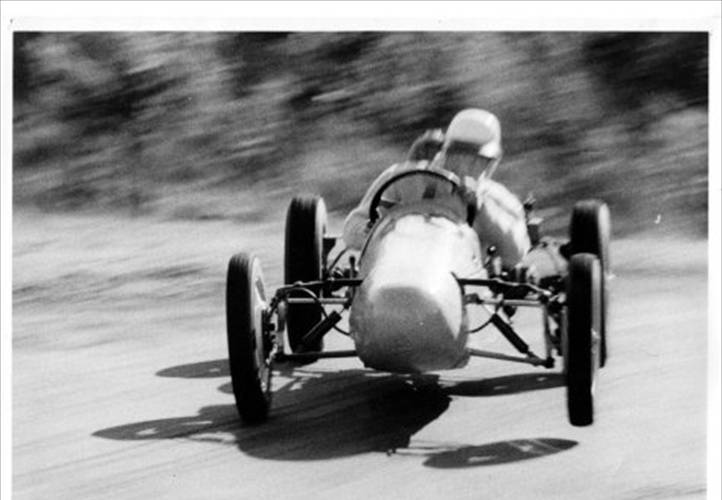
David Boshier-Jones with his immaculate Cooper JAP.

In August, Great Auclum was included in the championship; this was an unusual hill which started downhill and included a banked corner. It was very short at 440 yds, tree-lined and it attracted a big crowd of spectators being close to Reading and Slough. It’s now a housing estate! Again, Boshier-Jones managed to beat David Good and also made BTD. He gave Craigantlet a miss that year as he was already so far ahead in the championship and next went to Prescott on 11 September where he scored another BTD and was fastest in the championship run-off ahead of David Good. He had managed to win his 3rd consecutive RAC Hill-climb Championship competing in just 7 events in that year.

David Boshier-Jones says his early years had been fraught with mechanical unreliability whilst he learned the ropes, yet his career had gone on to include over 120 races and hill-climbs in 9 years. Looking back, he says he very much enjoyed the specialist nature of hill-climbing. “It’s a sport where you’ve got to be immediately switched on – there’s no time for daydreaming” he has told Loose Fillings. “I had had just one major incident and avoided involvement in several accidents in the rough and tumble of close fought racing which was F3 at the time. So, come 1961, I decided to ‘hang up my helmet’ and concentrate on business and my family.”
__________________________________________________________________________

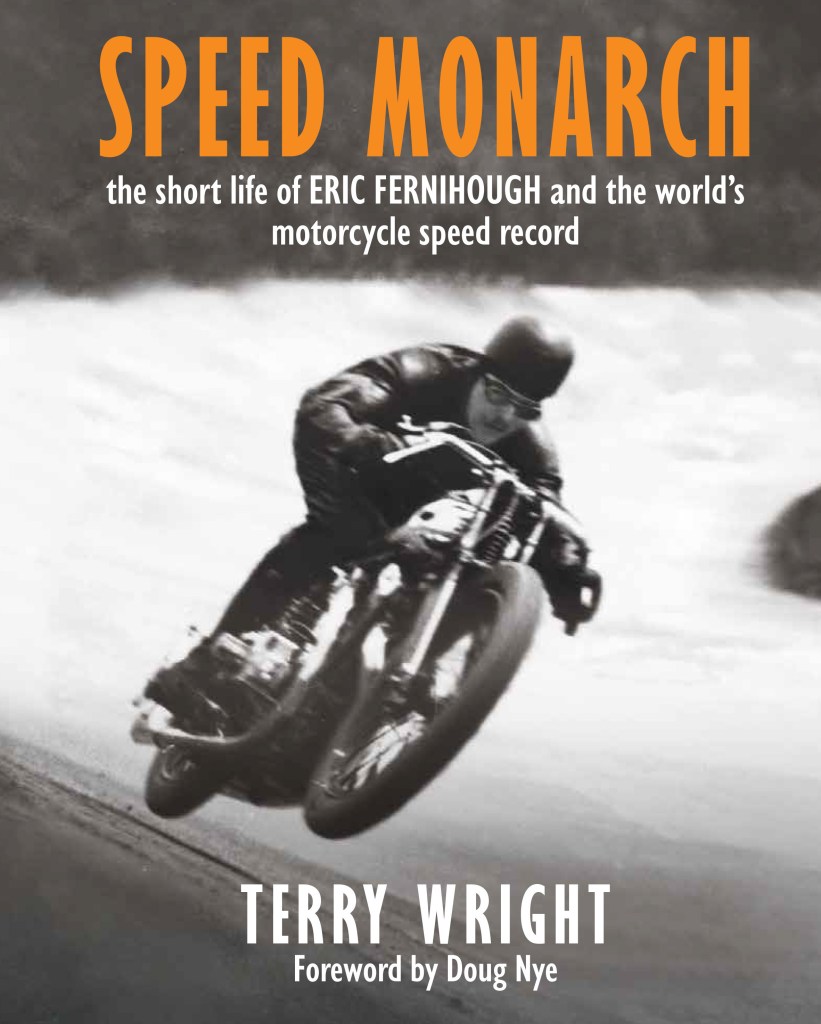
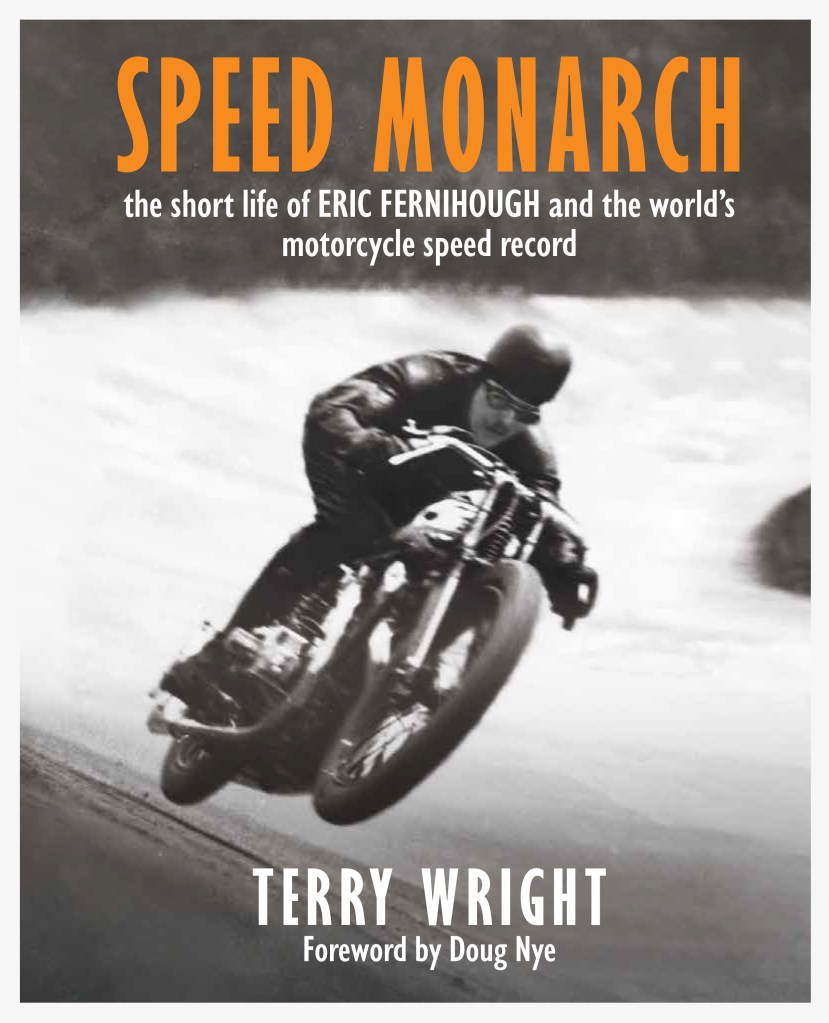
Click the button below to order a copy of our acclaimed book Speed Monarch; the short life of Eric Fernihough and the world’s motorcycle speed record. It is packed with JAP history. For more information about the book please go to one of our earlier posts in the left hand menu panel.

PS there is only one BUY button but sometimes the system shows multiple copies which nobody can explain. Any of them will work!

/**/

LUNCH WITH A THREE-TIMES COOPER CHAMPION Part 1

by Charles Reynolds

Charles Reynolds has recently acquired British hillclimb champion David Boshier-Jones’ Cooper JAP. He went to have lunch with him in South Wales and has written this two-part account of his Cooper career. David is a spry 93-year-old who retains clear memories and has kept precise records of his career and rise to fame as Cooper-twin mounted British Hillclimb Champion in 1958, 1959 and 1960. First is Charles’ account of David’s early 500cc racing days and this will be followed by an account of his winning the RAC British Hillclimb Championships of 1958, 1959 and 1960.

The Boshier-Jones family ran the Newport Garage in the town of that name in South Wales which had held an Austin agency since 1922. David Boshier-Jones’ grandfather had competed in many local hillclimbs in a Gwynne Eight, so sparking the interest in motorsport of David and his younger brother Peter. At the tender age of 20, David managed to convince his father to buy a Kieft 500, then made in nearby Bridgend, and he started racing it in 1952.


The Boshier-Jones Cooper with a fabulous British racing and hillclimb history is now owned by author Charle Reynolds

David had been impressed by the prototype Kieft driven by Stirling Moss which had won eight races in late ’51 and early ’52 and it seemed sensible to buy a Kieft, even though it would be JAP-powered at a time when the top drivers were buying complete Norton motorcycles to acquire Manx engines. In reality the production Kieft proved to be quite heavy and unreliable and in David’s opinion Cyril Kieft should not have been in the racing car business and should have stuck to making kitchen pots and pans at his Wolverhampton factory.

David’s first event was on 20 April (Easter Sunday) 1952, at a hill-climb at Lydstep Haven near Tenby in Pembrokeshire. It was 880yds long from the beach using a holiday camp road. David finished in a class second behind Jack Moor’s Wasp and was 3rd overall. In that first year he contested 13 events with 6 podium placings which was a good start considering the reliability of 500’s in that era. He was fortunate in have an excellent mechanic from the garage, a committed bachelor who stayed with him until 1960. He and David learnt a lot about the sport and chalked up many hundreds of travelling miles in the pre-motorway era well before the Severn bridge was built and made travel from South Wales a lot more convenient.

Through the 1953 and 1954 seasons the Boshier-Jones team persisted with the Kieft which was eventually fitted with a Manx Norton engine. They engaged Don Parker at one stage to try and cure the car’s unreliability. The car was tricky to drive with its pronounced front seating position and swing axle rear suspension; one small error meant the car was difficult to hold, especially in the wet. The original design had been ahead of the opposition, but others had now caught up and had gravitated to a conventional mid-seat spaceframe chassis with wishbone suspension. David decided to buy a new Mk9 Cooper which had just been introduced for 1955.

David Boshier-Jones with his long-time mechanic Les Ryland.

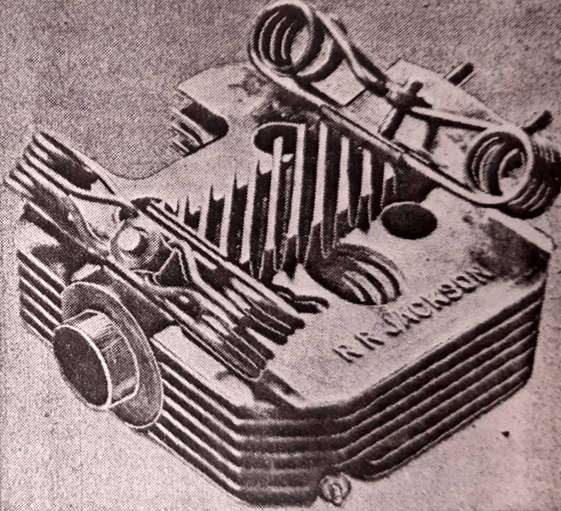
The Norton unit from the Kieft was fitted to the Cooper after Robin Jackson had upgraded it, including one of his twin-plug heads as earlier featured in Loose Fillings. The Cooper was much more forgiving than the Kieft although it took some time to get used to – David says he really needed miles behind the wheel and unfortunately there was nowhere to test the car locally so his learning curve tended to be at races or on the hills.

David’s first Cooper race was on Easter Monday at Goodwood where unfortunately he retired due to a fuel blockage. Then in May he was 10th at Silverstone followed by 6th in his class at Prescott two weeks later. In mid-June he was at Brands Hatch where he was 4th in his heat and 7th in the final. Also in June there was a big meeting at Shelsley Walsh, again run in the rain, where he was 2nd to Don Parker’s Kieft. A week later at Brands Hatch he won both his heat and the final before going to Prescott the next day on his way home where he won the 500class ahead of Henry Taylor and Austen May. At last, he says, things were looking up!

This first year with the Cooper was really busy and tiring yet rewarding. David and his team contested an extraordinary 26 events, had won 20 awards and he had finished 4th overall in the national 500 championship behind Jim Russell, Ivor Bueb and Stuart Lewis-Evans. But where to next? The 500 movement had peaked and interest was starting to decline as the sport became more professional; Coventry Climax was producing competitive 1100cc engines and sportscar racing had gained a foothold. Nonetheless 500 races were invariably closely fought and exciting.

Now 25 and married with a second child due, David didn’t want to follow others chasing the few Formula 1 seats. But at the 1955 Motor Show in London he met with Colin Chapman and Reg Tanner from Esso. Chapman agreed to loan him a car while Esso would supply a Coventry Climax engine. Reflecting on the increasing number of accidents at the top level and his responsibility to his family, David decided to do another year in F3. So in 1956, with a family to support and increasing work pressure, he felt it was time to cut back a bit on his motorsport activities and he only contested 10 events that year, gaining five awards.

At the end of September came David’s major success of the year, with this time winning the Commander Yorke Trophy from Tommy Bridger and Ivor Bueb. In the 100-mile final both the car and David were on good form and he led throughout. He was well clear of Jim Russell whose turn it was to break a drive-shaft. This was a satisfactory conclusion to a year of fewer events and one during which David also made the decision to concentrate on hill-climbing in future. He had always enjoyed the individual and precise nature of the discipline where no one else was going to take you off.

His idea was simply to install a JAP V-twin in his Mk9 Cooper; however John Cooper advised that the car would be better balanced and more serviceable by extending the chassis by 2” (factory twins are thought to have been 3″ longer – Ed) so the Cooper went back to Surbiton for the work to be done. At the same time he bought a new V-twin engine direct from the JAP factory in Tottenham which was installed at Cooper’s works and which Robin Jackson agreed to look after.

His absolute commitment and concentration can be seen as David Boshier-Jones rounds the last hairpin at Scotland’s Rest and be Thankfull hillclimb in his big-twin Cooper.

Whilst this was going on, Robin Jackson asked David if he would drive his 500cc Cooper in selected races. Robin would look after the car and David would drive it, although there was nothing financially in it for him. David would never know why Robin wanted to run his own car … perhaps it was to parallel the Moss/Beart relationship which later extended to Les Leston, Colin Davis and Stuart Lewis Evans.

One problem of the relationship was that Robin expected David to be available for testing and other work at any time, which proved tricky as he had a full-time job at the garage. There were few professional drivers back then, and David says he wasn’t one of them! (may delete this last para). David’s Boshier-Jones’ first outing in 1957 with the JAP V-twin was at Prescott where he was third in the Formula Libre class behind Michael Christie and Tony Marsh, also on Cooper V-twins. At the end of June David went all the way to Scotland for the next round of the RAC Championship at Rest-and-be-Thankful. This was a totally new hill for him so he took it easy, again coming third to Tony Marsh and Michael Christie.

To be continued 

 This story has been drawn from the 500 Owners’ Association Yearbook which was published in early 2025.

‘MAESTRO OF THE HILLS’

Click the button below to order a copy of our acclaimed book Speed Monarch; the short life of Eric Fernihough and the world’s motorcycle speed record. It is packed with JAP history. For more information about the book please go to one of our earlier posts in the left hand menu panel.

/**/

PS there is only one BUY button but sometimes the system displays four of them – you can click any of them!

Bruce Walton was Australian hill-climb champion for six years on the run from 1958-1963 and for that he had a place in Australia’s Guinness Book of Records. Over the past thirty years Loose Fillings editor Terry Wright has first restored and then hill-climbed his cars in Australia and as far away as the northern tip of Ireland.

After taking a science degree at the University of Adelaide, Bruce moved to Melbourne in the early ‘fifties to take up a post in the laboratories of the new Gas and Fuel Corporation, with which he stayed all of his working life. As some did then, he took a keen interest in the new 500 car movement, and set about building a Cooper likeness. He started by buying a pair of Ford 10 stub axles and after he ran out of room in his bed-sitter the project was moved to Ken Gayfer’s workshop in Coburg North (below). Bruce happened on an 8-80 twin JAP from a crashed Cooper and this was his brave choice of engine rather than a 500.

Under construction with the 8-80 JAP in Ken Gayfer’s Melbourne workshop

The car, the Walton Special – later known as the Walton JAP – made its first appearance at the Fishermens Bend records day on 18 July 1953. Then followed Templestowe, Rob Roy, Albert Park, Templestowe again and Altona, with the 8-80 JAP eventually being superseded by a more manageable and reliable 500 JAP

Flying at Rob Roy, Victoria: Photo by Peter D’Abbs

The best performance to date had been at Templestowe with a second fastest-time-of-day – FTD – but with the 500 Bruce drove better and better. There was a third at Fishermens Bend races, a class win and third FTD at Collingrove, South Australia, a first at Altona, and class records at Rob Roy and Templestowe. The 8-80 went back in for 1956 – it was later supercharged – and there followed class and meeting wins at hillclimbs around Australia including Newcastle for the NSW championship (first) and Bathurst for the Australian championship (second to Lex Davison).

Chasing the NSW championship at King Edward Park, Newcastle in 1956

With a supercharged 1098cc JAP installed, Bruce finally beat the Davison car, which was tuned by Phil Irving, over the closely fought three rounds of the Victorian Hillclimb Championship in 1957. In the final round at Rob Roy on 5 November, if Lex made FTD then the title was his; if Bruce made FTD it would be a tie and he would win the title only if he got the bonus point for a new hill record. Lex’ last run was a new record at 24.44sec; Bruce, who had been frantically replacing his over-stressed universals, made a final last dash of the day in … 24.4sec! With a new record the title was his and photographs show that nobody seemed more pleased than Lex himself.

Hepburn Springs, Victoria, with the big JAP now supercharged

With more than a few factory racing cars to his name, Lex sometimes teased Bruce about his ‘home-built’ special. In 1958 Bruce took the bait and bought a Mk8 Cooper which had pressed him hard when he had been up to New South Wales to take the state championship. The Marshall-blown 1100 JAP was slotted into the new car and the ‘Walton- Cooper’ was born, first appearing at Rob Roy on June 1, with a not very good time of 26.24sec. Disappointingly, the new car was nearly two seconds slower than the old one.

Bruce tips the Walton Cooper into the first corner at Templestowe, Victoria

It took months of work to find and cure the Cooper’s massive handling problems. Built for fast racing on (relatively) smooth English airfields, the Cooper just couldn’t handle the bumps that were the norm on Australian hills. When sticking  splines on the rear drive-shafts were diagnosed and replaced, Bruce was back at the top from the two Victoria rounds of the 1958 Australian Hill Climb Championship, beating Lex Davison’s Cooper at both.

Bruce’s team at work on the Cooper  in the paddock at Templestower

It was the beginning of a run of titles that earned Bruce his place in the (Australian) Guinness record book for the most successive Australian championships in any sport –  from 1958 to 1963. Of course he again won New South Wales, Victorian and South Australian state championships, his last meeting before retiring being the Victorian titles at Templestowe on 10 November 1963. It was his seventh in a row and his notes simply say “FTD 54.07 on melting surface. McEwin (Elfin) 56.64. Replaced cracked piston during the day”.

Bruce was absolutely committed to his car and to driving it –  just look at the pictures. He was very kind to the writer when he acquired and restored first one and then the second of Bruce’s cars; he would write long letters of advice enclosing data from his record books. At our last meeting at Rob Roy he looked wistfully at the Cooper and said to his wife Camille, “Did I really own that?”

Absolute concentration at Silverdale, New South Wales

Maybe 60 years on now, going to see Bruce Walton is something people still remember from their younger days, as the late Peter Brock once recalled. As a great champion, Bruce had many headlines over his name and my favourite probably sums him up best – Bruce Walton: Maestro of the Hills.

Terry Wright

The Walton Cooper (top) is today almost exactly as Bruce Walton had it, complete with its Marshall cabin blower supercharger but with a modern roll hoop, a fire extinguisher, seatbelts and coil ignition. The Walton JAP (below) has a reproduction of the original 8/80 JAP engine with beefed up ignition and carburettors plus a starter motor where the blower (now on the Cooper) was originally mounted.

MY REMARKABLE WGM 500

by Chester McKaige

__________________________________________________________
Click the button below to order a copy of our acclaimed book Speed Monarch; the short life of Eric Fernihough and the world’s motorcycle speed record. It is packed with JAP history. For more information about the book please go to one of our earlier posts in the left hand menu panel. PS there is only one BUY button but sometimes three display! Take your pick.

/**/

________________________________________________________________________

The post-war motoring enthusiast in Australia was very much like that of his counterpart in England in seeking an affordable means to take up amateur motorsport with whatever came to hand.

Two friends, both working at the Commonwealth Aircraft Corporation near Melbourne, A.M. (Maurice) Wheeler and J. E. (Jack) Gow, decided in their spare time to build a 500cc powered racing car from parts sourced from the ‘scrap bin’ at work. A design was drawn up on the back of an envelope, and work commenced in the summer of 1951.

The design was different to the cars being built in the many garages around Victoria. For a start, the design was to use front-wheel drive with the engine mounted ahead of the front axle. The chassis was of a cruciform construction made of aluminium alloy sheet boxed and riveted together as in aircraft design.

The WGM at the Australian Grand Prix meeting of 1956. Maurie Wheeler is on the left with his arms folded, Jack Gow is on the far right with the clipboard.

The engine used was a Matchless G80 single-cylinder 500cc motorcycle engine which was extensively modified with a compression ratio of 12:1. A large Amal 1-5/32in diameter bore carburettor was used. The engine-driven fuel pump was used to draw fuel from the main tank to a header tank that gravity-feeds the carburettor. The fuel used was Shell ‘A’ methanol. A large SU fuel bowl was later attached to the Amal carburettor.

The front wheels are independently suspended and are mounted on transverse wishbones. The outer ends of the wishbones are connected to full-length fabricated kingpin members with swivelling ends. Suspension is by an assembly of rubber ‘bungee’ cords. Friction dampers are fitted to the upper inboard wishbone pivot shafts.

The drive is straight-through with no differential. From a countershaft fitted with radial ball bearings mounted in the chassis box, the drive is through splined shafts and Holden universals to the front wheels. The final-drive sprocket is mounted on the left-hand side of the countershaft, and the brake disc is on the right-hand side. A Norton gearbox is mounted on top of the chassis box, and the primary chain comes up to it from the engine and the secondary chain then drives down to the final drive sprocket

The rear axle is a beam type and consists of a high-tensile steel tube with the hubs mounted on two radial ball bearings at each end. It is located on the centreline of the chassis at the rear in ‘De Dion’ fashion, with the mounting free to pivot and slide vertically. The outer ends of the axle are located by fore and aft torque members attached to the chassis on their front ends. The suspension uses bungee cord and steel cable mounted on aircraft control pulleys. ‘Hartford’ type dampers are fitted at each side.

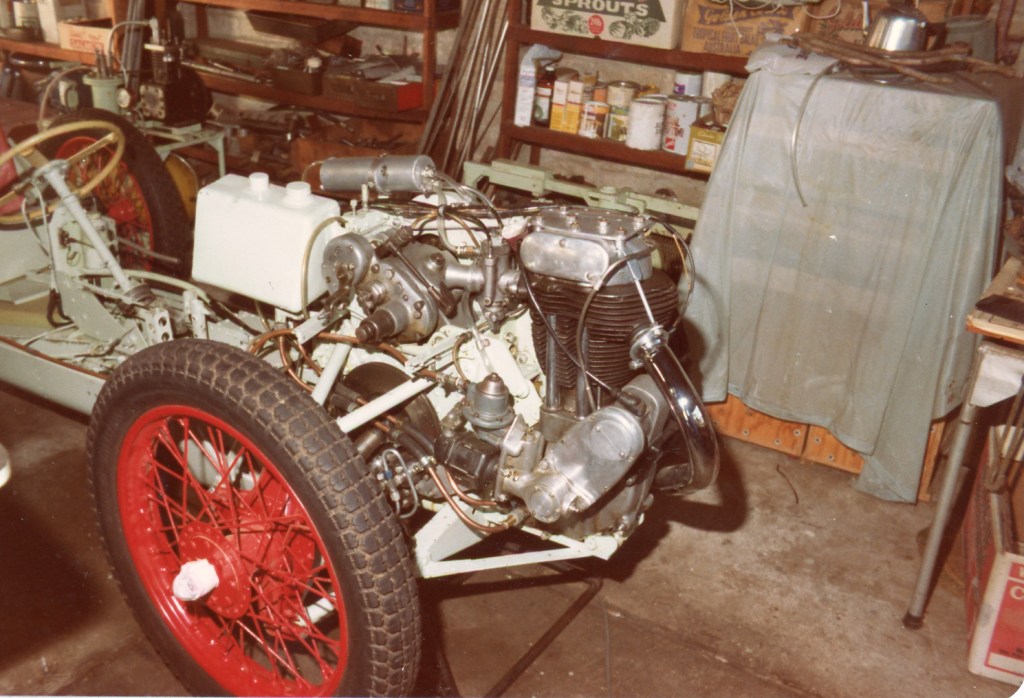
Top: The general arrangement of the front end of the WGM in Chester McKaige’s workshop in Tasmania near Launceston
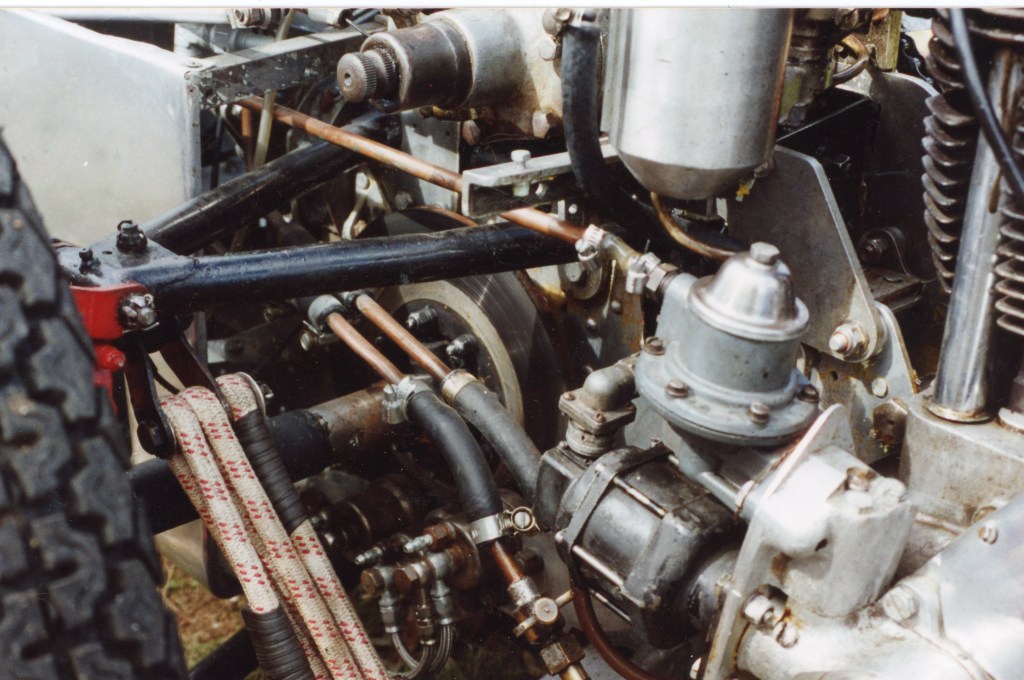
Bottom: the central front disc brake and the drive to the front wheels

The original bungee cord used was an ex-DC3 aircraft undercarriage component that, over time, unravelled itself in what looked like large strands of spaghetti. A new length of cord was obtained from ‘Hanger 9’ in Moorabbin, Melbourne.

Top: the single- sided rear brake
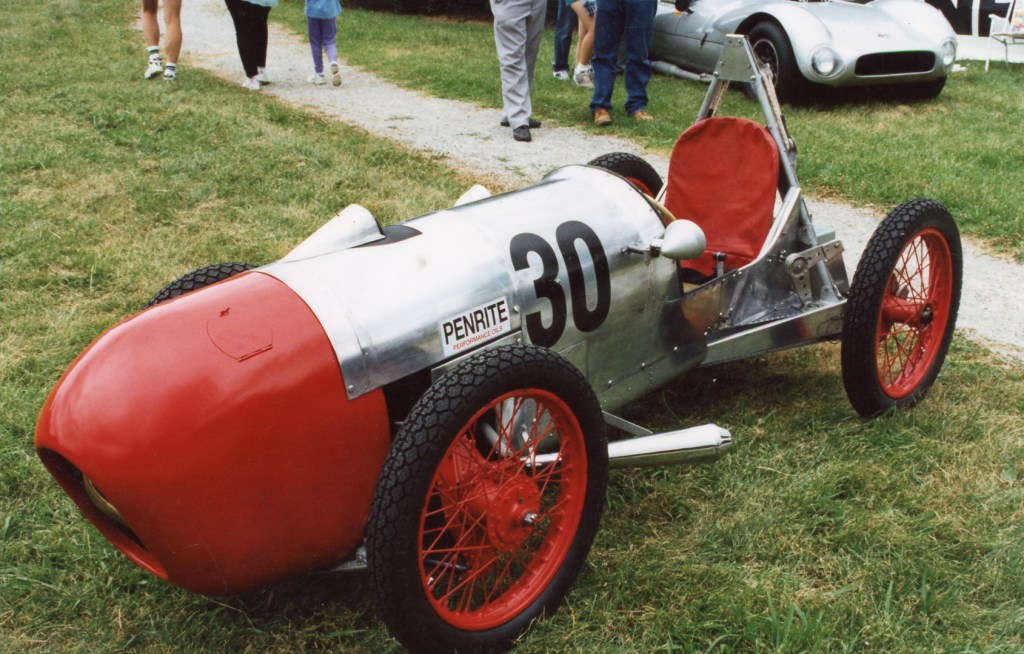
Bottom: the WGM (Wheeler Gow Motors)  in its present splendid condition

From the steering arms to the kingpins, divided tie rods with swivel ends are attached to a vertically pivoted sector shaft; aircraft steel cables run back through a series of aircraft control cable pulleys to a drum mounted on the lower end of the steering column with an intermediate pulley system to give a gear reduction.

It is believed the parts used came from the trim-tab controls off a Liberator bomber.

The steering wheel was a later modification, the car originally having a handle-bar! The car is fitted with front and rear disc brakes, and Maurice Wheeler designed these as a result of his experience designing the braking system on the Winjeel trainer aircraft.

(On this subject, note that this was 1951-1952, and Jaguar was the first to feature disc brakes on a race car in 1953).

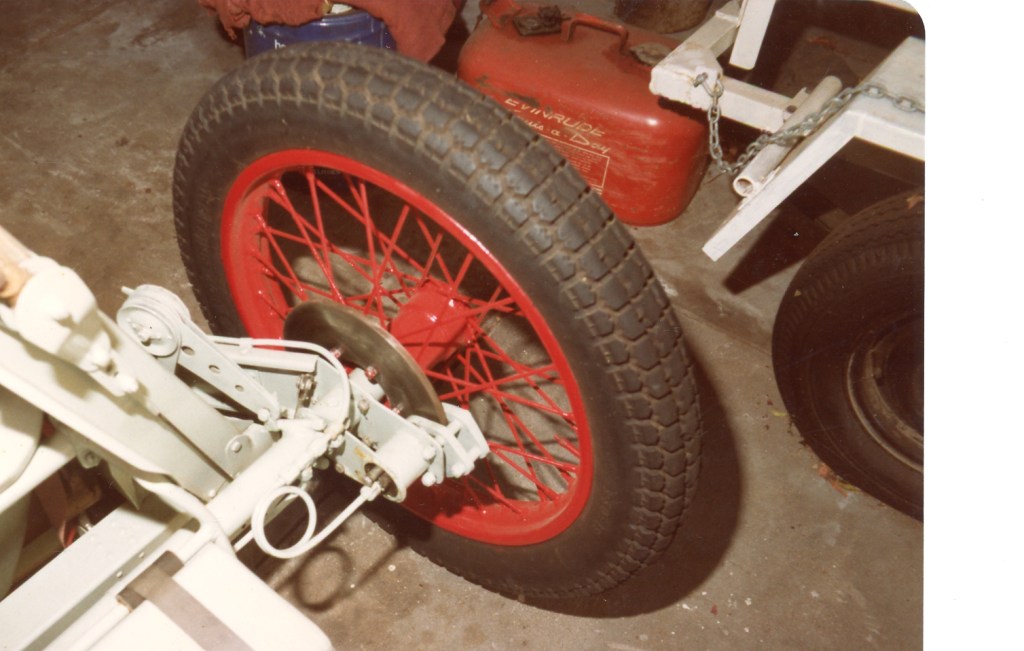
A single disc ½ “ thick x 10 “ diameter is used at the front, directly mounted to the countershaft axle. The calliper has three 1½” diameter pads on each side of the disc. These are operated hydraulically by three separate pistons of the same diameter using cup seals. They are interconnected together hydraulically. The calliper assembly is mounted on a beam, restrained at each end and free to move laterally to centralise the pads and allow for wear. The material is Ferodo VG 97.

The rear brakes have only one pad on each wheel and are the same dimensions as the front.  The calliper is free to move laterally to allow the brakes to centralise.

Two master cylinders ex BMC are fitted. One for the front and one for the rear. They are interconnected by a beam to give proportional braking. In addition to the foot pedal, a hand lever on the left side of the cockpit allows the brakes to be applied by means of a Bowden cable.

Maurie Wheeler writes that the car was originally conceived to provide something different to and more interesting than the general run of rear-engined Cooper type vehicles. The sheet metal and fabrication work was done by J. E. Gow and the mechanical work and machining by A. M. Wheeler. Some 3-4,000 hours of work is a conservative estimate of the time spent on the project.

The car first ran at Rob Roy in 1952.  It also ran at Templestowe, Fishermans Bend, Altona and Darley race meetings. The last appearance was at Albert Park in the curtain raiser to the Australian Grand Prix of1956, the Argus Cup, but unfortunately the car broke a crankpin due to driver error. The car was originally driven by Jack Gow, but he retired to get married and Maurice Wheeler later carried-on single-handed for a few years.

After the Australian Grand Prix of 1956, the car was rebuilt to replace the crankpin and cast-iron flywheels, but  work commitments got in the way until it was completely overhauled in 1981 and an engine rebuild was completed.

Maurie Wheeler, as already mentioned, climbed the ladder to become a leading draughtsman at the Commonwealth Aircraft Corporation. The author’s father, George McKaige, was also a draughtsman serving under Maurie who went on to become a designer of rockets at Woomera Rocket Range, whilst Jack Gow spent many years across the road in Port Melbourne at General Motors Holden. He was involved in the body design of a large range of Holden cars.

When Maurie eventually retired, my father used to go and visit him and of course watched the rebuild of the WGM. Years passed, and Maurie, a heavy pipe smoker, died. His son was responsible for settling Maurie’s estate. It was proposed that the car would be included in a Shannon’s auction. At that time I was working at Penrite Oil and Lou Russo, owner John Dymond’s mechanic, had begun working on one of John’s Coopers. My father called me and suggested I take a look at the car, simply because it was an intriguing vehicle.

I got hold of Maurie’s son (whose name escapes me) and said I would like to see the car and an acceptable time was made that same day, I recall it being a Sunday.

Before leaving home, I thought I’d take my chequebook just in case.

I looked around the car, asking heaps of questions. I got the impression that it was a bit of a burden hanging around his neck. In the end, I asked him what he wanted for the car, to which, after some thought, he came up with $5,000. I couldn’t write the cheque any quicker than I did.

The next day, during morning tea at Penrites, we were all discussing what we had done at the weekend. I said that I’d bought a 500cc racing car and went on to describe it. Immediately John Dymond and Lou Russo said, we must go and pick it up today and so armed with the Penrite truck, we ventured to Moorabbin, met Maurie’s son and loaded up the car.

Ten days later, Mark Dymond drove it without a muffler around the Penrite factory complex at Bayswater.  Lou Russo did some work on it after Mark’s initial drive, and we entered it in a couple of Rob Roy hill climbs and it featured on the poster at Geelong Speed Trials in 1997.

I engaged my brother-in-law to drive it as it was too narrow for me. We had a shake-down run at Calder Park, where the car circulated at 80 mph without a problem. The highlight of my ownership of ‘Bungee’ as it was called was when Jack Gow drove it up Rob Roy, he having not seen the car since 1957.

Today, it sits in my garage amongst my other cars, and later this year, it will have a birthday, with attention being given to its brakes and a new starting device.

BIG TWIN COOPER NEWS

____________________________________________________________________

Click the button below to order a copy of our acclaimed book Speed Monarch; the short life of Eric Fernihopugh and the world’s motorcycle speed record. For more information about the book please go to one of our earlier posts in the left hand menu.

/**/

________________________________________________________________________

If Loose Fillings had a ‘To Do List’ we would surely have on it the writing of the history of ‘big-twin’ engined Coopers in Australia. We have already published an account of these in New Zealand but for Australia there still needs to be a certain amount of sifting of fact from fiction before the full story can be written.  We hope to do this in the next year or two in a new edition of our book Power Without Glory: Racing the Big-Twin Cooper.

Typical of the currently incomplete Australian stories is that of an initially South Australian Cooper twin with a long history, laterly with four-cylinder engines. The story as we currently have it begins with the possibly incomplete Cooper factory records published by Doug Nye in his book Cooper Cars (published 1983 and 2003) where it is listed in Appendix 5 as follows: Mk.V/4/51 – (sic) – John Crouch – 1100cc- unpainted with black, set 500cc mountings and exhaust, Norton 500cc. As most readers will know, John Crouch was the early Sydney-based Cooper importer. An Australian account such as in John Blanden’s book Historic Racing Cars in Australia describes the car slightly differently as MkVL/4/51.

The subtle difference in the numeration given in these two sources cannot be checked against a chassis plate or other documents because we cannot currently make contact with the current owner. Be that as it may,some new information and photographs have recently come to us about the car from Ian Steele, the son of one of the early Adelaide owners, Don Steele, and there are more to be found in several editions of John Blanden’s book.

Various sources tell us that the car was painted gold when it was first sold to Bill Craig, and one of its first outings was at Bathurst Easter 1952 in the Australian Grand Prix. No less than 6 Cooper twins started the race but only one finished and it wasn’t the immaculate Craig car which dropped out after just 6 laps – Blanden tells us the problem lay with unequal cylinder head stud tightening but that is all we know.

The Bill Craig Cooper at Bathurst for the Australian Grand Prix Easter 1952. AGP history author Author Graham Howard suggested that the crew’s body language reflected the difficulties of racing such a car at Mt Panorama.

Craig crashed spectacularly suffering concussion and back injuries at the opening Port Wakefield meeting in January 1953. The car was advertised for sale in Australian Motor Sport of November 1953 and it was eventually bought by the Glenburn Road, Firle, Adelaide, garage owner Don Steele. It is from Don’s son Ian (seen at the wheel in the first photo below), that our latest information and the following photographs have come.

A young Ian Steele at the wheel of his dad’s Cooper with a JAP single now installed and Don, below, at his Caltex garage on the Glenburn Road.

Off the line at Collingrove hillclimb and further up the hill (below).

It seems that Don Steele did not, or rarely, competed himself, but others drove the car for him, especially Jack Johnson, Neil O’Brien, DL Harrison and maybe Bill Pile. The car was obviously repaired after its Port Wakefield crash and was apparently then painted white. It regularly ran with a 500cc JAP single instead of the twin engine.

We are not sure of the exact dates the car moved on to its next owner, Bill Pile, who bought the car about 1960 and later fitted a Coventry Climax FWA engine with a Volkswagen gearbox. A succession of owners followed until the car was last heard of with in the hands of Alan Tidbury who we have not been able to contact for more information. If and when it becomes available we will update this story.

In the meantime, enjoy the new photographs with thanks to Ian Steele. If you can provide any more information about the pictures please let us know.

BUY SPEED MONARCH

Click the button here to order a copy of our Speed Monarch; the short life of Eric Fernihopugh and the world’s motorcycle speed record which is packed full of JAP speed history. For more information about the book please go to one of our earlier posts in the left hand menu.

/**/

PS there is only one BUY button but sometimes the system displays four of them – you can click any of them!

Books are shipped from our UK printer Lavenham Press. When you enter your address the packing and postage charge will be automatically displayed. You can then pay by credit card. If you want more than one copy please email sales@loosefillings.com with your requirements.

For more about the book go to our previous post by clicking in the left hand menu.

________________________________________________________________________

Buy our acclaimed book

Click the button here to order a copy of our Speed Monarch; the short life of Eric Fernihopugh and the world’s motorcycle speed record which is packed full of JAP speed history. For more information about the book please go to one of our earlier posts in the left hand menu.

/**/

Books are shipped from our UK printer Lavenham Press. When you enter your address the packing and postage charge will be automatically displayed. You can then pay by credit card. If you want more than one copy please email sales@loosefillings.com with your requirements.

For more about the book go to our previous post by clicking in the left hand menu.

________________________________________________________________________

FERNIHOUGH WORLD RECORD BOOK SELLING FAST

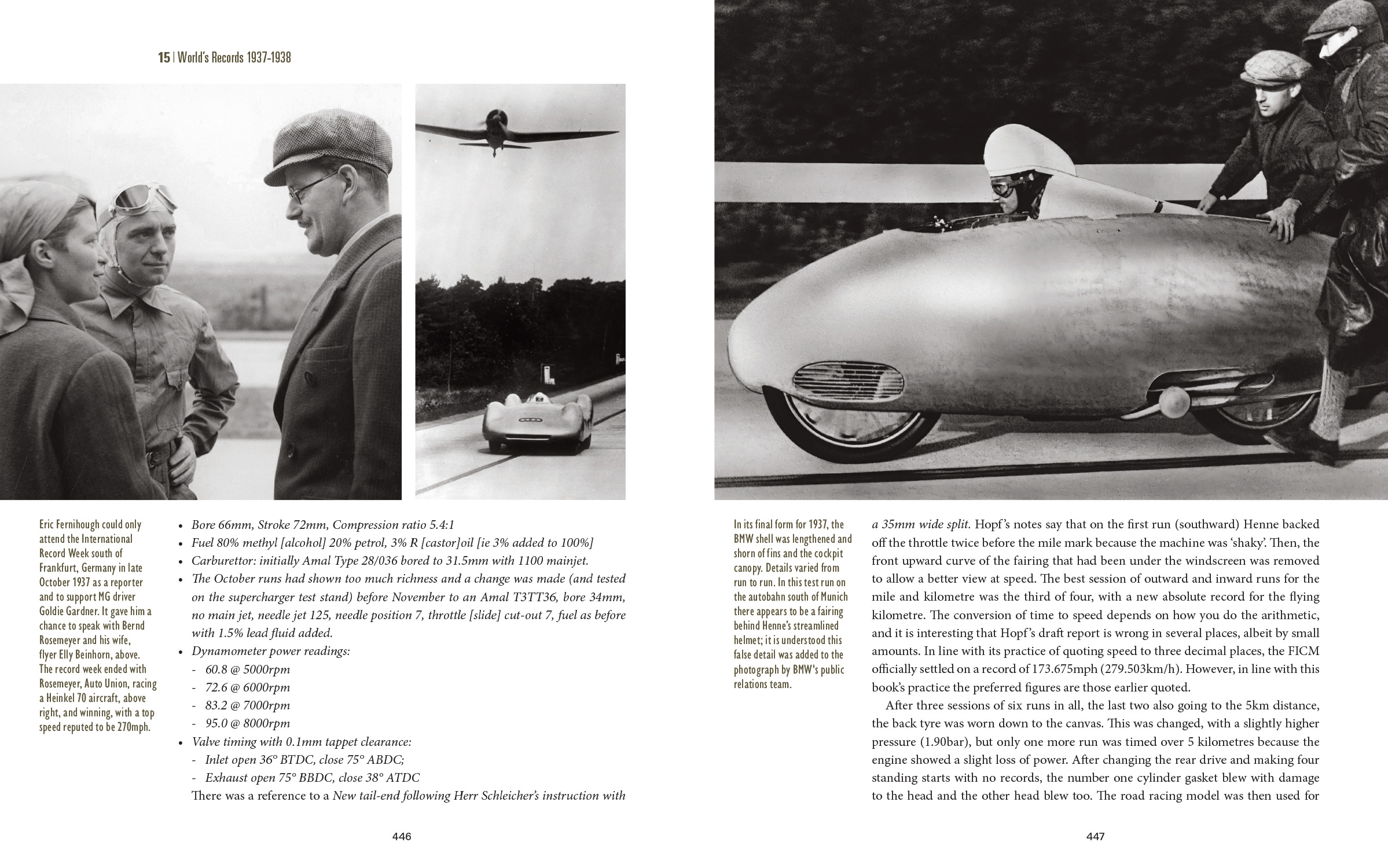
Speed Monarch is a hard-back book in full colour with over 500 pages and over 400 photographs and drawings from the Eric Fernihough and Ernst Henne albums and papers in the Brooklands and BMW Munich archives.

The book has comprehensive coverage of early American, Australian, British, French, German and Italian world’s motorcycle speed record attempts before World War 2. To order a copy go to the next post on this blog. Speed Monarch has had overwhelmingly good reviews in the British motoring and motorcycle press and we ex[pecte to sell all the print run during this year. Don’t miss out – buy a copy now.

Author and journalist Doug Nye has written the Foreword and has commented:

My goodness you really have done his memory proud! I think it’s a stupendous piece of work … I think your overlay of technicalities, associated racing and record-breaking events and developments, the subject’s personal life, contemporary events taking place out there ‘in the real world’, relevant houses, homes and business premises, the atmosphere of the time and above all the magnificent archive content make your work very, very special indeed.

The back of the cover says this about the contents:

When Eric Fernihough lost control of his motorcycle at over 170mph, he was the last British rider to have been the ‘world’s fastest’ on two wheels. An orphan, an adopted son, a public schoolboy, a Cambridge graduate, an engineer, a noted tuner, a European motorcycle champion, a multiple Brooklands race winner, ‘Ferni’ was a motorcycling household name in the nineteen thirties. On a new road in far-away Hungary, he rode to his death on 23 April 1938. His life story, which this new book tells, spanned more than thirty year’s of furious competition for the world’s absolute motorcycle speed record before World War 2.

First in 1900 was a Frenchman on an American motorcycle. French motorcycles took the lead in 1902 until an American boardtrack rider rode his best ever at England’s Brooklands Motor Course in 1911. An English rider and machine promptly took the title back before the Americans recovered it. With the world at war, in 1916 an Australian was the fastest on a remote dirt road near Adelaide.

After a short period of American supremacy on the sands of America’s Daytona Beach, Brooklands was the setting for more world’s record efforts before the long, straight roads of France became the new battleground. British riders and motorcycles were unbeatable until German technical ingenuity, and a BMW rider Ernst Henne, became dominant during the lean years of the Great Depression.

Eric Fernihough set out to challenge this German hegemony. With supercharged big-twin JAP engines in Brough Superior motorcycles, he drove to the south of Budapest and set the absolute world’s motorcycle speed record there at 169.79mph in April 1937. Gilera-mounted Piero Taruffi just squeezed past him before Henne took the title again at 173.68mph. Back in Hungary, Fernihough was aiming for over 175mph when he crashed and was killed.

Drawing on Fernihough’s personal papers and photographs at Brooklands Museum, the Mutschler collection in Germany, Henne’s private albums at the BMW archives and many other sources, this new book has hundreds of never-before-published photographs and drawings. It is the first detailed history of the world’s absolute motorcycle speed record and the first biography of a great motorcycle rider.


Here are some sample double-page spreads from the book , the first showing some early French motorcycle record breakers ... zoom to 200% in your browser settings to see the book text more clearly.

This image has an empty alt attribute; its file name is p26-27-2.jpg

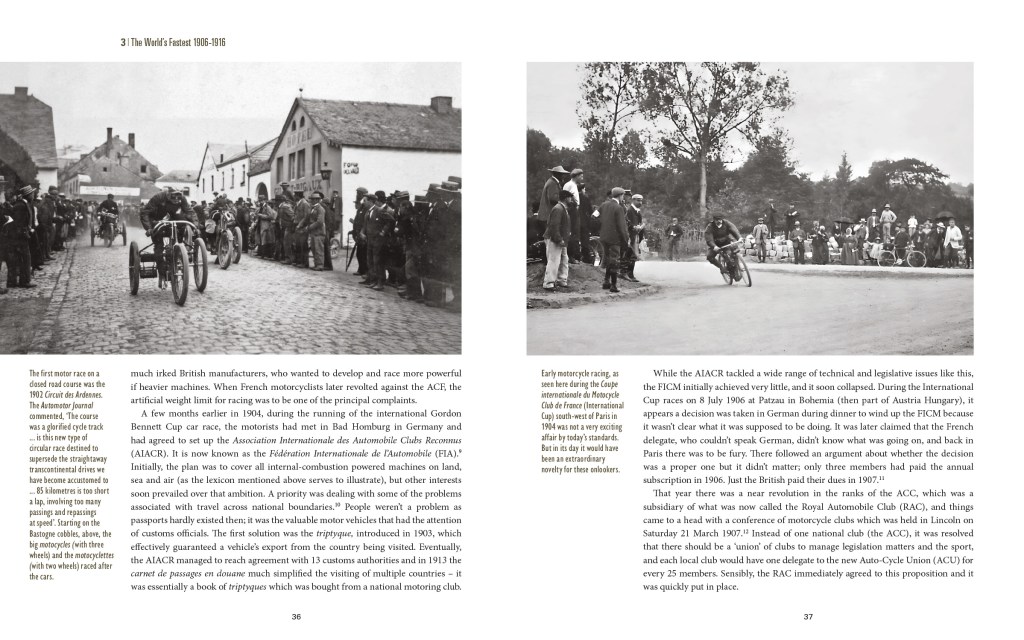
…. and the first motorcycle road races on three and two wheels ..

This image has an empty alt attribute; its file name is p36-37.jpg

In America there was a different approach to racing on banked timber board tracks and here some of the world’s fastest speeds were ridden …

This image has an empty alt attribute; its file name is p48-48-1.jpg

The massive concrete track at Brooklands, below, was the scene of early British record breaking;

This image has an empty alt attribute; its file name is p124-125.jpg

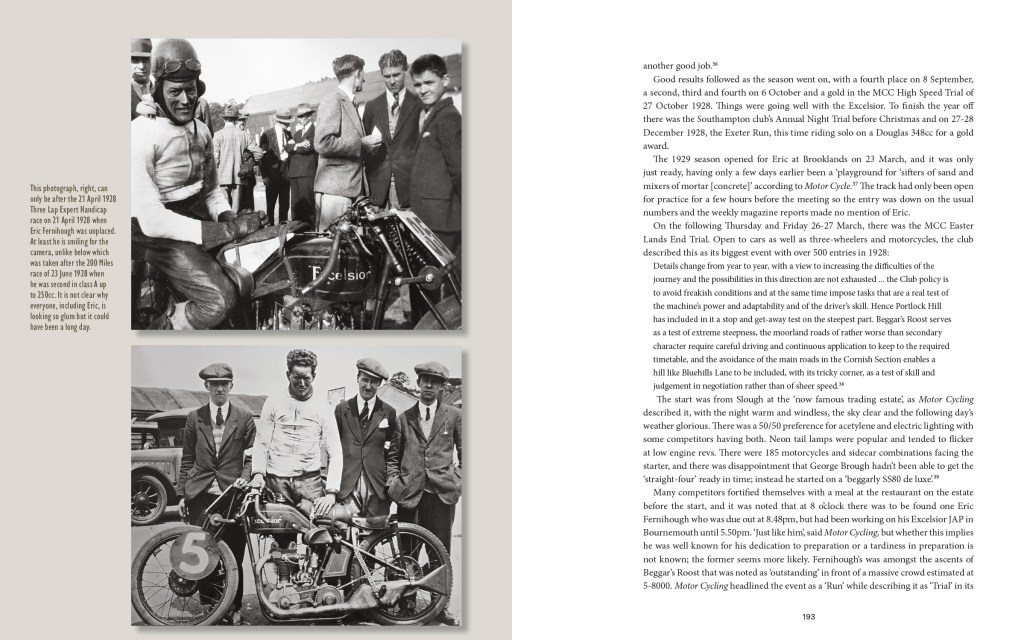
After his Cambridge university days, Eric Fernihough became an enthusiastic Brooklands racer, almost exclusively with JAP engines …

This image has an empty alt attribute; its file name is p192-193.jpg

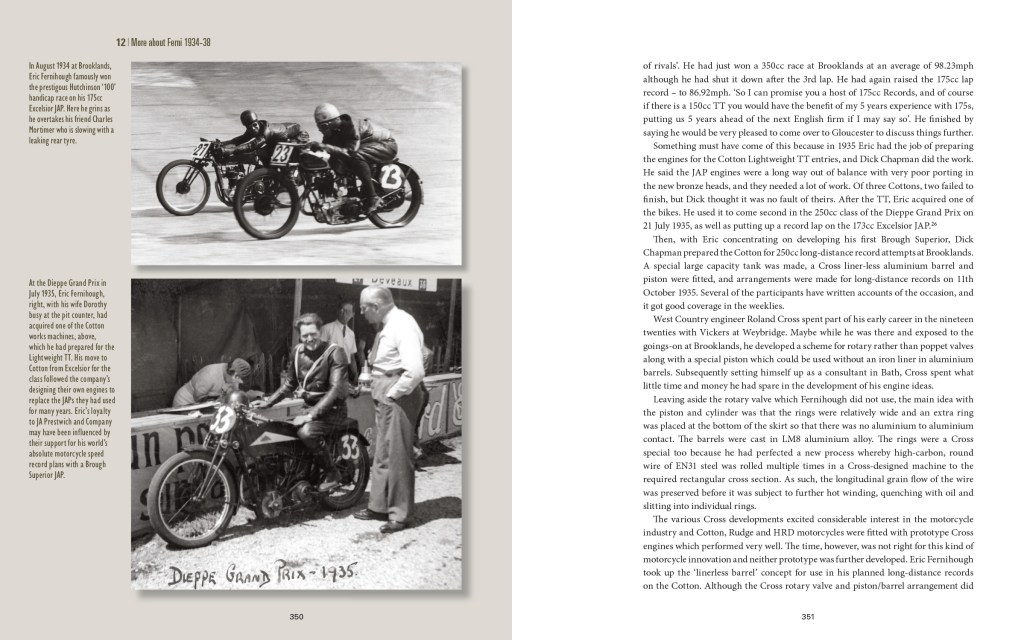
This image has an empty alt attribute; its file name is p350-351.jpg

Meanwhile the leading British riders dominated speed records during the nineteen twenties …

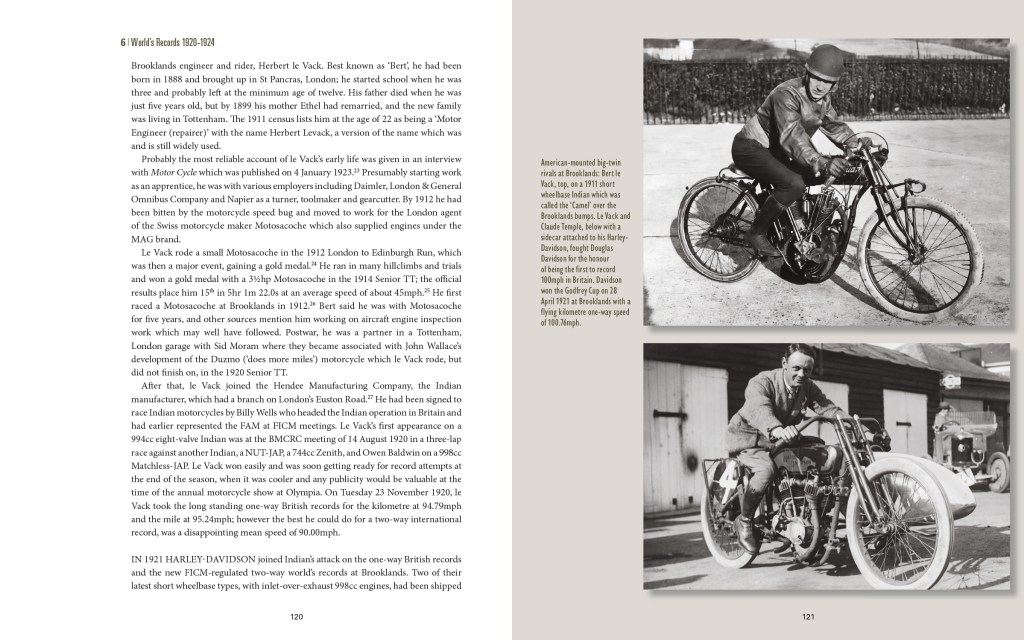
This image has an empty alt attribute; its file name is p120-121.jpg

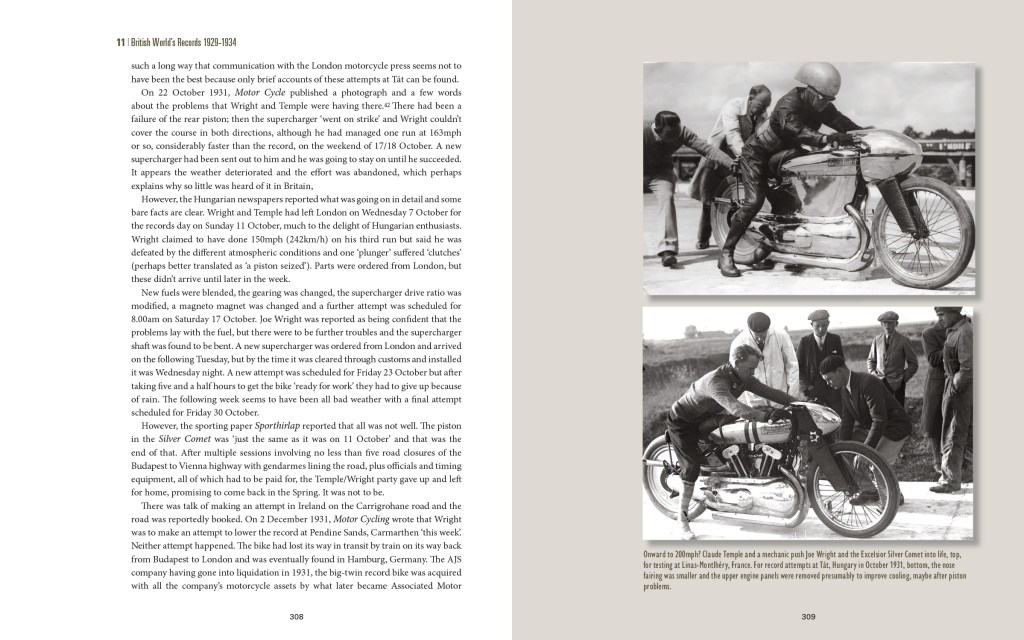
This image has an empty alt attribute; its file name is p308-309-1.jpg

This image has an empty alt attribute; its file name is p280-281-1.jpg

All sorts of ideas were put forward for record breaking motorcycles following the lead taken by land speed record car designers …

Phil Irving, second from right, below, was the designer of this fully enclosed streamlined Brough Superior JAP ……

This image has an empty alt attribute; its file name is p300-301-1.jpg

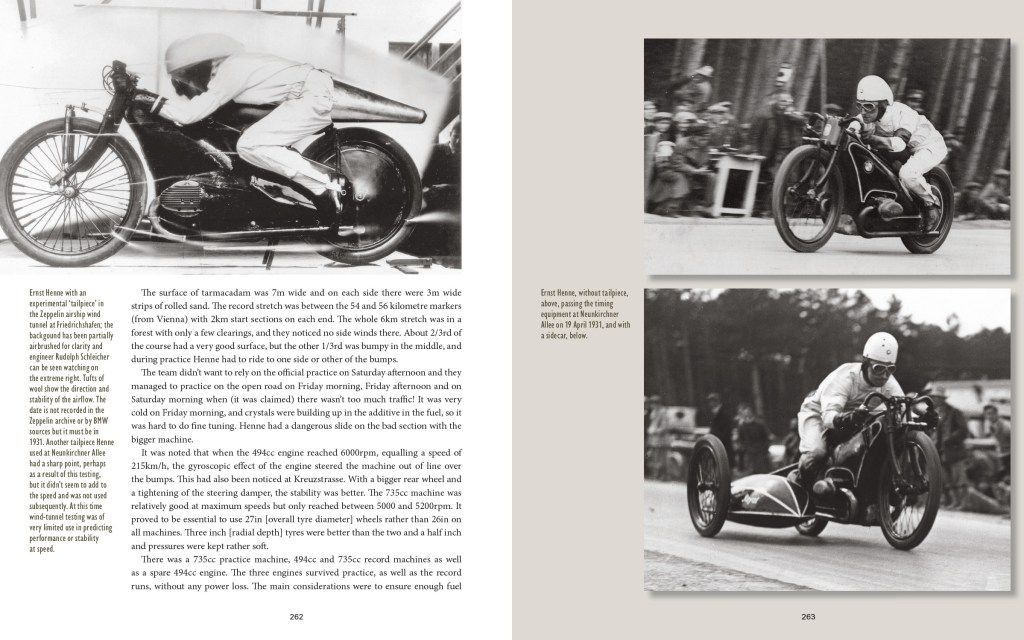
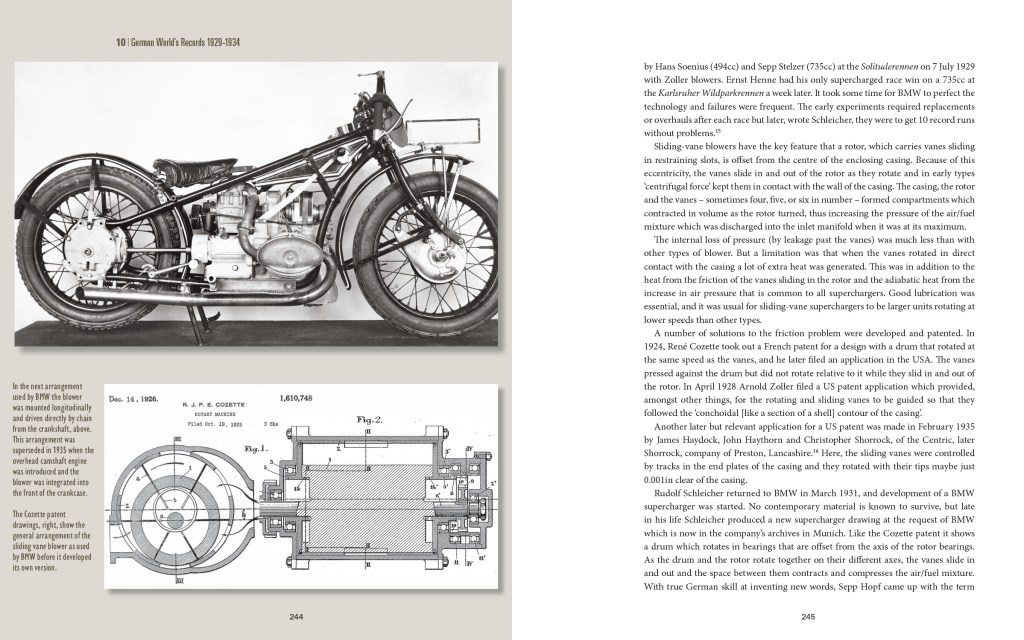
German technology with a high-revving, supercharged BMW, was all but unbeatable …

This image has an empty alt attribute; its file name is p238-239.jpg

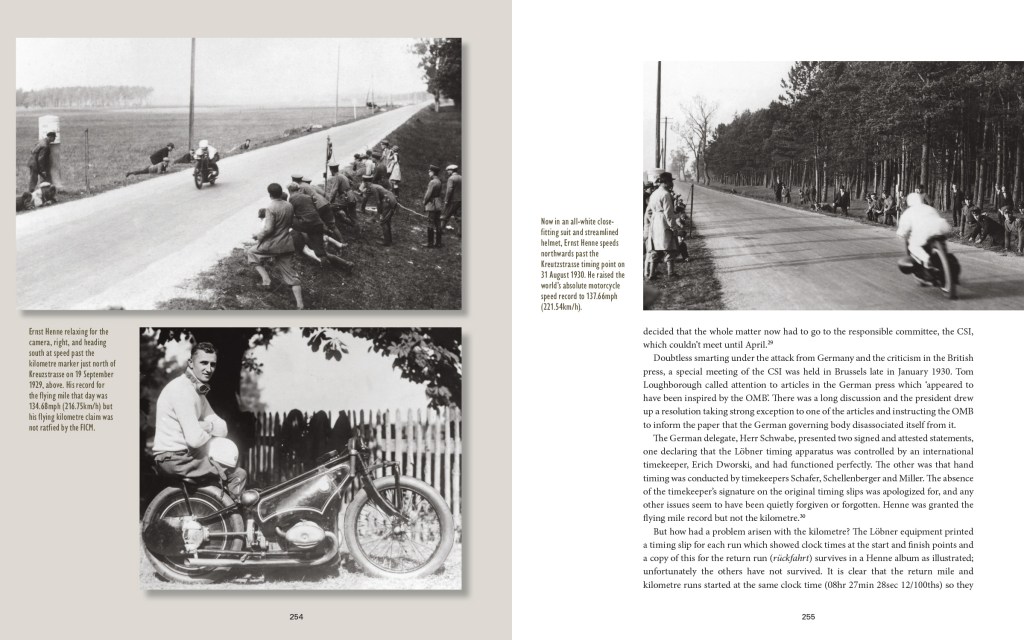
This image has an empty alt attribute; its file name is p254-255-1.jpg

This image has an empty alt attribute; its file name is p270-271-1.jpg

This image has an empty alt attribute; its file name is p262-263-1.jpg

This image has an empty alt attribute; its file name is p244-245-1.jpg

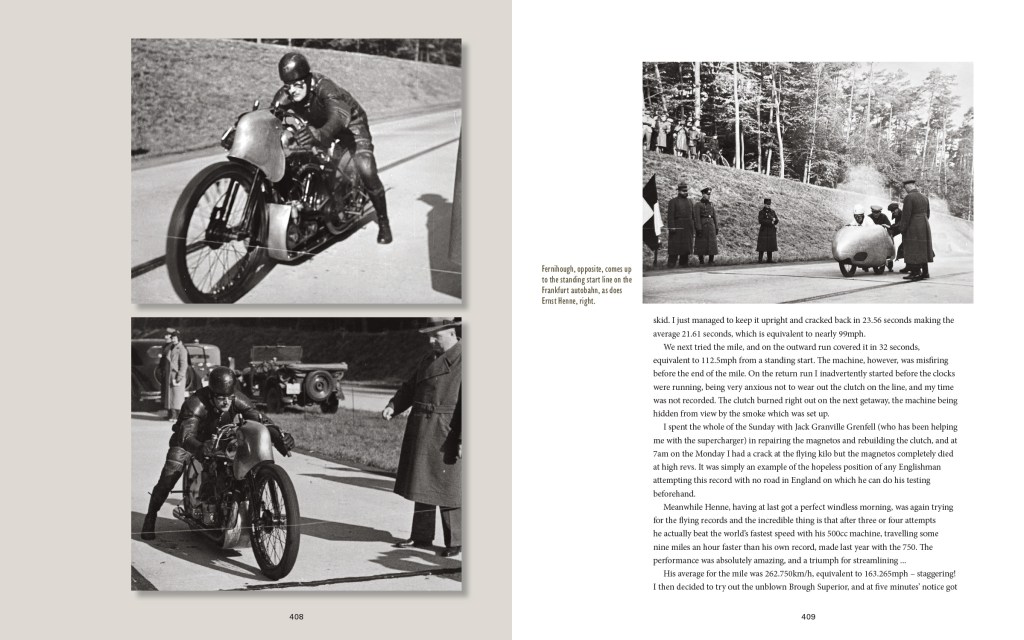
Eric Fernihough took up the world’s record challenge with a supercharged Brough Superior, eventually taking the absolute record from Ernst Henne …

This image has an empty alt attribute; its file name is p408-409.jpg

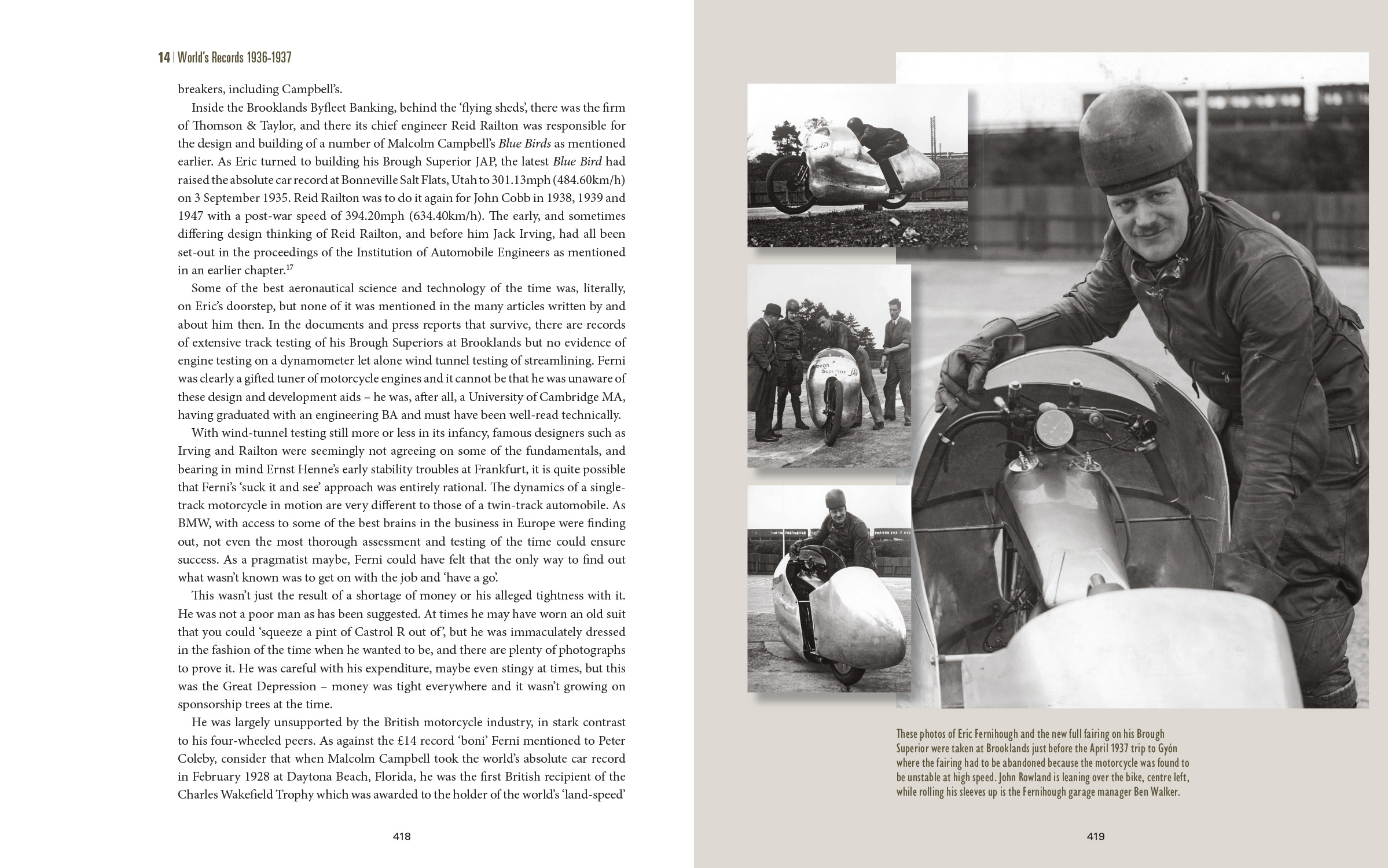
Ernst Henne took the absolute world’s record back and Eric Fernihough built a new supercharged Brough Superior with more extensive streamlining. He was to be killed during a record attempt in Hungary on 23 April 1938. Mourned throughout Europe he never received any recognition from the British crown or government.


Tor order a copy go to our next post ORDER SPEED MONARCH HERE – JUST CLICK THE ORANGE BUTTON BELOW

FERNIHOUGH BOOK SELLING FAST

Speed Monarch is a hard-back book in full colour with over 500 pages and over 400 photographs and drawings from the Eric Fernihough and Ernst Henne albums and papers in the Brooklands and BMW Munich archives.

The book has comprehensive coverage of early American, Australian, British, French, German and Italian world’s motorcycle speed record attempts before World War 2. To order a copy go to the next post on this blog. Speed Monarch has had overwhelmingly good reviews in the British motoring and motorcycle press and we ex[pecte to sell all the print run during this year. Don’t miss out – buy a copy now.

Author and journalist Doug Nye has written the Foreword and has commented:

My goodness you really have done his memory proud! I think it’s a stupendous piece of work … I think your overlay of technicalities, associated racing and record-breaking events and developments, the subject’s personal life, contemporary events taking place out there ‘in the real world’, relevant houses, homes and business premises, the atmosphere of the time and above all the magnificent archive content make your work very, very special indeed.

The back of the cover says this about the contents:

When Eric Fernihough lost control of his motorcycle at over 170mph, he was the last British rider to have been the ‘world’s fastest’ on two wheels. An orphan, an adopted son, a public schoolboy, a Cambridge graduate, an engineer, a noted tuner, a European motorcycle champion, a multiple Brooklands race winner, ‘Ferni’ was a motorcycling household name in the nineteen thirties. On a new road in far-away Hungary, he rode to his death on 23 April 1938. His life story, which this new book tells, spanned more than thirty year’s of furious competition for the world’s absolute motorcycle speed record before World War 2.

First in 1900 was a Frenchman on an American motorcycle. French motorcycles took the lead in 1902 until an American boardtrack rider rode his best ever at England’s Brooklands Motor Course in 1911. An English rider and machine promptly took the title back before the Americans recovered it. With the world at war, in 1916 an Australian was the fastest on a remote dirt road near Adelaide.

After a short period of American supremacy on the sands of America’s Daytona Beach, Brooklands was the setting for more world’s record efforts before the long, straight roads of France became the new battleground. British riders and motorcycles were unbeatable until German technical ingenuity, and a BMW rider Ernst Henne, became dominant during the lean years of the Great Depression.

Eric Fernihough set out to challenge this German hegemony. With supercharged big-twin JAP engines in Brough Superior motorcycles, he drove to the south of Budapest and set the absolute world’s motorcycle speed record there at 169.79mph in April 1937. Gilera-mounted Piero Taruffi just squeezed past him before Henne took the title again at 173.68mph. Back in Hungary, Fernihough was aiming for over 175mph when he crashed and was killed.

Drawing on Fernihough’s personal papers and photographs at Brooklands Museum, the Mutschler collection in Germany, Henne’s private albums at the BMW archives and many other sources, this new book has hundreds of never-before-published photographs and drawings. It is the first detailed history of the world’s absolute motorcycle speed record and the first biography of a great motorcycle rider.


Here are some sample double-page spreads from the book , the first showing some early French motorcycle record breakers ... zoom to 200% in your browser settings to see the book text more clearly.

This image has an empty alt attribute; its file name is p26-27-2.jpg

…. and the first motorcycle road races on three and two wheels ..

This image has an empty alt attribute; its file name is p36-37.jpg

In America there was a different approach to racing on banked timber board tracks and here some of the world’s fastest speeds were ridden …

This image has an empty alt attribute; its file name is p48-48-1.jpg

The massive concrete track at Brooklands, below, was the scene of early British record breaking;

This image has an empty alt attribute; its file name is p124-125.jpg

After his Cambridge university days, Eric Fernihough became an enthusiastic Brooklands racer, almost exclusively with JAP engines …

This image has an empty alt attribute; its file name is p192-193.jpg

This image has an empty alt attribute; its file name is p350-351.jpg

Meanwhile the leading British riders dominated speed records during the nineteen twenties …

This image has an empty alt attribute; its file name is p120-121.jpg

This image has an empty alt attribute; its file name is p308-309-1.jpg

This image has an empty alt attribute; its file name is p280-281-1.jpg

All sorts of ideas were put forward for record breaking motorcycles following the lead taken by land speed record car designers …

Phil Irving, second from right, below, was the designer of this fully enclosed streamlined Brough Superior JAP ……

This image has an empty alt attribute; its file name is p300-301-1.jpg

German technology with a high-revving, supercharged BMW, was all but unbeatable …

This image has an empty alt attribute; its file name is p238-239.jpg

This image has an empty alt attribute; its file name is p254-255-1.jpg

This image has an empty alt attribute; its file name is p270-271-1.jpg

This image has an empty alt attribute; its file name is p262-263-1.jpg

This image has an empty alt attribute; its file name is p244-245-1.jpg

Eric Fernihough took up the world’s record challenge with a supercharged Brough Superior, eventually taking the absolute record from Ernst Henne …

This image has an empty alt attribute; its file name is p408-409.jpg

Ernst Henne took the absolute world’s record back and Eric Fernihough built a new supercharged Brough Superior with more extensive streamlining. He was to be killed during a record attempt in Hungary on 23 April 1938. Mourned throughout Europe he never received any recognition from the British crown or government.


Tor order a copy go to our next post ORDER SPEED MONARCH HERE – JUST CLICK THE ORANGE BUTTON BELOW

FERNIHOUGH WORLD RECORD BOOK PRINTING SOON

Speed Monarch will be a hardback book in full colour with over 500 pages and over 400 photographs and drawings from the Eric Fernihough and Ernst Henne albums and papers in the Brooklands and BMW Munich archives. The book has comprehensive coverage of early American, Australian, British, French, German and Italian world’s motorcycle speed record attempts before World War 2. Publication in print is planned for August 2024 and the book will be available to buy from this website, Amazon and any motoring bookshop.

Author and journalist Doug Nye is writing the Foreword and has commented:

My goodness you really have done his memory proud! I think it’s a stupendous piece of work … I think your overlay of technicalities, associated racing and record-breaking events and developments, the subject’s personal life, contemporary events taking place out there ‘in the real world’, relevant houses, homes and business premises, the atmosphere of the time and above all the magnificent archive content make your work very, very special indeed.

The back of the cover says this about the contents:

When Eric Fernihough lost control of his motorcycle at over 170mph, he was the last British rider to have been the ‘world’s fastest’ on two wheels. An orphan, an adopted son, a public schoolboy, a Cambridge graduate, an engineer, a noted tuner, a European motorcycle champion, a multiple Brooklands race winner, ‘Ferni’ was a motorcycling household name in the nineteen thirties. On a new road in far-away Hungary, he rode to his death on 23 April 1938. His life story, which this new book tells, spanned more than thirty year’s of furious competition for the world’s absolute motorcycle speed record before World War 2.

First in 1900 was a Frenchman on an American motorcycle. French motorcycles took the lead in 1902 until an American boardtrack rider rode his best ever at England’s Brooklands Motor Course in 1911. An English rider and machine promptly took the title back before the Americans recovered it. With the world at war, in 1916 an Australian was the fastest on a remote dirt road near Adelaide.

After a short period of American supremacy on the sands of America’s Daytona Beach, Brooklands was the setting for more world’s record efforts before the long, straight roads of France became the new battleground. British riders and motorcycles were unbeatable until German technical ingenuity, and a BMW rider Ernst Henne, became dominant during the lean years of the Great Depression.

Eric Fernihough set out to challenge this German hegemony. With supercharged big-twin JAP engines in Brough Superior motorcycles, he drove to the south of Budapest and set the absolute world’s motorcycle speed record there at 169.79mph in April 1937. Gilera-mounted Piero Taruffi just squeezed past him before Henne took the title again at 173.68mph. Back in Hungary, Fernihough was aiming for over 175mph when he crashed and was killed.

Drawing on Fernihough’s personal papers and photographs at Brooklands Museum, the Mutschler collection in Germany, Henne’s private albums at the BMW archives and many other sources, this new book has hundreds of never-before-published photographs and drawings. It is the first detailed history of the world’s absolute motorcycle speed record and the first biography of a great motorcycle rider.


Here are some sample double-page spreads from the book , the first showing some early French motorcycle record breakers ... zoom to 200% in your browser settings to see the book text more clearly.

This image has an empty alt attribute; its file name is p26-27-2.jpg

…. and the first motorcycle road races on three and two wheels ..

This image has an empty alt attribute; its file name is p36-37.jpg

In America there was a different approach to racing on banked timber board tracks and here some of the world’s fastest speeds were ridden …

This image has an empty alt attribute; its file name is p48-48-1.jpg

The massive concrete track at Brooklands, below, was the scene of early British record breaking;

This image has an empty alt attribute; its file name is p124-125.jpg

After his Cambridge university days, Eric Fernihough became an enthusiastic Brooklands racer, almost exclusively with JAP engines …

This image has an empty alt attribute; its file name is p192-193.jpg

This image has an empty alt attribute; its file name is p350-351.jpg

Meanwhile the leading British riders dominated speed records during the nineteen twenties …

This image has an empty alt attribute; its file name is p120-121.jpg

This image has an empty alt attribute; its file name is p308-309-1.jpg

This image has an empty alt attribute; its file name is p280-281-1.jpg

All sorts of ideas were put forward for record breaking motorcycles following the lead taken by land speed record car designers …

Phil Irving, second from right, below, was the designer of this fully enclosed streamlined Brough Superior JAP ……

This image has an empty alt attribute; its file name is p300-301-1.jpg

German technology with a high-revving, supercharged BMW, was all but unbeatable …

This image has an empty alt attribute; its file name is p238-239.jpg

This image has an empty alt attribute; its file name is p254-255-1.jpg

This image has an empty alt attribute; its file name is p270-271-1.jpg

This image has an empty alt attribute; its file name is p262-263-1.jpg

This image has an empty alt attribute; its file name is p244-245-1.jpg

Eric Fernihough took up the world’s record challenge with a supercharged Brough Superior, eventually taking the absolute record from Ernst Henne …

This image has an empty alt attribute; its file name is p408-409.jpg

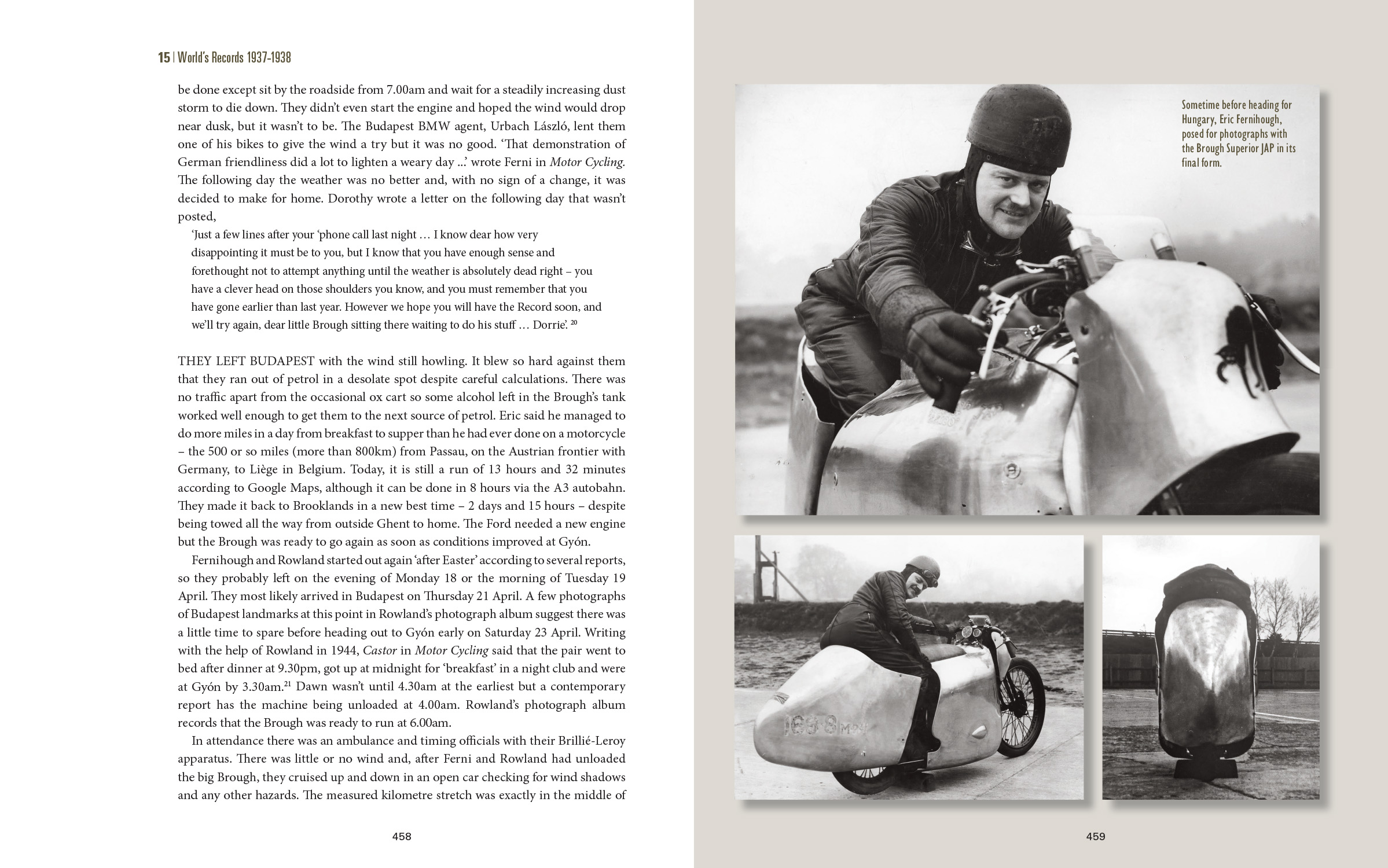
Ernst Henne took the absolute world’s record back and Eric Fernihough built a new supercharged Brough Superior with more extensive streamlining. He was to be killed during a record attempt in Hungary on 23 April 1938. Mourned throughout Europe he never received any recognition from the British crown or government.

This image has an empty alt attribute; its file name is p458-459.jpg

…………………………………………………………………………………………………………………………

POWER WITHOUT GLORY: is long out of print but there will be a new edition

Power Without Glory: Racing the Big-twin Cooper by Terry Wright was published on 2 November 2015 in Australia by Loose Fillings Publishing. It was printed in Britain by Lavenham Press who distributed it to booksellers and online buyers worldwide.

But an expanded second edition is planned in the next few years, This will bring the Cooper twin story up to 1960 at least. If you have any good quality photos from the ‘fifties that we might make use of, please let us know.

The book is a new look at the early history of the modern racing car. It explores the influences behind the first Coopers including V-twin engined record breaking motorcycles, hillclimb and sprint specials and dirt track speedway cars. The engine and chassis designs and the racing and hillclimbing of the early post-war years are described and illustrated by hundreds of previously unpublished photographs and drawings.

The pedigree of the modern racing car is usually considered to have originated with the classic marques of Europe. In this book, the author suggests that the clearest line of descent started before World War 1 with the ‘boy’ racers of California and was developed between the wars by the ‘special’ builders of England. In building their first car in 1946, Charles and John Cooper were strongly influenced by these antecedents. When they mated their offspring with JAP motorcycle engines a new breed emerged. Motor racing was never to be the same again.

Power Without Glory is printed four-colour on 150gsm satin-coated paper and is hard-back bound with a laminated colour jacket. There are 352 pages, 254 x 203mm, and 300 colour or duotone racing, car, engine and document images. The photos have come from some of the very best photographers including the collections of Guy Griffiths, Louis Klemantaski, Autocar, Motor and Motor Sport.

Features

  • Foreword by Mike Cooper
  • History of JAP racing engines in motorcycles and cars
  • History of car racing with V-twin engines
  • History of V-twin engined Cooper racing cars
  • Analysis of JAP and Vincent engines with factory photographs
    and drawings
  • Analysis of Cooper and other chassis developments leading up to Coopers’ 1959 World Championships
  • Coverage of big-twin Cooper racing and hillclimbing in Britain and Europe from 1948  to 1951
  • Photographs from the Autocar, Motor Sport, Louis Klemantaski and Guy Griffiths archives

Published on 2 November 2015
ISBN 9780994366108 (hardback)
Was

£55.00 plus packing and postage.
Now fetching three or four times that!

STREWN ACROSS THE PADDOCK

by Garry Simkin

Some air-cooled Coopers have been prominent throughout their lives in Australia and New Zealand, but others remain shrouded in a certain degree of mystery. One such is a big-twin with a 1098cc JAP engine – chassis number 10-48-50 – which was later to be seen with its engine strewn across the paddock at Bathurst in 1957. Here it is, a sad sight, but more on that later.

Strewn across the paddock at Bathurst Easter 1957 or 1958

There are no reports of 10-48-50 being first seen in Australia, so Sydney’s John Nind seems to have taken delivery of his new car in New Zealand.  Perhaps the car had been ordered by a local customer and was shipped to New Zealand but then Nind took over the order? Maybe he just couldn’t wait for an early season start so had the car delivered there? What we do know is that after a sprint the previous weekend, his first race start was at Wigram airfield near Christchurch on 31 March 1951 for the premier event, the Lady Wigram Trophy race. With a brand new car, what could go wrong?

John Nind makes a good start from the second row of the grid in the Lady Wigram Trophy race 31 March 1951

Despite qualifying fifth-fastest and leading initially, Nind completed less than one lap in wet conditions before an accident sidelined him. He had entered for the Easter Bathurst meeting but it appears that delays in getting the car back across the Tasman Sea, plus possible accident repairs, made him a non-starter.

According to John Medley’s monumental history, Bathurst:Cradle of Australian Motor Racing, Nind was next entered for the Bathurst meeting of October 1951 and initially led the six-lap handicap race before retiring; the race was won by Alf Barrett in the author’s Cooper Vincent 10-41-50.

Perhaps not being all that Nind had expected it to be, the car was then advertised for sale in Australian Motor Sport in December 1951 as Cooper “1,100” in almost new condition, under 100 miles competition. Spare wheels, tyres and tubes unused. At reasonable reduction on new cost. John Nind, 38 Pemberton St; Strathfield, New South Wales UM8086

So the Cooper went to Ash Marshall of Sydney who was third in a Redex handicap race at Gnoo Blas instead of Bathurst as was usual, at Easter 1953. Only motorcycles raced at Mt Panorama that year because the Australian Sporting Car Club had fallen out with the authorities and shifted its meeting to Orange. Eventually the Australian Racing Drivers Club took up the challenge of running car races at Bathurst and has done so ever since.

Ash Marshall, right, at Easter1953 alongside Dick Cobden in Mk5-L9-51

Then the Cooper was sold to Newcastle’s Gordon Greig who was listed only as a reserve for the 18th Australian Grand Prix at Albert Park in 1953 and did not start in the race. Jim Madsen was the next owner, and it is his name on several photos we have of what is now a dark-coloured car. This is seen below at an unidentified Mt Druitt meeting but I am fairly certain from the helmet and other features that the driver is the next owner, the known-to-be-diminutive ex-motorcycle racer Ron Williams.

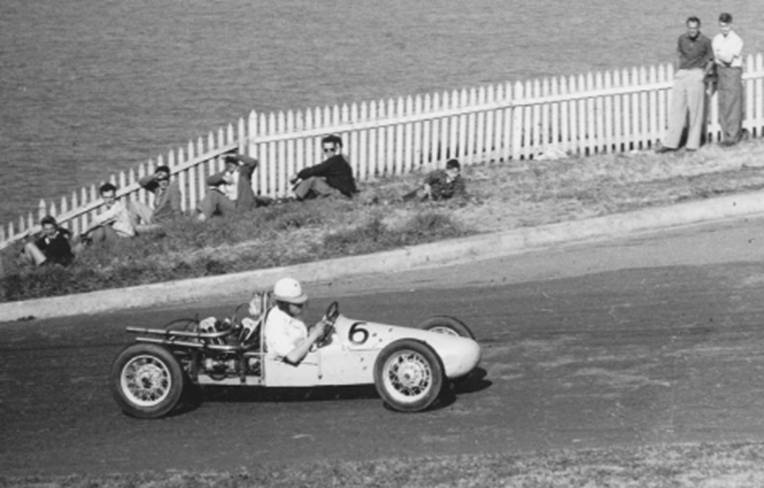
Ron Williams, probably, in Cooper 10-48-50 at Mt Druitt, date unknown

Ron entered the car for the Bathurst meeting at Easter 1957, and finished second in a closely fought three-lap scratch race just behind Frank Gardner’s C-type Jaguar, which must have taken some doing. He was just ahead of Bill Reynolds in his John Crouch Motors entered 996cc 8/80 JAP engined Cooper.

Either at this meeting, or maybe Easter 1958, the car had some massive engine trouble, as shown in the opening picture which graphically illustrates the sad truth about the big-twin Coopers’ reliability over longer distances. Bathurst, which this photo is assumed to be at, was really too much for them.

Moving on, the next owner was Phil Boot, also of Sydney. Victorian John Harnett told Loose Fillings some years ago that he recalls going to Boot’s place to buy the car for Graeme Keilerup. He mentioned selling the JAP engine to Tasmanian Dave Powell Snr who, with his son Dave Powell Jnr, did quite a lot of racing with various Cooper JAPs on the Apple Isle.

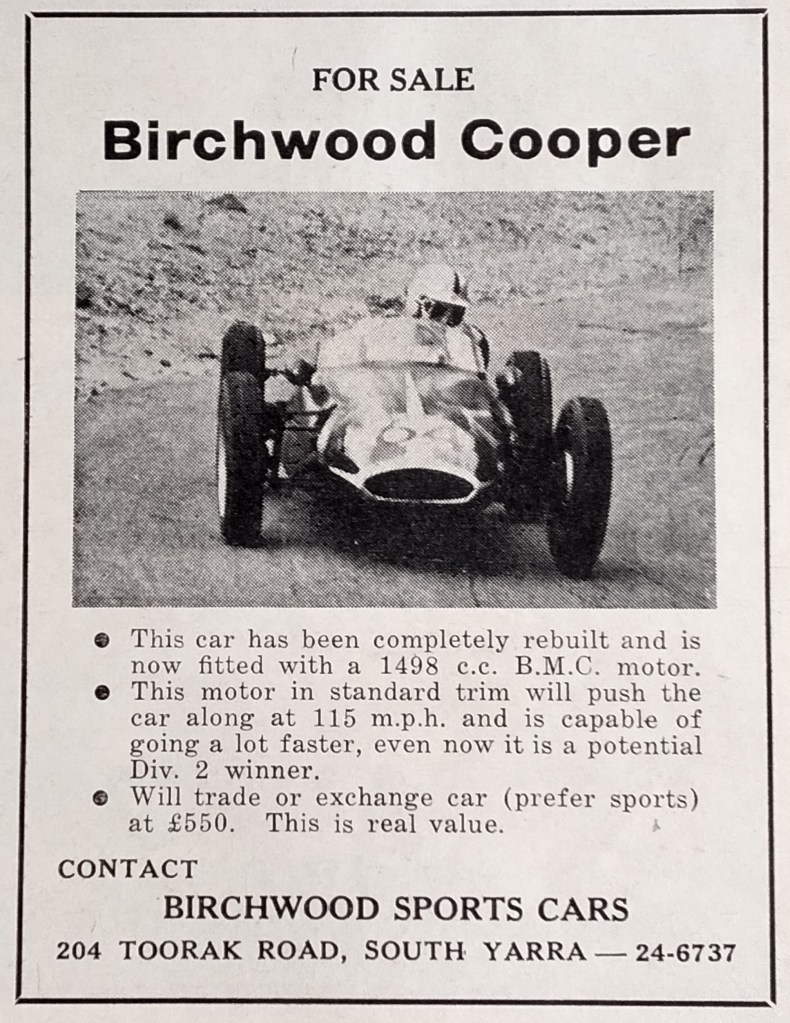
In place of the JAP there was then installed a 1098cc Coventry Climax engine, a project started by Hartnett but later completed by someone else; it was known as the JHM Climax before becoming the Birchwood Cooper.

With a BMC 1498cc engine the car then became the Birchwood Cooper

Fast forward some years and John Bodinnar acquired the car as well as Cooper 10-32-49 before both moved on to ACT vintage car enthusiast John Prentice. 

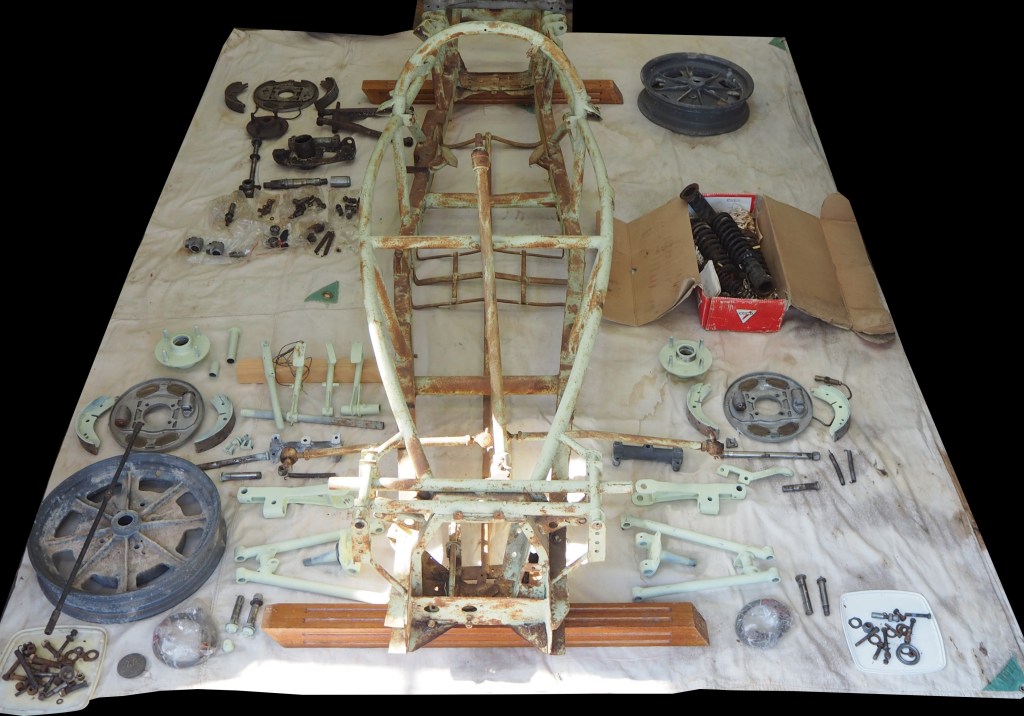
Current photos of the remains, below, show the chassis has been seriously modified over time. The lower part of the early ladder chassis has been retained but the hoops of 1/2 x 3/16” flat steel have been removed and upper tubes as in a Mk8 or later Coopers have been welded on. A lot of work is needed to restore it to its former glory but it is all do-able with the right skills and effort. John also has the Birchwood Cooper body panels.
With thanks to Stephen Dalton for his help.

AND NOW FOR FORMULA 4!

by Richard Anderson

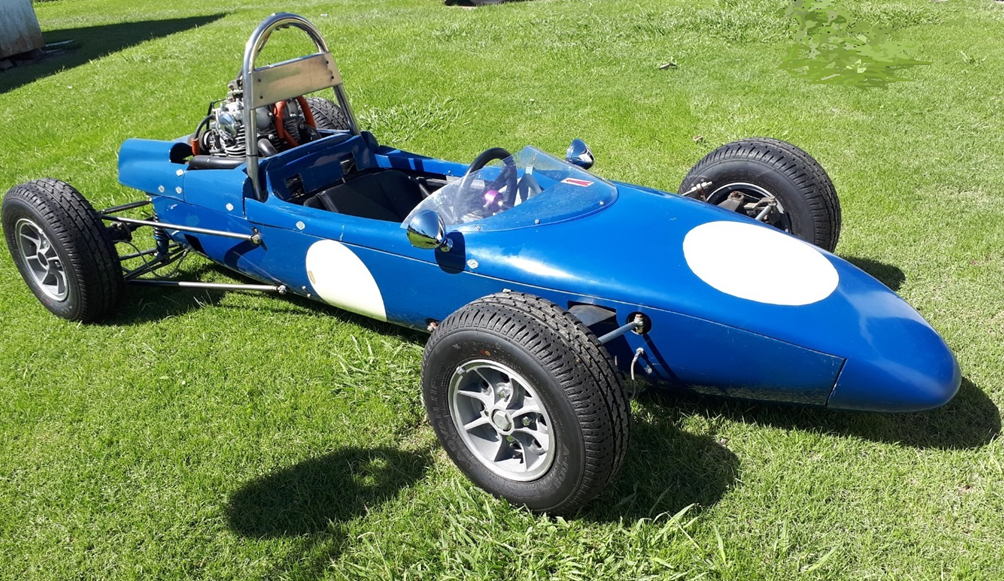
At Loose Fillings we must admit to only being vaguely aware of something called Formula 4 which in a way superseded the pioneering British 500cc Formula 3. We are also aware of a 125cc movement that briefly flourished in Australia about which we someday hope to write; anyone care to make sense of the stack of Clisby photos we have? Now Richard Anderson has written to us from New Zealand with news of  his rare 1967 Briham Formula 4.

In Britain the first alternative to 500cc racing was a 250cc formula that started in the early 1950s. The class first ran at a semi-private meeting at Brands Hatch on 17 April 1955 and the 250 MCR ran its own meetings at Brands Hatch in 1955/56 before joining up with the Austin 7 originating 750 Motor Club. The last outing of these cars was in July 1963 when two of them ran in one of the last UK 500cc races at a 750MC Silverstone meeting.

Click below for a classic bit of British newsreel from 1966 on what came next:

Everybody’s Racing Car (1966 )

This was Formula 4, and Richard has sent us the history below by Mark Wenden in UK who can probably be regarded as ‘Mr F4′ being the owner of a number of F4 Cars and all the drawings, blue­prints etc for the Johnny Walker cars mentioned below.

Formula 4 racing can trace its origins back to 1962 in the US where the first F4 races were held. The cars were typically scaled replicas of Fl cars and powered by 250cc motorcycle engines. It didn’t take too long for the idea to be brought to Britain by American servicemen working in Europe, and in 1963 Trak-kart built the 500cc Triumph-engined TK. As the concept gathered momentum in Europe in 1965, Tecnokart in Italy began producing the Tecno which was powered by 250cc Ducati engines, (below)


In the same year, the first Johnny Walker cars appeared from their Gloucestershire factory with the JW4 Mk1 powered by the 250cc Villiers Starmaker. Johnny Walker was better known at the time for operating a bearings and machine tool business. He had a keen interest in motor sports and saw the potential of Formula 4 after their first car emanated from someone who had approached them with a design into which they built in the Villiers engine.

The car initially competed against 750MC cars, and with the interest this created, Johnny Walker Racing Ltd was subsequently born. They then entered negotiations with the RAC and FIA for the formula to be officially recognized. The first car, the Mk1, was the 250cc but it proved to be slow and unreliable, so the 650cc Mk2 was born with a BSA engine. Reportedly it was capable of 120mph around Castle Combe.

One of the conditions of the new formula was that the smallest class cars should have a basic price (complete with engine) of less than £650. The regulations allowed for 3 classes which were 250cc and 650cc using motorcycle engines, and 875cc which used car-derived engines. Engines from Ducati, Villiers, Husqvarna and Bultaco predominated. The Johnny Walker Mk3 & Mk4 JW4’s were fitted with 875cc Imp and Saab engines. All the classes were tightly controlled for cost and engine tuning.

Initially the grids were small, but for 1967 and 1968 they had a series of about 7 rounds which included the British Grand Prix meeting at Silverstone in 1967. Notable works drivers for JW4’s were Bev Bond and Derek Minter who had switched to four wheels following his retirement from motorcycle racing.

The most prolific manufacturer was the Italian Techno company which produced a Ducati 250cc-engined car. A significant number of cars were produced by Tark (Estonia) though these probably didn’t compete outside the Soviet block. From Spain came the Nogeura with Bultaco engines, along with numerous others produced in small numbers.

In the USA ‘Red’ LeGrand produced cars with the 700cc BMW engine and transmission, below.

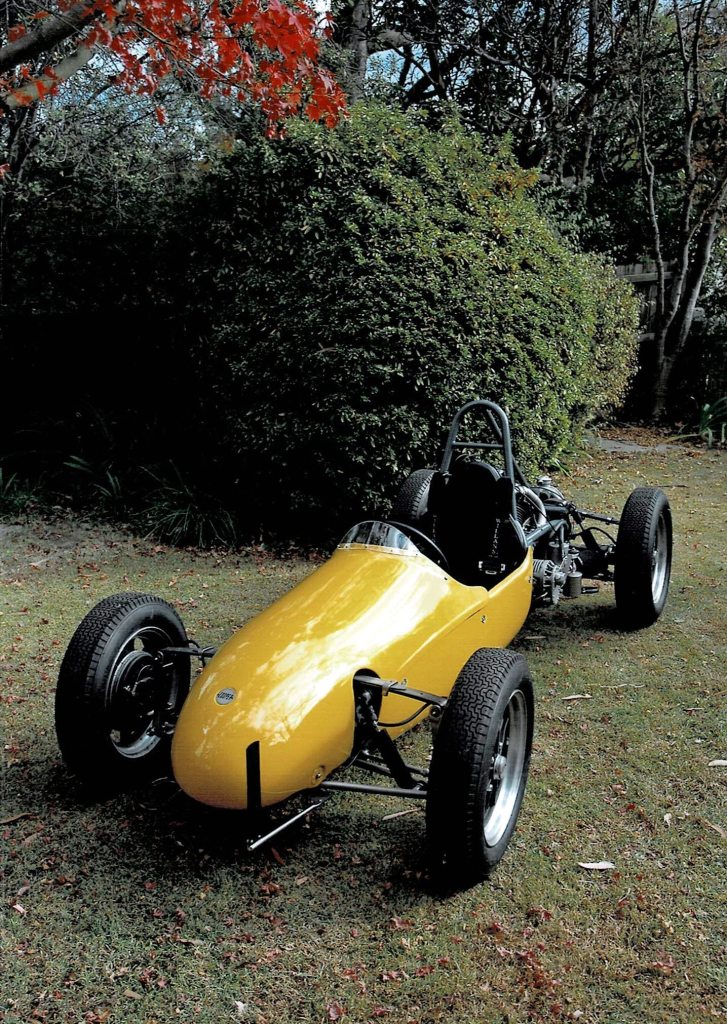
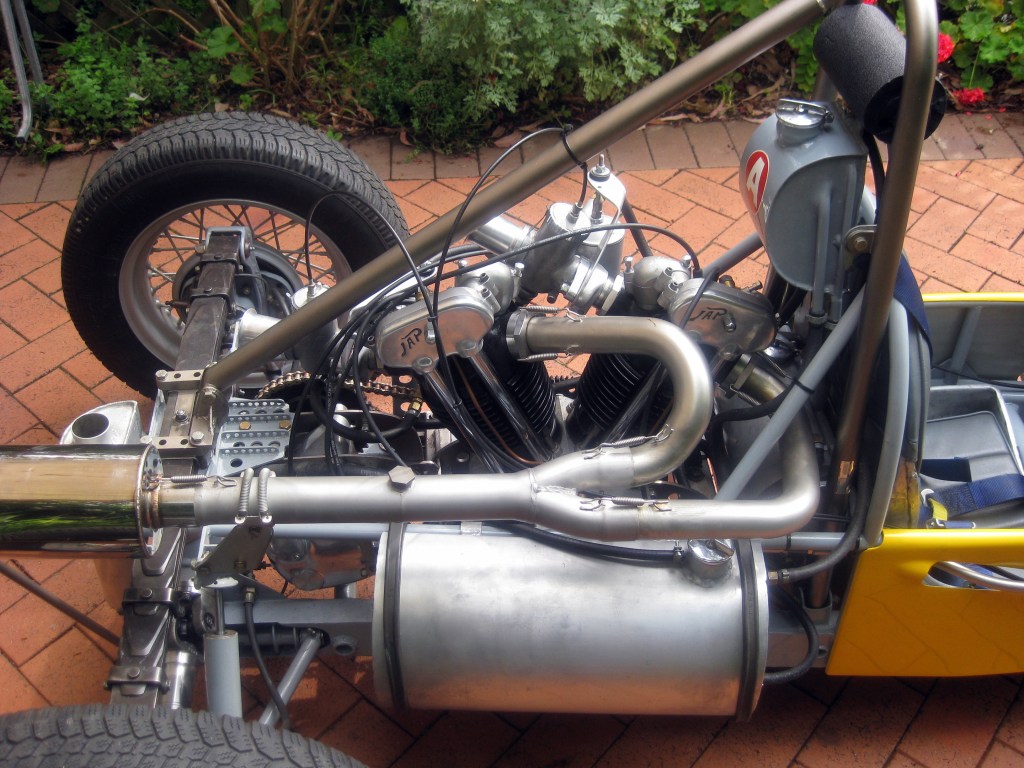
In the UK by far the largest producer was Johnny Walker who produced approximately 50 cars. Also from UK were Vixen, Evad, Ginetta, Briham, along with many owner-built one-off cars. Unfortunately, just as Formula 4 was starting to get going, Johnny Walker’s firm suddenly went into liquidation. This left Techno as the only major manufacturer and a handful of smaller companies producing specials.

Enter Briham: in 1966 the brothers Brian & Peter Hampsheir built a Villiers Starmaker 250cc engined-car to meet the RAC specifications. The car was extremely light thanks to its innovative use of Mallite sandwich construction. Mallite was a product produced primarily for the aircraft industry and comprised a sandwich of end-grain balsa wood laminated between two sheets of thin duralium. Extremely strong and very light in weight, McLaren used Mallite in the construction of the M2B, their first Fl car.

Formula 4 racing ended soon after. but the cars lived on by adapting to compete in many different countries, and in 1970 the 750MC took Formula 4 under its wing by amending the regulations to allow for 1000cc engines and aerodynamic devices.                

The Hampsheir’s car used the material in a completely different way, with a top panel and 4 bulkheads dropping from it, then bonding the “monocoque” in a fibreglass shell using steel reinforcements for suspension (explain better). It was exhibited at the Racing Car Show in January 1967 and then the car was modified to take a 650cc Triumph (pre unit) engine and Norton gearbox, (it was re-designated as PRH4).

The car proved to be extremely quick and was very advanced with rocker-arm front suspension and inboard coil-overs front and rear; it tipped the scales at about 220kg. This prototype car was invariably on the front row of the starting grid, however lack of reliability of the old Triumph engine reduced the number of chequered flags it received.

The brothers then set about producing 5 cars (designated PRH4, 2-6) al1 of which were fitted with the later Triumph Bonneville engine and exported to the USA via Jan Winkel of WREP inc, their US distributor. My car’s early history is unknown, but we do know that it is car number PRH4-3 (the second of the exported cars) The original Triumph engine had been removed early in its life and replaced with a Yamaha XS650 engine of 1975 vintage.

With 5 gears, more horsepower, electric start, and no oil leaks it is a worthy successor to the old Triumph. The engine bares the insignia of Anderson-Robinson who modified these engines, as “streetracker” engines. I do not know what modifications have been made but the engine certainly has some punch.

PRH4-3 has been recommissioned with new brakes, chain & sprocket, wheel cylinders, 6 point harness, the original 10″ sized ‘wheels (in place of the 13″ minilites) fitted with new tyres, and is pretty much ready to go racing.

Richard Anderson’s Briham F4

Editor’s Note: see also https://loosefillings.wordpress.com/2017/03/29/masterly-modern-interpretation/ for Bob Britton’s contribution to the art

WINE COUNTRY HILLCLIMB

There may be more big-twin Coopers now running competitively at one time in Australia than there have ever been. Can someone check?
Peter Fagan reports, with great photos thanks to John Lemm

The 2023 Vintage Hillclimb run by the Sporting Car Club of South Australia at Collingrove in early October was attended by four air-cooled Coopers this year, all big-twins. They were made up of three J.A.P 1100’s from the ‘Chas McGurk Racing Team’ plus the Cooper-Irving supercharged Vincent. Chas was present in the pits to keep a watchful eye on things and was handing out timely advice, both tuning and driving tips, when needed.

We were blessed with a magnificent sunny day and 25degC which should have made for fast times, although no one expected to get close to the 35.07 seconds best set by Derry Greeneklee in his Mk9 Cooper back in 1991.

The Sunday morning practice run was pleasingly uneventful except that the Mk9 driven by Brian Simpson failed to fire, only to miraculously come to life minutes later. The issue would plague the car throughout the day until a broken wire was found behind the dash.

Peter Fagan in the Mk6 set a benchmark 38-something-seconds time in practice, but would only better this once as he pushed to discover the limits on multiple corners. Throughout the day he found the grass on the three separate bits of the track. One was the tight right-hander up the top that would prove difficult for all four Cooper drivers as they struggled to get their cars stopped and back to first without under-steering off.

Rod North in the Mk5 Cooper-Irving tirelessly chased a sub 40 seconds run, a target that he was cruelly told he could not go home without achieving. He improved with every run with the supercharged Vincent sounding magnificent and delighting the crowd at his first ever event at Collingrove.

The Cooper Irving, running a supercharged Vincent engine is now being run by Rod North . Originally run by Dick Cobden as a 500,  it went  to Reg Smith, then Lex Davison who had Phil Irving install the blown Vincent .

Brian Simpson managed a fast 39 seconds run before chasing a brown snake into the long grass on his next run. The competitors following him thanked him for clearing the wildlife off the track, but the electrical gremlins had left him short of track time to post a faster time.
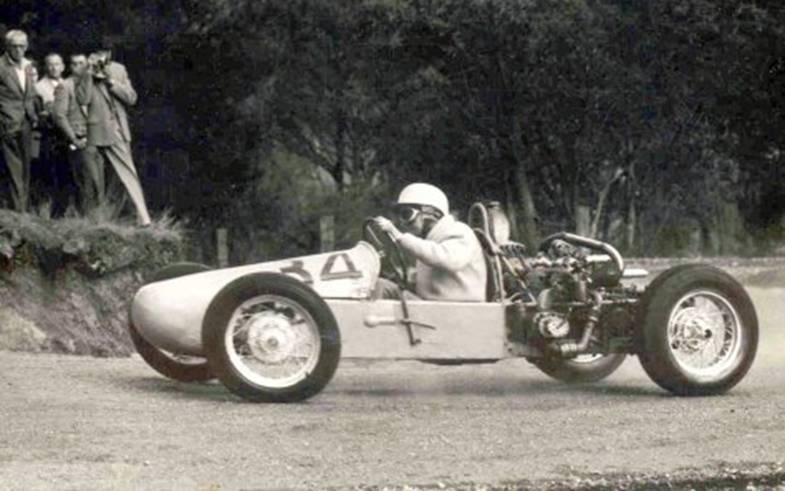
Brian Simpsons Cooper Mk 9 JAP 1100 twin is also ex Derry Greeneklee and has an extensive New Zealand history, and its history can be viewed at Loose Fillings, back issues, # 28.

Stephen Denner in his Mk5 JAP was frustrated that his times kept disappearing from the timing screen, so he had no idea if he was improving throughout the day. He was sure there was a conspiracy against him but despite trying, could find no evidence. He did however keep the Cooper on the black stuff and had a successful day.
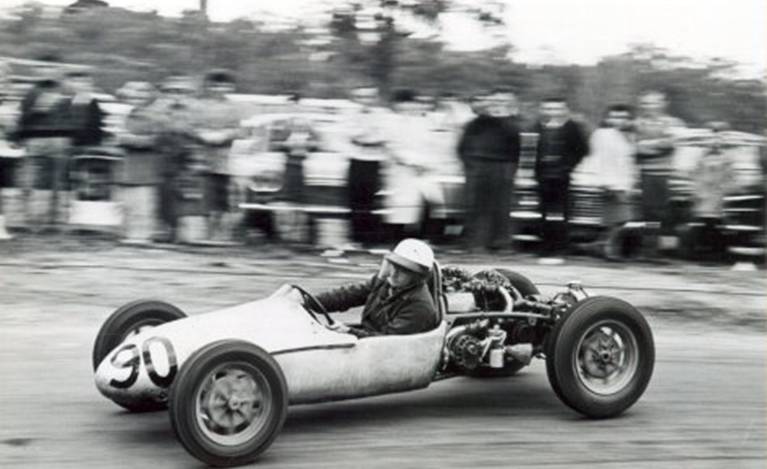
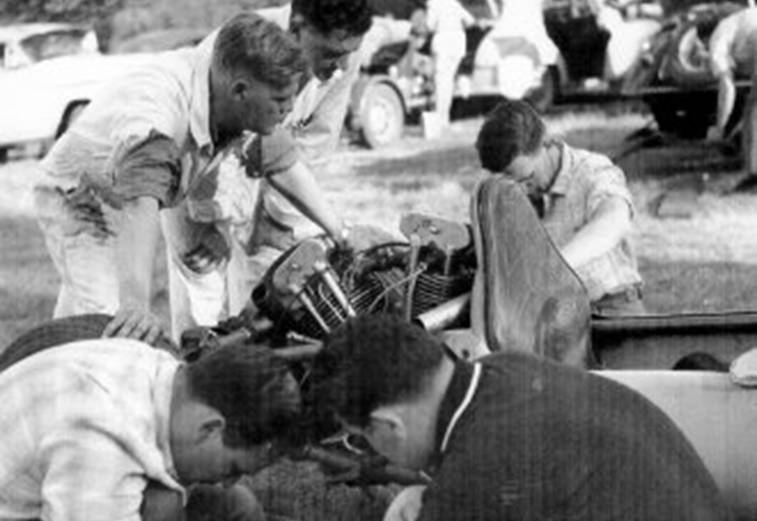
Stephen Denner in an ex Derry Greeneklee Cooper #2 that came out of  South Africa from Richard Baker, having been raced there by Arthur Mackenzie.  For more on this car go to Loose Fillings, back issues, # 41


Peter Fagan in the Mk6 finally put a clean run together and ended with a 36.50 seconds run to be the fastest air-cooled and second fastest overall, included the fastest overall first split.

Peter Fagan’s Cooper JAP 1100 #126 is also an ex Derry Greeneklee car,  having been obtained from Peter Wright in the UK in 2012. It has history with a supercharger being fitted in the day.

This was a fantastic social event set in the magnificent Barossa Valley and the weekend included organized social dinners on Friday, Saturday and Sunday plus a tour to a winery for Saturday lunch, making the drive from interstate well worth the trip. And to still have the four Coopers running well at the end of the day was a bonus.

Peter Fagan

Post Script: in Loose Fillings # 49 Derry Greeneklee has listed Collingrove times for Coopers over the years.

RARE SKIRROW SOLD

image9

The Skirrow went into limited production in 1936 and was a development of a prototype that Harry Skirrow had built for Belle Vue, Manchester speedway. It was all part of a plan to start up speedway car racing, which was a raging success in the United States, in England.

Belle Vue decided to build their own cars so Harry started a company called Skirrow Special Cars Ltd to build his. Car Speedway Ltd was set up to run the business side of things and there was a National Association of Speedway Car Racing Circuits that licensed drivers in 1938 and 1939. The photo below shows one of the Belle Vue Elto-engined cars ahead of a Skirrow-JAP at Coventry speedway some time in 1938 or 1939. When the war started, racing  came to a stop for the duration.

Skirrowracing

The photo below shows a brand new car at London’s Lea Bridge speedway where they were built for Harry Skirrow:

Mackereth

Post-war, about a dozen or so of the  JAP 8/80 V-twin­ engined cars were bought up and kept in Northamptonshire by Dave Hughes who founded the Brafield speedway  in 1949. He took the cars to speedway tracks all over the country, organized races and did what he could to revive midget car speedway racing.

Some Skirrows were still racing in 1962 but cannot have lasted much longer. Sometime in the 1960s, one of the most successful of the pre-war midget drivers, Les White, bought one of Hughes’ cars. lt was just ‘for old time’s sake’ said his son Malcolm who did a ‘light restoration’ on it and demonstrated it from time to time at a local speedway.

When Les retired from the garage business he sold everything up and the car went to America, eventually to a private collection in Florida. From there it was sold to Canada, and then I bought it without an engine and shipped it to Sydney with the aim of restoring it and running it in Vintage Speedcar Association events. Here is the car as it arrived,

SkirrowAsBought

The chassis has two pairs of BSA FWD springing and drive mechanisms, one at the front and one at the back as can be seen in the following drawing:

SkirrowChassis

The rear wheels are obviously fixed direction-wise and both ends are without dampers. The front uses a BSA steering box and column with a Bluemels sprung steering wheel.  A double sprocket on the front-mounted engine drives forward and rearward Rudge clutch assemblies which are on counter-shafts running in cast aluminium mounting cases. Exactly as on a speedway bike, a final drive sprocket is fixed to each clutch and drives a shaft on the ends of which are flexible joints and all the other BSA bits and pieces . The following video shows the chassis and the transmission after the body was removed:

The whole of the chassis and running gear was stripped to bare metal and reassembled with repairs and replacements such as the flexible drive couplings using the invaluable assistance of the BSA FWD club’s spares scheme. The sprockets were replaced and a new rear drive-shaft was the only significant part that needed to be custom-made.

I was prepared to make an engine more or less from scratch but I was lucky to acquire a post-war  8/80 JAP and Greg Summerton has made a new crankshaft and reconditioned the bottom end. The cylinders need to be relined and a new timing cover machined to accommodate the prewar total-loss Pilgrim pump. Cylinder heads and rocker gear need a service of course and there are brand new Mahle pistons andTerrys valve-springs in boxes as well as new valves. There are Amal type 27 carburettors with twin float-bowls. but no magnetos.
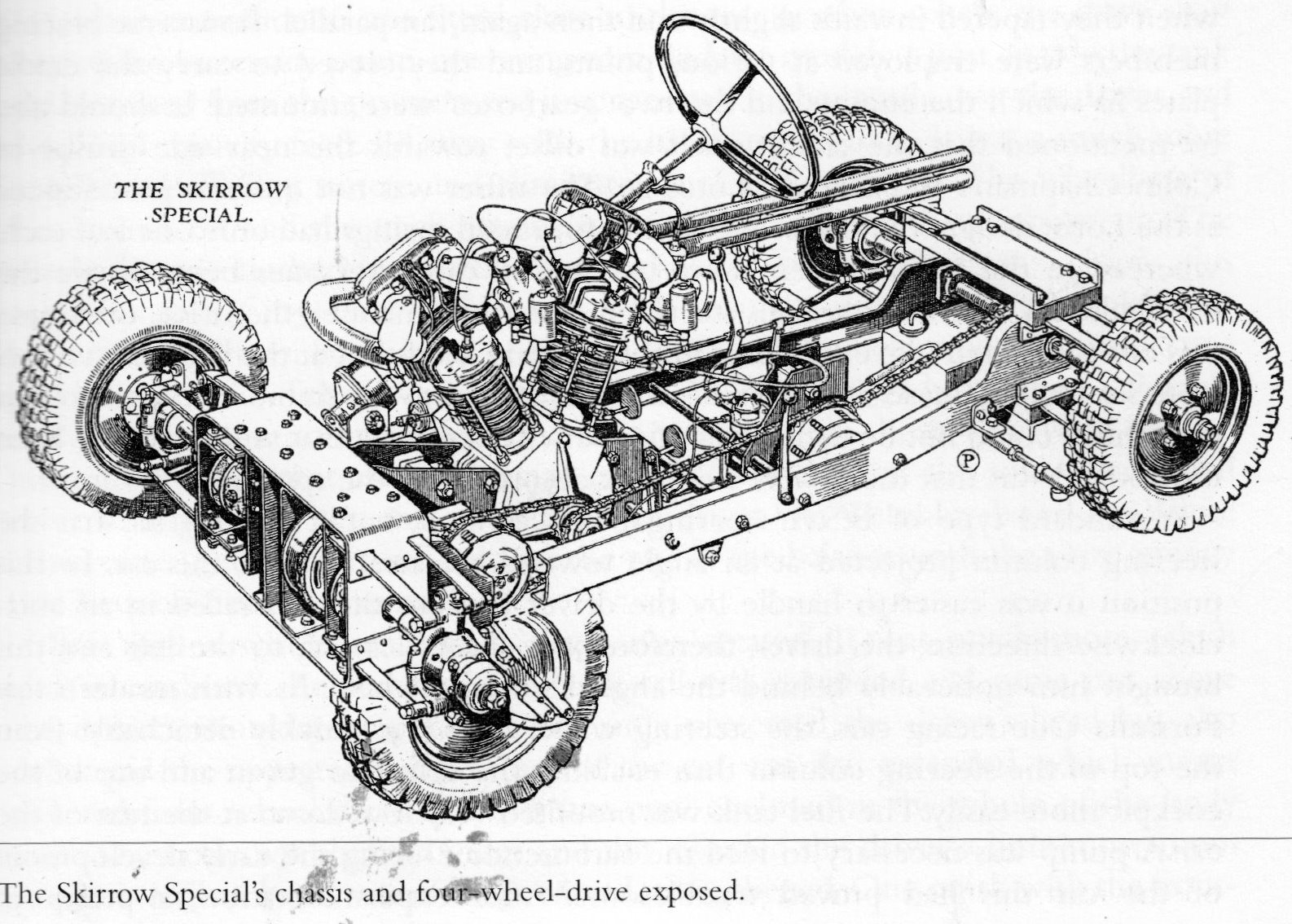
Rudge speedway countershaft units and clutches seem to be like gold but I found two sets of these to replace the ill-fitting Norton units. The very stylish body, which is mainly several heavy pieces of welded sheet metal sitting directly on the chassis, has been extensively reconditioned with some new panels and it is now ready for final finishing. Here it is at the moment:

20200302_142058
20200302_142122

Nobody knows how many Skirrows were made but I have seen a reference to Harry Skirrow saying there were just 17. Several were reportedly destroyed by bombing in the war, two ended-up in Australia but have since been lost and, allowing for a few to be scrapped, that would line-up with the dozen or so that Dave Hughes had.

There seem to be just three complete Skirrows surviving including this one. Bugatti expert Ivan Dutton has one which he bought at auction about ten years ago; it is complete and running. He also has a real treasure in the substantial remains of demon-driver Spike Rhiando’s Skirrow as well as one of the Elto-engined cars built for Belle Vue. It was Spike Rhiando’s spare engine for his Skirrow that was part of a deal for John Cooper to build a long chassis car with the 8/80 JAP at the rear. Spike first raced this in the Isle of Man in 1948.

The Skirrow was a pioneering series-production single-seat racing car with strong motorcycle connections. Significantly, it was the reason the 8/80 JAP, as developed by Eric Fernihough for his world’s motorcycle record efforts, went into limited production.

It’s now been sold to the Halliday family and it will be good company for the Brabham midget which they hold so dear; a museum appearance and live runs is a possibility in the future.

Terry Wright

tsrwright@gmail.com

There is another Loose Fillings article about early English speedway car racing at  https://atomic-temporary-88099765.wpcomstaging.com/2015/12/13/bugattis-did-it-too

DEVELOPING A NORTON CYLINDER HEAD

The following abbreviated version of an article by the great Brooklands tuner Robin Jackson recently surfaced in a tidy-up of founding editor Graham Howard’s Loose Fillings papers. The article first appeared in Autosport in 1954. Garry Simkin’s commissioning of a new Norton engine made by Charlie Banyard-Smith in his restored Mark 9 Cooper (photo below by David Williamson) seemed like a good excuse to give its wise words a fresh airing.

Garry Simkin in his Mk9 Cooper at Eastern Creek

Some years ago, it was decided to investigate the possibilities of improving the performance of the standard Norton engine specifically with a view to its application to 500 c.c. car racing.

The first task was to obtain a clear picture of the standard engine, and to ascertain, if possible, what were the factors limiting its performance and what possibilities there were of making improvements. Essential, therefore, was a test set-up which would reproduce accurate and repeatable data and which would allow the running of the engine on an open exhaust pipe fitted with a megaphone, under conditions that as near as possible simulated those that were met in the 500cc car.

A programme of investigation on the standard Norton engine was put under way with a view to ascertaining where possibilities lay for improving its performance. At this point it might be as well to digress and point out that the most suitable shape of power curve for a motorcycle engine is not necessarily the best for a 500cc car. The average racing motorcycle has as much horse power as the rider can use at the bottom end of its power range; the general tendency, therefore, when developing a motor-cycle engine, is to seek for higher powers at higher rpm.

In the case of the 500cc car, however, the driver is able to use all power that can be obtained from the engine over the lower portion of the power curve, and as practically all circuits demand good acceleration rather than sheer maximum speed, the essential requirement for a 500 c.c. car is that one should produce a very good power output throughout the entire range of the engine. It is very rarely, if ever, that power at the top of the scale, when bought at the expense of the bottom end, produces faster lap times on the actual circuit.

When testing at Goodwood we decided to shorten the exhaust pipe by 2 ins. (using the same standard megaphone) and gained an increase in rpm, down Lavant straight of 250 to 300 and a drop of 200rpm approaching St. Marys’. The lap times increased by 1/2 sec, showing that extra power at the top end, when bought at the expense of the bottom end, does not improve lap times but, in fact, slows them.

As it was a necessary requirement from a commercial angle that the standard Manx Norton cambox had to be used with the cylinder head, one was, of necessity. limited as to the alterations one could make to the head, since obviously the valve angle and valve positions had to remain basically the same as the standard engine.

It was accordingly decided, after examining the test data of the standard unit, that the best hope of obtaining an improvement in the performance of the engine was to try and improve its filling; accordingly, the inlet port was moved round from the standard Norton position of 15 degrees to the front-rear centre line on the front-rear centre line and the exhaust port was also moved on to this line. In place of the normal exhaust ring nut (which comes loose and the thread strips) a short length of steel tube was cast into the head, over which the exhaust pipe slides, thereby providing a slip-joint.

The new Jackson head – are there any in use now?

At the same time as this was done the cylinder head was stiffened considerably, as it had been found that a certain amount of distortion of the head on the standard engine took place with the resultant nitromethane was used. The possible alterations to the shape of the inlet port were to a large extent governed by the existing valve angle. A considerable amount of development work was done on the shape of the port on an airflow rig which consisted of a Wade supercharger, the airflow on the inlet side of which was measured by a British Standards sharp edge orifice. The air from the outlet of the supercharger was led through suitable ducting to the inlet port, a static tapping being taken off the ducting to a manometer, which read the pressure differential across the inlet port and the valve seat.

Cross-sectional drawing showing the best shape that could be achieved for the inlet port

The airflow at various valve openings was plotted against the manometer readings and by this means the shape of the port shown above was developed. A cylinder head was then made and bench-tested, having a sparking plug in the same position as the standard Norton engine. This head showed a small   improvement in power over the standard head, but there was evidence of detonation at the maximum B.M.E.P. condition which occurred around 5,000rpm, which was definitely more pronounced than on the standard Norton head.

The engine was run under these conditions and a careful examination was made of the carbon deposit on the cylinder head and piston. Evidence showed that detonation was taking place adjacent to the edge of the inlet valve seating on the opposite side of the head to that in which the standard plug was fitted. It was accordingly decided to introduce a second sparking plug in this position.

The question of providing two simultaneous sparks then had to be solved. Initially a B.T.H. magneto was used, but it was found that this instrument did not produce the requisite voltage to operate the sparking plugs under the maximum B.M.E.P. conditions met with on the engine. Two Lucas twin spark magnetos were then located which had been developed in the pre-war years and these were reconditioned by Joseph Lucas Ltd.

Power and rpm graphs for the Jackson head.

Running with the Lucas twin-spark magnetos, an improvement in performance was obtained and the tendency for the engine to detonate was slightly reduced. It was found that whereas with single ignition the required timing was 34/35 degrees before TDC, with dual ignition the correct timing was 28/29 degrees before TDC.

An examination of the cylinder head showed, however, that there was still evidence of detonation around the edge of the exhaust valve seat immediately   opposite the plug which had been fitted adjacent to the inlet valve: accordingly, the head was drilled and tapped to accommodate a second 10mm sparking plug. Further running using two 10 mm. sparking plugs was carried out and the tendency for detonation was found to have more or less completely disappeared. it is of interest to note on the latest standard square Norton engine, that burning due to detonation takes place in exactly the same location as we found when we used the standard Norton plug position on our head.

Whereas previously the power output of the engine reached the peak around 6,500r.p.m. and then fell off, the power output now carried on beyond the peak without any falling off up to 7,000 rpm The engine also showed better power around the satisfactory minimum rpm, of 4,400, which was attributed to the better combustion conditions obtained with dual ignition and the better mixing of the fuel with the air. Prior to the introduction of dual ignition, the piston crown was kept close to the cylinder head round its circumference. Due to the position of the sparking plugs, which are very near to the cylinder head face, a piston of this type would have produced partial masking of the plugs; the piston was accordingly chamfered as shown at 45 degrees, with the result that with adequate valve to piston clearance, which is reckoned to be 6 mm.at TDC, a compression ratio of the order of 12 1/4 to 12 1/2 was obtained, which appeared to be the optimum ratio.

All 500 c.c. car engines are run on virtually pure methanol, with the result that whereas the fuel consumption on petrol is of the order, of 730 pints [414 litres] per bhp hour, on alcohol it is [of the order of double that]. The carburettor therefore has to mix a very much larger volume of liquid with the air than in the case when petrol is used, and, broadly speaking, the carburettor delivers a mixture in the case of petrol which is akin to a relatively fine mist-while in the case of alcohol this approximates much nearer to a thunderstorm.

To summarise the position to date, it would appear that the result of fitting this type of cylinder head has been two-fold:

(1) To raise the actual power of the engine throughout the range; and

(2) To extend the range of the engine over which useful power is obtained from 6,500 rpm to 7,000 rpm[T+RW1] .  


 [T+RW1]

GREAT VINCENT SURFACES

Loose Fillings hears that the Holinger Vincent is coming up for sale in West Australia where it has been in the hands of Jim Runciman since the early 1980s.

Peter Holinger, with his wife Beverley, built a world-wide business in competition gearboxes. He trained as a machinist at the Commonwealth Aircraft Corporation at Fishermans Bend, Melbourne, and in the mid-1960s played a key role in machining components of the Phil Irving-designed Repco-Brabham V8 engine. He became one of a number of Repco people – Paul England, Ivan Tighe and Keith Young were others – who built Vincent-powered hillclimb and racing cars. Even more were built by other enthusiasts. From 1933 to 1954 give or take a few, some 650 Vincent-HRD motorcycles were sold in Australia and many of these engines found their way onto race tracks, hillclimbs and speedways during the nineteen-sixties.

The Holinger Vincent, a beautifully-built spaceframe car, first appeared unsupercharged in late 1963. It was soon supercharged and its engine stretched to 1400cc, in which form it was competitive with the England and Tighe cars. With the car converted to wider wheels, Holinger set a new outright record at Lakeland hillclimb in1968, but the car never quite achieved an Australian championship and it was retired in 1970. It has never been fitted with a body. Next for Peter, the first of two Holinger-built Repco V8-powered hillclimb cars appeared in 1972, and with these cars Peter won four Australian championships, in 1976, 1978, 1979 and 1988.

Peter Holinger and his Vincent engined car at Silverdale 24 July 1966 according
to Graham Howard’s notes on these photos

Peter was a keen hillclimb exponent and his first car, which was an original design, followed the general path of the time with a Vincent based engine in a very light chassis. This design was almost a continual work in progress from 1963 and in 1965 or 1966 was in supercharged form. As Peter put it, the car was designed to run 1000 yards (the approximate length of most of the local hillclimbs). The car delivered a standing start ¼ mile time of 10.33 seconds and it is not unreasonable to consider this may have been the fastest time then recorded in Australia as It was prior to the establishment of drag racing in the country.

For tyres, Peter utilised a Tasmanian recap on the rear called a Tiger Paw which was not fully cured so it gave a lot of mechanical grip. Post 1966, he began to design and build his Repco V8 engined car and bits of the first car were sold off to a number of parties. Through David Rapley, Jim Runciman managed to purchase the chassis, running gear, and final drive from separate parties and subsequently purchased the engine from Brisbane to where Peter had sold it. The one item missing was the steering rack which had been used in the newer car. Jim says that Peter generously made another steering rack so the car is very near to 100% original.

The Holinger Vincent in Jim Runciman’s workshop

The basic space frame is constructed from chrome-moly tubing which has been nickel-bronze welded. The front and rear suspensions evolved from practice at the time which used twin wishbone front suspension with coil overs and at the rear has a layout which looks very Lotus like. The brakes are drum all round but were subsequently changed to front discs which is outside the CAMS Group M period so Jim has returned these to the original drum configuration at the front. The car is fitted with a ZF pattern limited slip differential and new pawls have been made for this. The original pre ’66 Lynx style wheels are with the car however Jim made patterns, cast and machined new wheel centres and had new aluminium rims spun.

The motor in the current state of tune using a Marshall J100 supercharger produced 165bhp at 6000 rpm in the era. When Jim repurchased the engine, Peter Holinger stripped and reassembled the bottom end and then passed the job of assessing the state of the engine and gearbox to Vincent man Ken Horner. The crankshaft was custom built and the unit was dismantled, reassembled in the crankcase with new main and big end bearings and succesfully test run. The primary drive is fully geared as is the supercharger drive. An electric starter and adaptor have been manufactured by Ken Horner and incorporated into the supercharger drive to simplify starting. The gearbox internals are as made by Peter in the original casing and the gear ratios are designed for car use.

Peter Holinger’s utterly committed hillclimbing style is captured in this Bruce Leeson photo from Silverdale, New South Wales, in 1968. The sole instrument is the tachometer, mounted above the driver’s left foot. The never-bodied car is running its later composite alloy wheels.

The car is currently for sale at $80,000 and Jim Runciman can be contacted at 0419 847888 or runcimans@westnet.com.a